• HOME
  • NEWS
  • EXPLORE
    • CAREER
      • Companies
      • Jobs
    • EVENTS
    • iGEM
      • News
      • Team
    • PHOTOS
    • VIDEO
    • WIKI
  • BLOG
  • COMMUNITY
    • FACEBOOK
    • INSTAGRAM
    • TWITTER
Saturday, May 16, 2026
BIOENGINEER.ORG
No Result
View All Result
  • Login
  • HOME
  • NEWS
  • EXPLORE
    • CAREER
      • Companies
      • Jobs
        • Lecturer
        • PhD Studentship
        • Postdoc
        • Research Assistant
    • EVENTS
    • iGEM
      • News
      • Team
    • PHOTOS
    • VIDEO
    • WIKI
  • BLOG
  • COMMUNITY
    • FACEBOOK
    • INSTAGRAM
    • TWITTER
  • HOME
  • NEWS
  • EXPLORE
    • CAREER
      • Companies
      • Jobs
        • Lecturer
        • PhD Studentship
        • Postdoc
        • Research Assistant
    • EVENTS
    • iGEM
      • News
      • Team
    • PHOTOS
    • VIDEO
    • WIKI
  • BLOG
  • COMMUNITY
    • FACEBOOK
    • INSTAGRAM
    • TWITTER
No Result
View All Result
Bioengineer.org
No Result
View All Result
Home NEWS Science News Health

Insights from a rare genetic disease may help treat multiple myeloma

Bioengineer by Bioengineer
February 12, 2018
in Health
Reading Time: 2 mins read
0
Share on FacebookShare on TwitterShare on LinkedinShare on RedditShare on Telegram
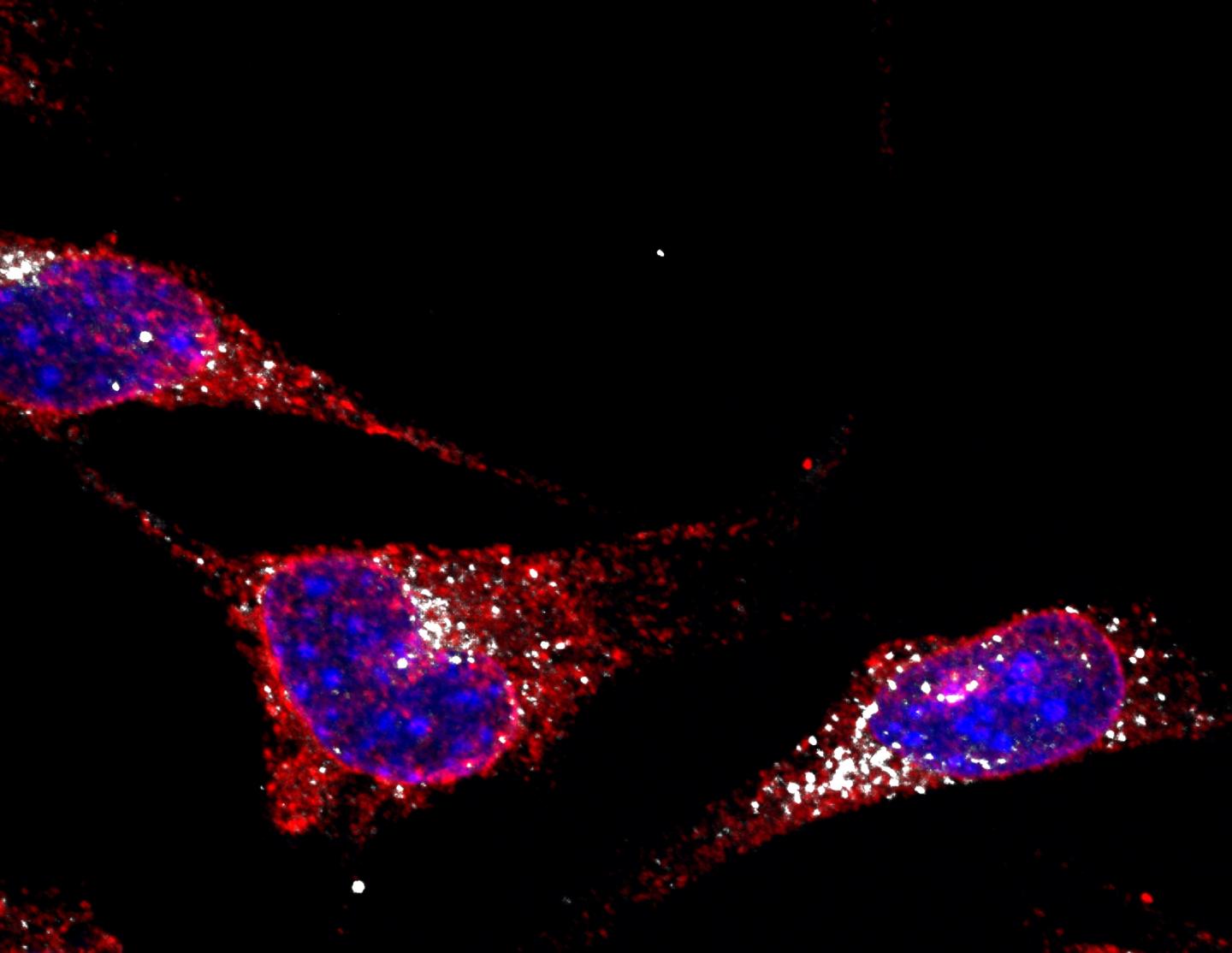
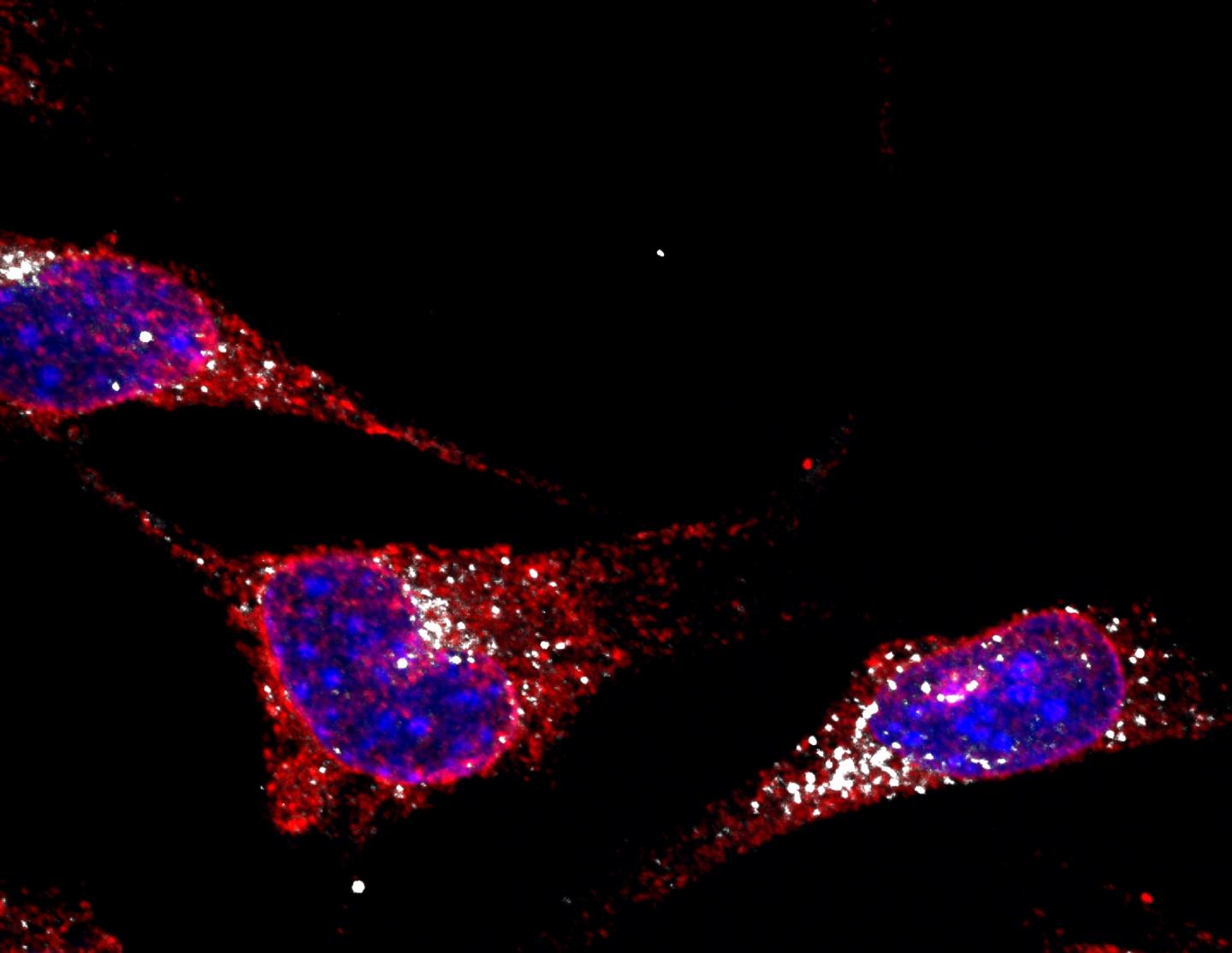
IMAGE

Credit: The American Chemical Society

A new class of drugs for blood cancers such as leukemia and multiple myeloma is showing promise. But it is hobbled by a problem that also plagues other cancer drugs: targeted cells can develop resistance. Now scientists, reporting in ACS Central Science, have found that insights into a rare genetic disease known as NGLY1 deficiency could help scientists understand how that resistance works — and potentially how drugs can outsmart it.

A class of compounds called proteasome inhibitors that include bortezomib and carfilzomib — both approved by the U.S. Food and Drug Administration — have been effective at treating certain types of blood cancers. The drugs work by jamming some of cancer cells' machinery to induce cell death. But the drugs have been limited by cancer cells ability to development resistance, as well as the inhibitors inability to fight solid tumors effectively. Studies have suggested that resistance could be linked to a protein called Nrf1. When proteasome inhibitors go into action, Nrf1 is spurred into overdrive to restore the cells' normal activities and keep them alive. If researchers could figure out how to block Nrf1, they might be able to address the resistance problem. Carolyn Bertozzi and colleagues, through studying NGLY1 deficiency, a seemingly unrelated condition, may have hit upon an approach to do this.

The researchers were investigating how lacking the enzyme NGLY1 causes a host of debilitating symptoms. They found that NGLY1 is responsible for activating Nrf1, the protein that is suspected of weakening proteasome inhibitors' effectiveness against cancer. Further testing showed that dampening NGLY1 allowed a proteasome inhibitor to continue doing its work killing cancer cells without interference from Nrf1. This finding, the authors note, holds great promise for the development of combination therapeutics for blood cancers in the future.

###

The authors acknowledge funding from the Grace Science Foundation, the National Institutes of Health and the German Research Foundation.

The study is freely available as an ACS AuthorChoice article here.

The American Chemical Society, the world's largest scientific society, is a not-for-profit organization chartered by the U.S. Congress. ACS is a global leader in providing access to chemistry-related information and research through its multiple databases, peer-reviewed journals and scientific conferences. ACS does not conduct research but publishes and publicizes peer-reviewed scientific studies. Its main offices are in Washington, D.C., and Columbus, Ohio.

To automatically receive news releases from the American Chemical Society, contact [email protected]

Follow us on Twitter | Facebook

Media Contact

Katie Cottingham
[email protected]
301-775-8455
@ACSpressroom

http://www.acs.org

Share12Tweet7Share2ShareShareShare1

Related Posts

Short-Term Home Cognitive & Physical Training Tested in Seniors

May 16, 2026

New Kineococcus Species Discovered on Anabasis Seeds

May 16, 2026

Transitional Care Boosts Heart Failure Outcomes in Elders

May 16, 2026

Gymnopilus Mushrooms Yield Antibacterial Gymnopilin A10, Gymnoprenol B13

May 16, 2026
Please login to join discussion

POPULAR NEWS

  • Research Indicates Potential Connection Between Prenatal Medication Exposure and Elevated Autism Risk

    844 shares
    Share 338 Tweet 211
  • New Study Reveals Plants Can Detect the Sound of Rain

    730 shares
    Share 291 Tweet 182
  • Salmonella Haem Blocks Macrophages, Boosts Infection

    62 shares
    Share 25 Tweet 16
  • Breastmilk Balances E. coli and Beneficial Bacteria in Infant Gut Microbiomes

    58 shares
    Share 23 Tweet 15

About

We bring you the latest biotechnology news from best research centers and universities around the world. Check our website.

Follow us

Recent News

Short-Term Home Cognitive & Physical Training Tested in Seniors

Stress Evolution and Time Control in Retreat Roadways

New Kineococcus Species Discovered on Anabasis Seeds

Subscribe to Blog via Email

Enter your email address to subscribe to this blog and receive notifications of new posts by email.

Join 82 other subscribers
  • Contact Us

Bioengineer.org © Copyright 2023 All Rights Reserved.

Welcome Back!

Login to your account below

Forgotten Password?

Retrieve your password

Please enter your username or email address to reset your password.

Log In
No Result
View All Result
  • Homepages
    • Home Page 1
    • Home Page 2
  • News
  • National
  • Business
  • Health
  • Lifestyle
  • Science

Bioengineer.org © Copyright 2023 All Rights Reserved.