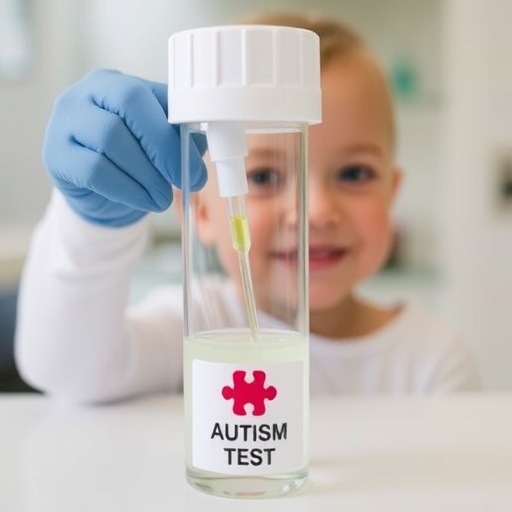
A groundbreaking scientific advancement has emerged from Arizona State University (ASU) that promises to revolutionize early autism spectrum disorder (ASD) detection—an innovation that could dramatically transform the lives of millions. Researchers have developed a novel urine-based diagnostic screening tool which detects unique biochemical signatures associated with autism in children as young as two years old. This pioneering approach focuses on analyzing microbially-derived metabolites, small molecular compounds produced by the gut microbiota, which appear to be distinctly elevated in children with autism compared to typically developing peers.
The newly introduced biomarker panel examines seventeen specific metabolites related to amino acid pathways, particularly those involving tyrosine, tryptophan, and phenylalanine. These amino acids are crucial precursors to major neurotransmitters such as serotonin and dopamine, both of paramount importance in modulating cognitive and emotional processes. The research delineates a consistent biological phenotype—termed “ASD associated with microbially-derived metabolites” (ASD-MDM)—that could underpin approximately 90% of autism cases. This biochemical fingerprint provides an objective diagnostic adjunct that transcends reliance on conventional behavioral assessments, which often delay definitive diagnosis.
This diagnostic innovation, termed the Microbially-Derived Metabolite (MDM) System, employs advanced metabolomic techniques to quantify metabolite concentrations in pediatric urine samples. The system generates a composite score indicating the elevation degree of these metabolites relative to established normative ranges. Notably, children with autism exhibit one or more MDMs at levels exceeding those in non-autistic controls by orders of magnitude, with some metabolites reaching concentrations 100 to 1,000 times higher. The clinical trial evaluating the MDM System demonstrated remarkable diagnostic performance, reporting 90% sensitivity and perfect specificity, highlighting its potential as a highly accurate risk stratification tool.
The implications of this discovery extend beyond early diagnosis. The metabolites detected are implicated in neurotransmitter pathways critical to mood regulation, executive functioning, and behavioral modulation. By identifying disturbed biochemical pathways linked to the gut-brain axis, this research opens an avenue for targeted therapeutic interventions aimed at normalizing metabolite profiles. Strategies such as microbiota-based therapies and precision nutritional interventions could, in theory, modulate aberrant metabolite production, providing symptom relief and enhancing quality of life for affected individuals.
One of the more striking findings involves metabolites derived from gut microbiota that serve as altered analogs of serotonin and dopamine. These neuroactive molecules have the potential to influence neurological development and symptomatology, potentially accounting for the spectrum of behavioral and cognitive features observed in autism. The perturbation in microbial metabolites correlated with ASD could provide a mechanistic explanation linking gastrointestinal dysfunction to neurodevelopmental anomalies, a longstanding hypothesis supported by accumulating experimental evidence.
The ASU team’s research involved a geographically diverse cohort of 99 children aged 2 to 11 years, drawn from multiple U.S. states—including Arizona, Massachusetts, Tennessee, and Texas—to enhance the robustness and generalizability of findings. This multicenter approach bolstered confidence that the observed metabolomic signature is a biologically meaningful and reproducible phenomenon rather than a regional artifact. While the initial sample size was moderate, ongoing validation studies aim to extend and confirm these promising results across larger and ethnically diverse populations.
Current autism diagnosis relies heavily on subjective behavioral evaluations, often delayed by systemic barriers and diagnostic hesitancy, which introduces critical windows of missed opportunity for early intervention. This urine test addresses these challenges by offering a non-invasive, easily administered method that could significantly expedite risk assessment and triaging. Earlier detection facilitates timely initiation of medical and behavioral therapies, which are closely linked to improved developmental trajectories and stronger long-term outcomes.
Importantly, while the MDM System is not intended to replace comprehensive clinical diagnosis, it functions as a powerful adjunct that can prioritize referrals and personalize treatment pathways. For children already diagnosed with ASD, longitudinal monitoring of metabolite levels can provide objective metrics to assess response to interventions—potentially guiding adjustments in therapeutic regimens in real-time based on biochemical feedback.
The conceptualization of an ASD subtype based on microbial metabolite production marks a paradigm shift in autism research. This phenotypic stratification acknowledges the heterogeneity intrinsic to autism and underscores the multifactorial etiology involving genetics, metabolism, and gut microbiome interactions. Approximately 10% of children with autism in this study lacked abnormal metabolite profiles but demonstrated other metabolic disturbances, highlighting the complexity and diversity of underlying pathophysiological processes.
One of the scientific leaders in the study, Professor Rosa Krajmalnik-Brown of ASU’s Biodesign Center for Health Through Microbiomes, emphasized the significance of these findings. She noted that this test encapsulates important microbial contributions previously hypothesized but not concretely measured in practice. The gut microbiome’s pivotal role in neurological health is increasingly recognized, and this work exemplifies how integrative metabolomics can illuminate obscure diagnostic and therapeutic frontiers.
Preliminary interventional research suggests microbiota transfer therapy, which involves transplanting gut microbial communities, may reduce levels of deleterious metabolites like p-cresol sulfate and concomitantly alleviate gastrointestinal and behavioral symptoms in autism. Although early clinical trials are encouraging, more rigorous investigations are necessary to standardize these approaches and validate efficacy across broader populations before widespread clinical endorsement.
Commercialization efforts are already underway to translate this technology from the research setting to clinical practice. The Autism Diagnostics Laboratory—led by first author Christina Flynn, a recent chemical engineering PhD graduate from ASU—is at the forefront, offering the test through international partnerships such as Analutos in the United Kingdom. This accessibility expansion heralds a new era in autism diagnostics where biology-based tools complement traditional methods to provide earlier, more accurate assessments.
Despite the optimism, researchers underscore that further studies must explore the causal relationships between microbially-derived metabolites and autism pathogenesis. The current evidence establishes strong associations but does not prove causality. Elucidating these biochemical interplays holds promise for unlocking novel prevention strategies and developing targeted interventions to mitigate ASD symptoms more effectively.
Autism spectrum disorder affects approximately one in 31 children in the United States, imposing a profound societal and economic burden. The lifetime individual costs associated with autism can average upwards of $3.6 million, highlighting the critical necessity of innovations that can alleviate this impact. The integration of metabolite profiling in clinical workflows has the potential to streamline early diagnosis, reduce diagnostic stigma by emphasizing biological underpinnings, and ultimately improve outcomes for affected individuals and their families.
In summary, this seminal research by ASU scientists delineates a transformative approach to understanding and diagnosing autism through the lens of gut microbiota-derived metabolites. By marrying cutting-edge metabolomics with clinical insight, the study marks a significant milestone toward personalized, biology-centered autism care. As research advances, these insights could pave the way for a future where autism is detected early with precision and treated with interventions tailored to the biochemical fingerprints unique to each child.
Subject of Research: Not applicable
Article Title: Elevated microbially-derived metabolites in autism: a possible diagnostic screening test for a distinct ASD phenotype.
News Publication Date: 26-May-2026
Web References:
Molecular Psychiatry Article DOI
Biodesign Center for Health Through Microbiomes
Autism Diagnostics Laboratory
CLIA Certification
References:
Original clinical and experimental study published in Molecular Psychiatry
Supporting studies on microbiota transfer therapy and microbial metabolite analysis
Image Credits: Andy DeLisle/ASU Knowledge Enterprise
Keywords: Autism, gut microbiota, microbially-derived metabolites, metabolomics, neurotransmitters, serotonin, dopamine, early diagnosis, autism spectrum disorder, microbiota transfer therapy, biomarker, biochemical phenotype
Tags: amino acid pathways in autismASD biochemical fingerprintASD biomarker panelautism spectrum disorder metabolomicsearly autism detection in childrengut microbiota autism linkmicrobially-derived metabolites autismneurotransmitter precursors autismnon-invasive autism diagnosispediatric urine diagnostic testtryptophan and tyrosine metabolitesurine-based autism screening