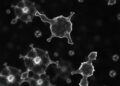
Credit: (Picture: UZH)
Researchers at the University of Zurich have shown for the first time that hematopoietic stem cells detect infectious agents themselves and begin to divide — that is, without signals from growth factors. This direct production of defensive cells damages hematopoiesis in the long term, however, which could lead to malignant hematopoietic stem cell diseases at advanced age.
If severe infections result, the body must form more white blood cells to fight off infectious agents. Hematopoietic stem cells in the bone marrow are responsible for their production. These cells, which renew themselves throughout a person's lifetime, form all cells of the hematopoietic system. The group led up by Markus Manz, professor of hematology at the University of Zurich and director of the Department of Hematology of the University Hospital Zurich, is studying how complex hematopoiesis manages to produce a sufficient number of the necessary cells. Or in other words, how signals of the "infection" are translated into signals of "hematopoiesis."
Hematopoietic stem cells directly detect infections
In studies conducted in the past few years, Manz and and his team were able to demonstrate how the cells of the vascular walls participate in the defense against infections: They produce growth factors (cytokines), thereby boosting hematopoieis. The researchers have now shown that the hematopoietic stem cells are themselves also able to detect and react to bacterial infections. "In living organisms, we were able to prove for the first time that hematopoietic stem cells have receptors that detect infections," Manz says. "As a result, latent cells are activated and start to divide and therefore produce more defense cells." This is astonishing as scientists previously assumed that hematopoietic stem cells are located in a space in the bone marrow completely protected from environmental signals, the so-called hematopoietic stem cell niche.
Reaction to infectious agents damages hematopoietic stem cells
A receptor called TLR4 (toll-like receptor 4) is responsible for the detection of some infections. These antennae on the surface of the cell detect structures that are found only in infectious agents, such as lipopolysaccharides (LPS). If scientists administered LPS to mice, "latent" hematopoietics stem cells divided and began to produce immune cells beforehand. This detection system could have proven advantageous in evolution to provide the organism with a survival benefit, Manz assumes. As his team now shows, this process has a drawback: In the long term, damage in the hematopoietic stem cells occurs due to the reaction to infections that impair their regenerative ability and make them less fit for further hematopoieis.
Preventing age-related damage to the hematopoietic stem cells
According to the scientists, these discoveries in the mouse model could explain why chronic inflammations and/or infections enhance the development of malignant hematopoietic stem cell disease in advanced age. In the experiments with mice, they were able to slow down this harmful process using medication. Moreover, all that without impairing the indirect path of stem cell activation. "If the body can survive with a strong reaction, it accepts the risk of later damage," Manz says. "Our goal is to prevent such damage through preventive interventions." Whether this indeed is possible must be demonstrated in further research.
###
Literature:
Hitoshi Takizawa, Kristin Fritsch, Larisa V. Kovtonyuk, Yasuyuki Saito, Chakradhar Yakkala, Kurt Jacobs, Akshay K. Ahuja, Massimo Lopes, Annika Hausmann, Wolf?Dietrich Hardt, Álvaro Gomariz, César Nombela-Arrieta, and Markus G. Manz. Pathogeninduced TLR4TRIF innate immune signaling in hematopoietic stem cells promotes proliferation but reduces competitive fitness. Cell Stem Cell. 20 July 2017. DOI: 10.1016/j.stem.2017.06.013
Contact:
Prof. Markus G. Manz, MD
University Hospital Zurich
Department of Hematology
Phone +41 44 255 38 99
E-mail: [email protected]
Media Relations
University of Zurich
Phone +41 44 634 44 67
Media Contact
Markus G. Manz, M.D.
[email protected]
41-442-553-899
@uzh_news
http://www.uzh.ch