• HOME
  • NEWS
  • EXPLORE
    • CAREER
      • Companies
      • Jobs
    • EVENTS
    • iGEM
      • News
      • Team
    • PHOTOS
    • VIDEO
    • WIKI
  • BLOG
  • COMMUNITY
    • FACEBOOK
    • INSTAGRAM
    • TWITTER
Tuesday, August 4, 2026
BIOENGINEER.ORG
No Result
View All Result
  • Login
  • HOME
  • NEWS
  • EXPLORE
    • CAREER
      • Companies
      • Jobs
        • Lecturer
        • PhD Studentship
        • Postdoc
        • Research Assistant
    • EVENTS
    • iGEM
      • News
      • Team
    • PHOTOS
    • VIDEO
    • WIKI
  • BLOG
  • COMMUNITY
    • FACEBOOK
    • INSTAGRAM
    • TWITTER
  • HOME
  • NEWS
  • EXPLORE
    • CAREER
      • Companies
      • Jobs
        • Lecturer
        • PhD Studentship
        • Postdoc
        • Research Assistant
    • EVENTS
    • iGEM
      • News
      • Team
    • PHOTOS
    • VIDEO
    • WIKI
  • BLOG
  • COMMUNITY
    • FACEBOOK
    • INSTAGRAM
    • TWITTER
No Result
View All Result
Bioengineer.org
No Result
View All Result
Home NEWS Science News Biology

Inbred animals face greater threat from changes to environment

Bioengineer by Bioengineer
June 27, 2018
in Biology
Reading Time: 2 mins read
0
Share on FacebookShare on TwitterShare on LinkedinShare on RedditShare on Telegram
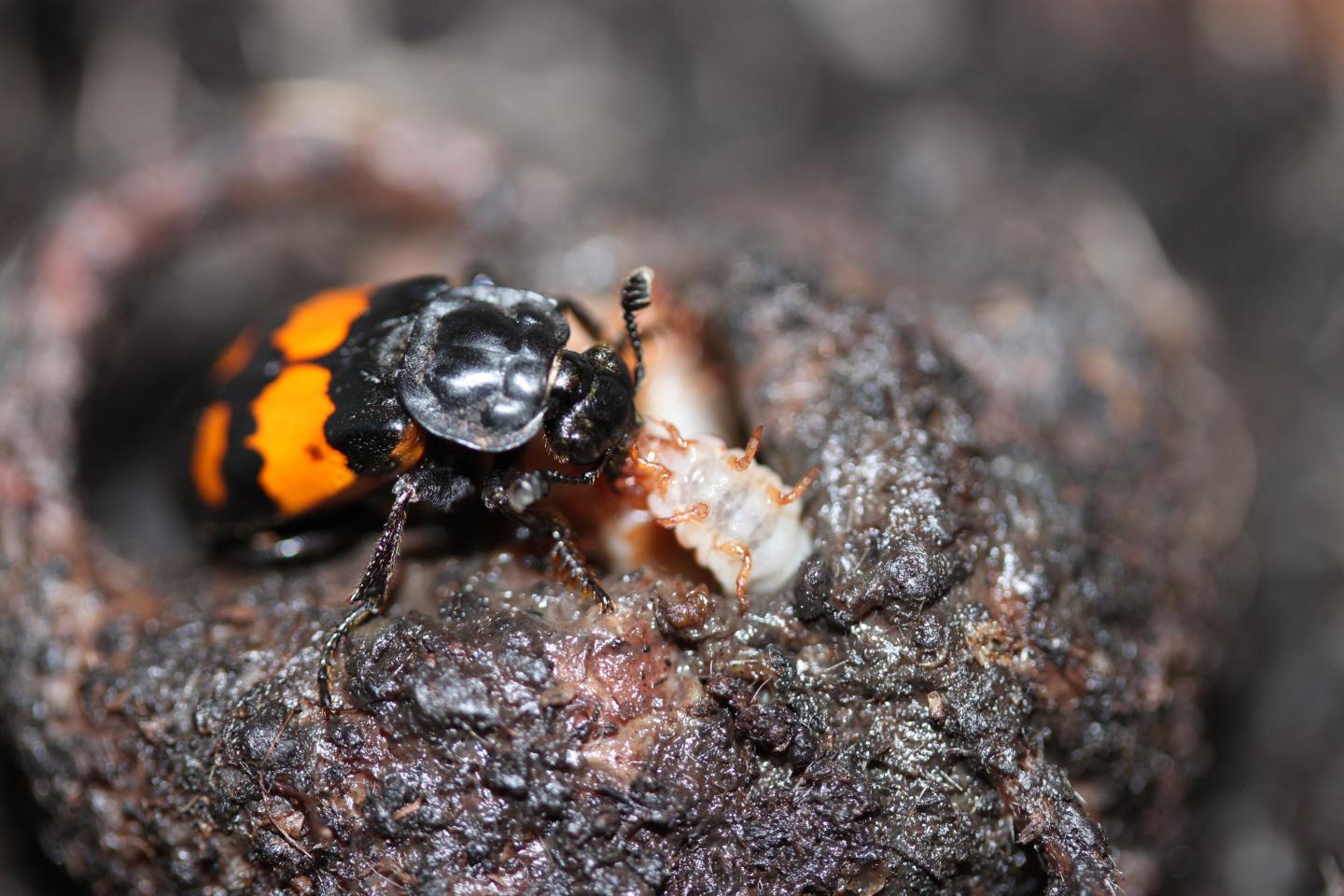
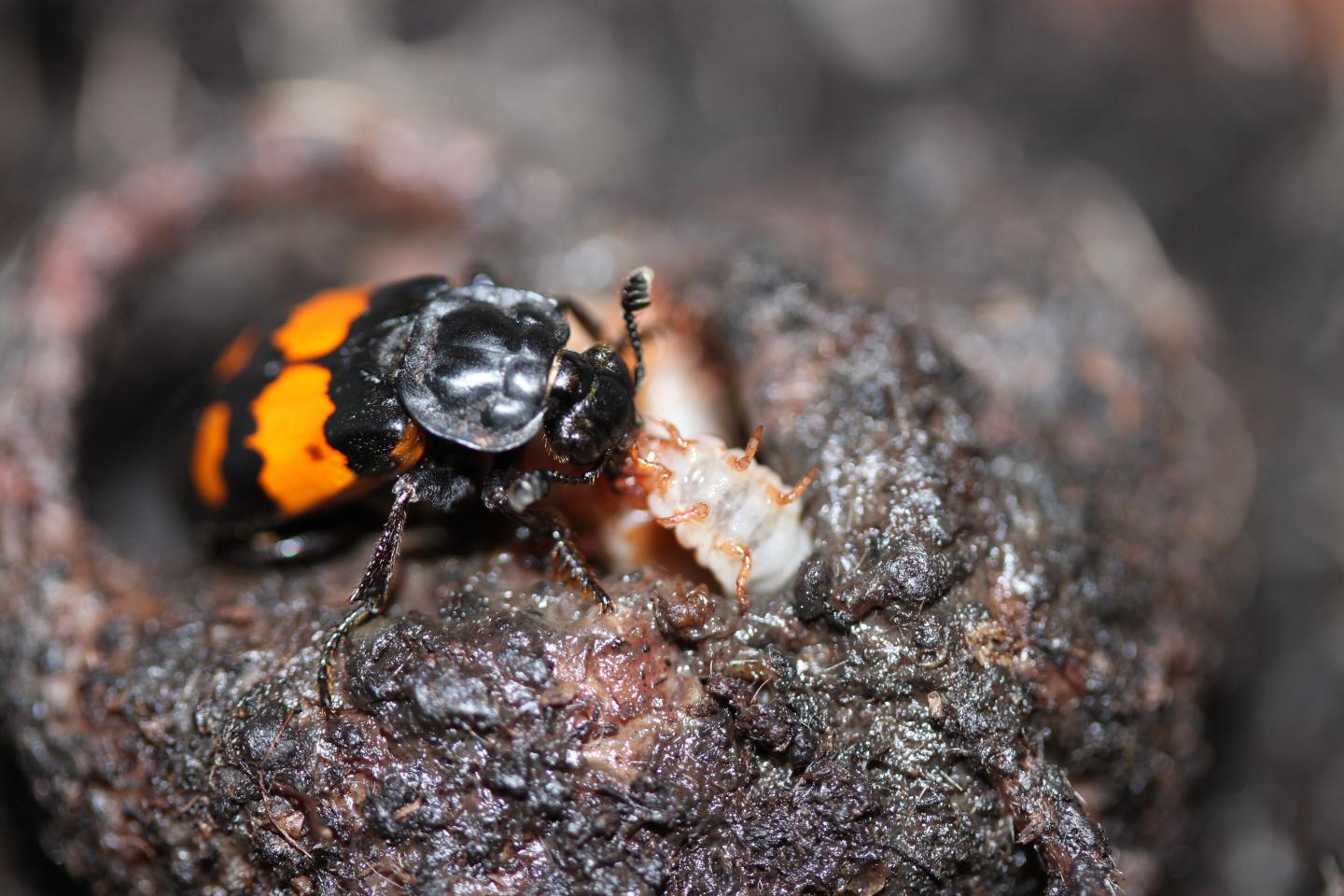
IMAGE

Credit: Per T Smiseth

Animals that are inbred make mistakes in response to changes in their surroundings, which threatens their survival, research has found.

A study found that inbred beetles were more likely to make bad decisions amid developing circumstances – at a cost to themselves and their offspring.

The findings could inform conservation programmes and aid the understanding of wild animals, especially where shrinking populations raises the likelihood of inbreeding.

Researchers from the University of Edinburgh observed hundreds of female burying beetles as they raised their offspring.

Midway through the experiment, researchers swapped the resource available to each female – a dead mouse on which they feed their young – for another of a different size.

Inbred females whose mouse was swapped for a smaller one failed to adjust their parenting strategy in response, and raised too many young with not enough food.

As a result, their young were smaller and the mother lost weight, meaning all were less likely to breed in future.

Parents that were not inbred responded to a loss of resources by culling some of their young, which would be their natural response in the wild.

The inbred animals' lack of response to changes may be down to impaired thinking ability or lack of sensitivity to their surroundings, suggest researchers.

Previous studies had shown that the effects of being inbred – which can impact on growth, survival, or chances of reproduction – can be worsened by environmental conditions. The latest study shows that bad decision-making by individuals plays a part in this effect.

The study, published in Proceedings of the Royal Society B, was supported by the Natural Environment Research Council.

Jon Richardson, of the University of Edinburgh's School of Biological Sciences, who led the study, said: "The impact of environmental conditions can amplify the effects of being inbred, such as susceptibility to disease or competing for resources. We now know that poor decision-making plays a part in the burden facing inbred animals."

###

Media Contact

Catriona Kelly
[email protected]
44-779-135-5940
@edinunimedia

http://www.ed.ac.uk

Original Source

https://www.ed.ac.uk/news/2018/inbred-animals-at-risk-from-environmental-change

Share12Tweet8Share2ShareShareShare2

Related Posts

Plant ULTRAPETALA1 Balances Trithorax and Polycomb Signals to Fine-Tune Reproductive Transitions

Plant ULTRAPETALA1 Balances Trithorax and Polycomb Signals to Fine-Tune Reproductive Transitions

August 4, 2026
Human herpesvirus infects lemurs, threatening wild populations

Human herpesvirus infects lemurs, threatening wild populations

August 4, 2026

Could Leaf Surface Insights Reveal New Ways to Prevent Crop Disease?

August 4, 2026

Early-Life BMI Trajectories Linked to Childbirth and Infertility Among Women

August 4, 2026
Please login to join discussion

POPULAR NEWS

  • State contract expands UNC team’s mental health training efforts

    29 shares
    Share 12 Tweet 7
  • Mizzou Research Helps Pork Producers Protect Pigs From Extreme Heat

    29 shares
    Share 12 Tweet 7
  • Plant ULTRAPETALA1 Balances Trithorax and Polycomb Signals to Fine-Tune Reproductive Transitions

    29 shares
    Share 12 Tweet 7
  • Vibrio-produced tryptophan activates gut immune signaling through ultraspiracle phosphorylation

    29 shares
    Share 12 Tweet 7

About

We bring you the latest biotechnology news from best research centers and universities around the world. Check our website.

Follow us

Recent News

State contract expands UNC team’s mental health training efforts

Mizzou Research Helps Pork Producers Protect Pigs From Extreme Heat

Plant ULTRAPETALA1 Balances Trithorax and Polycomb Signals to Fine-Tune Reproductive Transitions

Subscribe to Blog via Email

Enter your email address to subscribe to this blog and receive notifications of new posts by email.

Join 86 other subscribers
  • Contact Us

Bioengineer.org © Copyright 2023 All Rights Reserved.

Welcome Back!

Login to your account below

Forgotten Password?

Retrieve your password

Please enter your username or email address to reset your password.

Log In
No Result
View All Result
  • Homepages
    • Home Page 1
    • Home Page 2
  • News
  • National
  • Business
  • Health
  • Lifestyle
  • Science

Bioengineer.org © Copyright 2023 All Rights Reserved.