Artificial olfaction has long lagged behind its biological counterpart, largely because conventional gas sensors must wait for adsorption equilibrium to be established before they can deliver a reliable reading. Researchers have now reported an ultrafast artificial olfaction system that sidesteps this bottleneck by performing computation directly inside the sensor itself. According to the study, published in Nature Sensors, the architecture enables gas concentration readout within milliseconds, a speed regime that approaches the millisecond timescales on which biological olfaction operates.
The key innovation lies in an in-sensor feature extraction architecture that performs analogue differential computation within the sensing element. Rather than waiting for the resistive sensing film to reach a stable equilibrium signal, the system extracts a kinetic descriptor from the transient adsorption response according to a pseudo-first-order kinetic model. By relying on adsorption kinetics instead of equilibrium signals, the researchers report that the system determines gas concentration ten to 1,000 times faster than conventional resistive sensors.
The architecture was designed and verified using a hydrogen-sensing unit, in which the in-sensor differential computation extracted a kinetic descriptor from the transient adsorption response. The researchers further present the architecture as universal across different sensing materials, indicating that the approach is not limited to a single chemistry.
Beyond speed, the extracted kinetic features proved readily compatible with machine learning models. In mixed-gas detection experiments, the researchers showed that these features enable reliable analysis of complex odour mixtures.
To demonstrate practical utility, the researchers coupled the sensor system with an unmanned aerial vehicle, creating an ultrafast olfaction platform for real-time gas leak detection and autonomous monitoring.
The researchers state that these results establish a route towards biomimetic, high-speed artificial olfaction for dynamic sensing environments.
Subject of Research: An ultrafast artificial olfaction system using in-sensor feature extraction for millisecond-scale gas detection.
Article Title: Millisecond olfaction system with in-sensor feature extraction
Article References: Yuan, Z., Yang, R., Huang, T., Zhang, X., Zeng, W., Duan, Z., Wu, Y., Zhou, J., Jiang, Y., Fan, Z., & Tai, H. (2026). Millisecond olfaction system with in-sensor feature extraction. Nature Sensors, 1(11), 1021-1032. https://doi.org/10.1038/s44460-026-00148-7
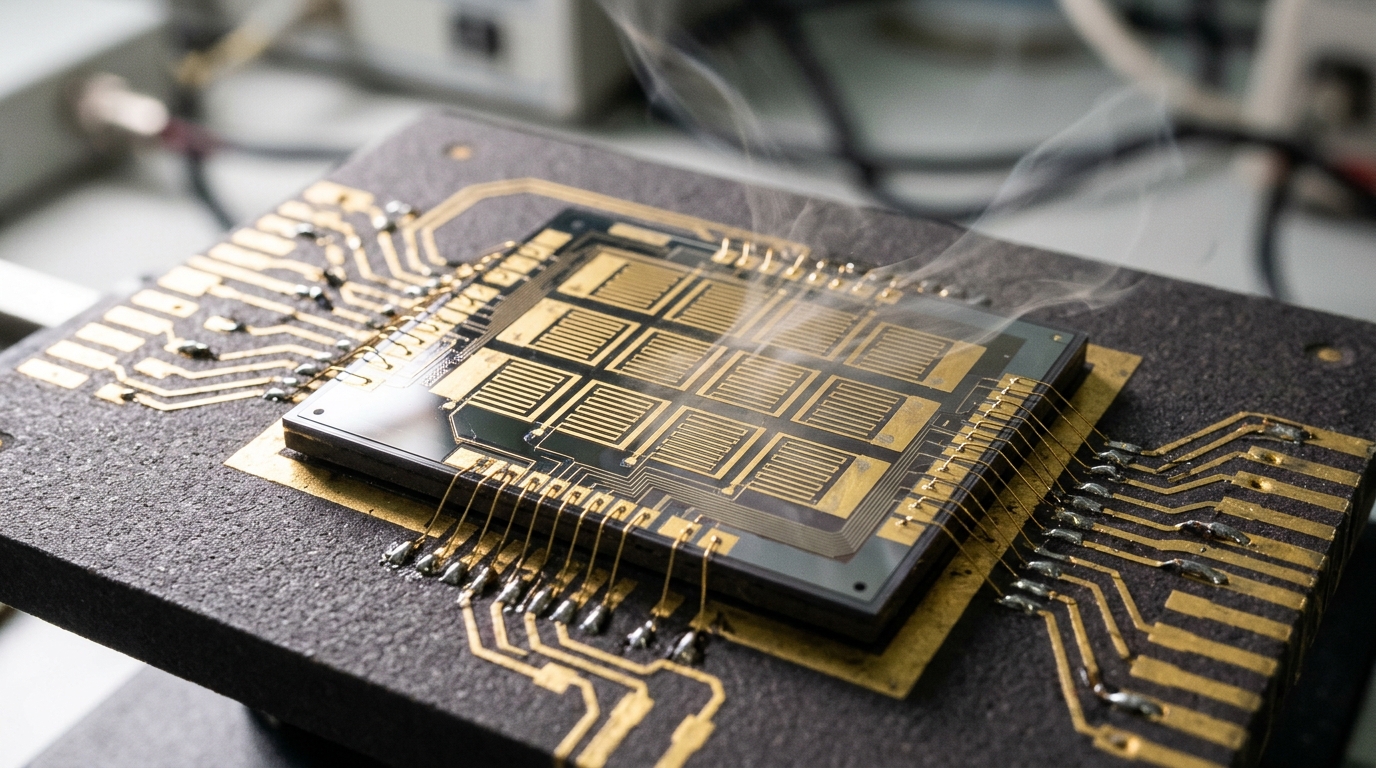
Image Credits: AI Generated
DOI: 10.1038/s44460-026-00148-7
Keywords: artificial olfaction, in-sensor computing, gas sensors, adsorption kinetics, machine learning, unmanned aerial vehicle, resistive sensors, hydrogen detection, pseudo-first-order kinetics, gas leak detection, Nature Sensors, biomimetic sensing
News Source: Denise Maddox. (November 5, 2026). In-sensor computing lets artificial nose sniff out gases in milliseconds. Scienmag.