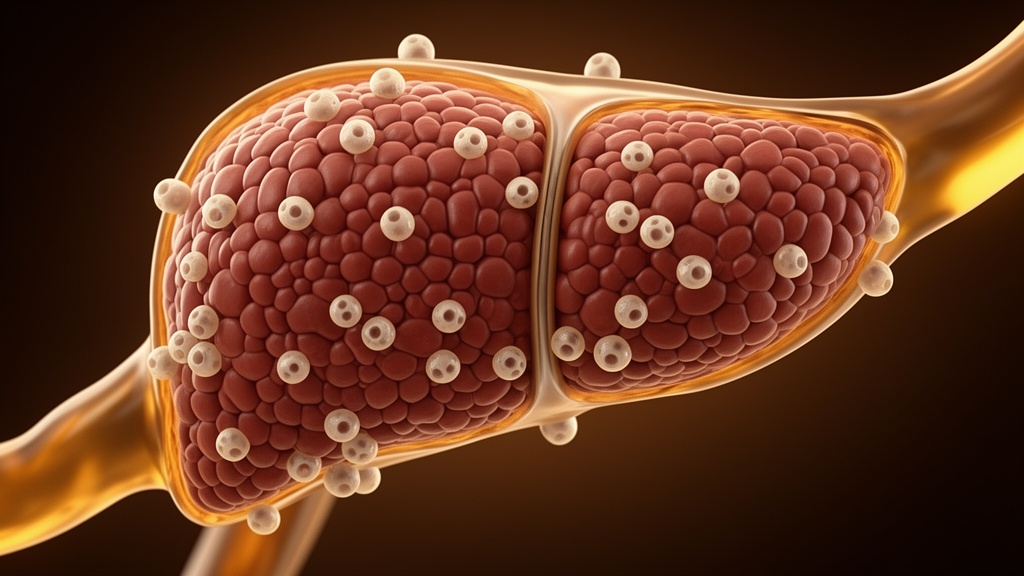
Mucosal-associated invariant T (MAIT) cells, an immune cell population that is enriched in the liver, appear to protect against alcohol-associated liver injury by restraining neutrophil-driven inflammation, according to a study published in Cell Death Discovery. The work, led by Hejiao Zhang and Derun Kong, combined blood samples from patients with alcohol-associated liver disease (ALD) with a series of experiments in ethanol-fed mice to map a previously unclear regulatory pathway.
The researchers first examined MAIT cell frequency and function in blood from ALD patients and in the liver, spleen and peripheral blood of mice fed ethanol. In both settings, MAIT cells were reduced in number and showed an activated but functionally impaired phenotype. To test whether this loss mattered, the team used wild-type mice and MR1-deficient (MR1−/−) mice, which lack MAIT cells, exposed to chronic-binge and acute ethanol protocols.
To identify the mechanism, the authors performed RNA sequencing and flow cytometric analyses of the liver immune environment. MAIT cell deficiency was associated with increased accumulation of monocyte-derived macrophages (MoMFs) and enhanced CD86 expression on these cells, while resident Kupffer cells showed no significant phenotypic changes. This pointed to a selective relationship: MAIT cells preferentially regulated MoMFs rather than hepatocytes, and through this interaction they restrained production of the chemokine CXCL1, a signal that recruits neutrophils into the liver. The net effect was reduced hepatic neutrophil recruitment in the presence of functional MAIT cells.
The pathway ran through the signalling molecule IL-10. MAIT-derived IL-10 was required for the regulatory effect on macrophages, and two interventions confirmed the axis in ethanol-fed MR1−/− mice: administration of recombinant IL-10 and treatment with a CXCL1-neutralizing antibody each attenuated liver injury. The authors conclude that the data define a MAIT–IL-10–macrophage–CXCL1 axis that restrains neutrophil-driven inflammation in ALD and represents a regulatory checkpoint in disease progression. The study was published as an open-access article on 27 October 2026, and the version shared at publication is an accepted manuscript that remains subject to further editorial edits. Because the mechanistic findings come from mouse models and the patient data consist of blood measurements rather than interventional trials, the results describe a regulatory circuit identified in preclinical and observational settings rather than a tested therapy for people with alcohol-associated liver disease.
Subject of Research: The role of MAIT cells in regulating macrophage-driven neutrophil inflammation in alcohol-associated liver disease
Article Title: MAIT cells protect against alcohol-associated liver injury via an IL-10–macrophage–CXCL1 axis
Article References: Zhang, H., Shen, H., Hu, Q., Li, C., Zhang, X., Zhang, Y., Wu, S., Xie, L., Shu, H., Yang, L., Tian, S., Wang, C., Wang, H., Xu, L., & Kong, D. (2026). MAIT cells protect against alcohol-associated liver injury via an IL-10–macrophage–CXCL1 axis. Cell Death Discovery. https://doi.org/10.1038/s41420-026-03428-w
Image Credits: AI Generated
DOI: 10.1038/s41420-026-03428-w
Keywords: MAIT cells, alcohol-associated liver disease, IL-10, CXCL1, monocyte-derived macrophages, neutrophils, Kupffer cells, MR1-deficient mice, 5-OP-RU, liver inflammation, steatosis, Cell Death Discovery
News Source: Ophelia Keating. (October 27, 2026). Immune cells in the liver shield against alcohol-related damage, mouse study finds. Scienmag.