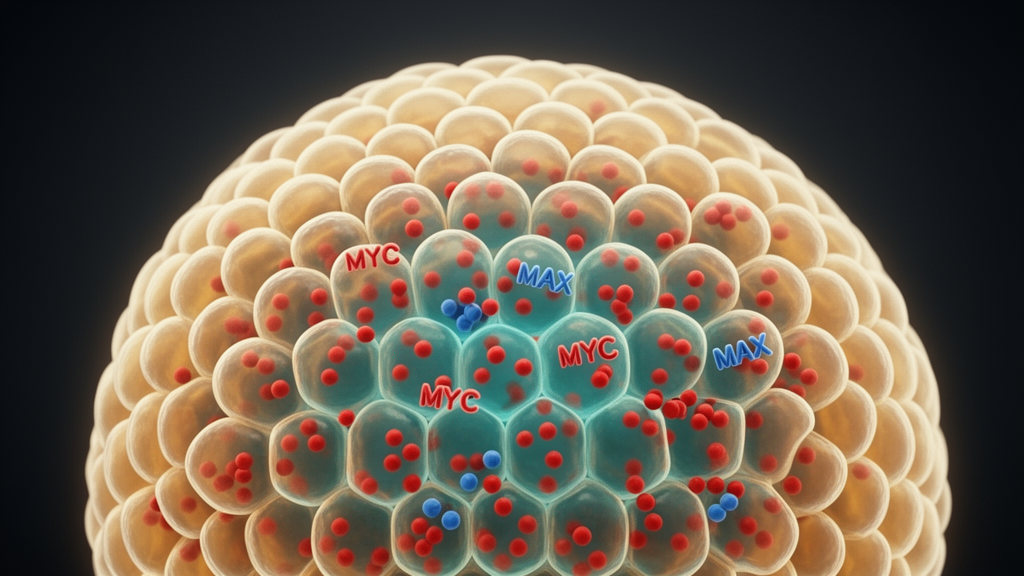
When the balance between two closely allied transcription factors tips too far in one direction, the identity of a developing cell can change entirely. That is the central finding of a new study published in Frontiers in Cell Developmental Biology, in which researchers at the University of Bologna and their collaborators used the fruit fly Drosophila melanogaster to show that the relative abundance of the fly MYC ortholog Myc and its binding partner Max acts as a developmental switch. When the team pushed the Myc/Max ratio high enough in undifferentiated eye progenitors, some of those cells abandoned their eye fate altogether and differentiated into wing tissue, a phenomenon known as transdetermination. The transformation was traced to a rewiring of HOX genes, the master regulators of body identity, suggesting a mechanism that may also underpin the cellular plasticity seen in MYC-driven human cancers.
MYC proteins, which in vertebrates comprise MYC, MYCN and MYCL, are transcription factors that control cell growth, proliferation, metabolism, apoptosis and differentiation by regulating a broad array of target genes. In the canonical model, MYC must pair with MAX to form the transcriptionally active complex, making MYC activity generally MAX-dependent. MYC family members are frequently overexpressed in human cancers through chromosomal translocations, genomic amplification or promoter mutations; in childhood neuroblastoma, for example, MYCN can be amplified to hundreds of copies. Yet MAX itself is not always intact in tumors. Large deletions or loss-of-function mutations in the MAX gene have been identified in a subset of cancers, and the most aggressive neuroblastomas are those in which MYCN is overexpressed while MAX levels fall below normal. How this altered stoichiometry changes cell biology has remained incompletely understood, and recent work showing that MYCN can recruit the nuclear exosome to its target genes in a MAX-independent fashion has intensified interest in functions that lie outside the classical dimer.
To dissect these mechanisms in a living organism, the researchers turned to the Drosophila eye, which carries single orthologs of both genes, called Myc and Max, and offers sophisticated genetic tools for manipulating their expression. The fly eye develops from an imaginal disc, a primordium that forms in the embryo and proliferates during larval life. At the wandering third larval stage, a wave of differentiation called the morphogenetic furrow sweeps across the disc from posterior to anterior, driving progenitor cells to become photoreceptors. These photoreceptors assemble into highly regular units called ommatidia, which together form the adult compound eye. Using the eyeless-Gal4 driver to activate transgenes specifically in undifferentiated eye progenitors, the team could raise or lower Myc and Max levels at will and observe the consequences for both the developing disc and the adult eye.
Overexpressing fly Myc in eye progenitors produced a roughly twofold increase in Myc transcripts while leaving Max transcript levels unchanged. Under these conditions, 75 percent of the animals showed morphological eye defects, which fell into two classes of increasing severity: mild misalignment of the ommatidia, often confined to the posterior part of the eye, and a striking cone-shaped eye. Increasing the dose of the transgenes or the incubation temperature, which amplifies Gal4-driven expression, worsened the defects in a dose-dependent manner. Notably, overexpression of human MYCN produced similar eye phenotypes, and the defects caused by either fly Myc or human MYCN could be suppressed by introducing a Myc loss-of-function allele, indicating functional conservation between the fly and human proteins. Immunolabeling of larval eye discs revealed that the discs were smaller and that the number of cells expressing Elav, a marker of differentiating photoreceptors, was reduced, in some cases leaving only a few differentiating cells in the disc.
Max told a different story. When the researchers downregulated Max using an RNAi construct in the same progenitors, without affecting Myc transcripts, the result was a growth defect rather than a differentiation defect. Adult eyes were reduced in size, ranging from mild loss of ommatidia to significantly shrunken eyes, and in the strongest combination of two copies each of the driver and the RNAi construct at elevated temperature, the animals died at the end of the pupal stage with small or absent eyes and a reduced head capsule. In larval discs, the proliferative marker phosphorylated Histone H3 was weaker throughout the tissue, yet the morphogenetic furrow progressed normally and Elav-positive photoreceptors appeared on schedule. Introducing an extra copy of the Max gene rescued the eye phenotype. Together, these results indicate that Max promotes tissue growth in the developing eye but is dispensable for progenitor differentiation, whereas Myc overexpression impairs differentiation in a way that does not strictly depend on Max.
The decisive experiments came from combining the two manipulations. When the team simultaneously overexpressed Myc and downregulated Max, thereby raising the intracellular Myc/Max ratio, the phenotypes escalated dramatically. In flies carrying two copies each of the driver, the Myc transgene and the Max RNAi construct, 82 percent showed eye defects. In 55 percent of cases, ventral ommatidia were replaced by ectopic tissue decorated with bristles, and in 27 percent, a wing-like structure emerged within the eye territory, ranging from a wing bud to a clearly recognizable unfolded wing bearing the sensory bristles characteristic of the anterior wing margin. Crucially, neither manipulation alone produced ectopic wing structures. The team then confirmed that the ratio, not the absolute levels, was what mattered: lowering Max in heterozygous Max mutants produced mild defects in 51 percent of flies, adding a Myc transgene to that background triggered wing-like eyes, and adding an extra copy of Max rescued the phenotype. Restoring Max levels also rescued the differentiation defects caused by Myc overexpression alone.
The molecular explanation pointed squarely at the HOX program. The thoracic HOX gene Antennapedia is normally expressed in the wing disc, where it antagonizes ectopic eye formation, and ectopic Antp expression in the eye disc is known to drive eye-to-wing transformations. Immunolabeling revealed Antp-expressing cells in eye discs with an elevated Myc/Max ratio; in extreme cases these cells clustered together within morphologically disrupted tissue, had exited the cell cycle as judged by the absence of the mitotic marker PH3, and only rarely retained the neuronal marker Elav. Antp could also be detected upon Myc or MYCN overexpression alone or upon strong Max downregulation, but in those settings the Antp-positive cells remained scattered and proliferative, and no wing-like structures appeared. Only when the ratio was driven to an extreme did ectopic Antp expression coincide with activation of a wing fate program.
Genetic interaction experiments identified the cephalic HOX gene Deformed as a key mediator. Deformed is normally expressed in the eye disc, and its loss-of-function mutations are known to cause transformations toward thoracic structures. Silencing Deformed in eye progenitors was sufficient to drive ectopic Antp expression in proliferating cells of the eye disc and mimicked the Myc overexpression phenotypes in the adult eye in a dose-dependent fashion. When Deformed silencing was combined with Myc overexpression, the defects became more severe, and in rare cases a tissue overgrowth bulged from the eye territory, resembling a rudimentary wing-like structure. The authors propose that a Myc/Max ratio pushed to an extreme may reduce expression of cephalic HOX genes such as Deformed, which normally inhibits thoracic gene activity, thereby lifting repression on Antennapedia. However, they could not directly detect a reduction of Deformed expression in the affected discs, because the available antibody gives weak and unreliable staining and the gene is expressed in a very restricted domain, so this part of the model remains a hypothesis requiring further validation.
Transcriptomic profiling by bulk RNA sequencing of eye discs with an elevated Myc/Max ratio, performed in three independent biological replicates, identified 835 differentially expressed genes, of which 314 were upregulated and 521 downregulated. Gene ontology analysis of the downregulated genes highlighted eye development terms and included key eye regulators such as the Pax-family transcription factor Eyegone, which promotes eye disc proliferation, the transcription factor Prospero, required for R7 photoreceptor differentiation, the RNA-binding protein Elav, and the zinc finger factor Teashirt, which cooperates with HOX proteins to repress Antp in the head. Meanwhile, wing development genes were upregulated, including the wing identity factors Vestigial and Nubbin, whose ectopic expression in the discs was confirmed by immunolabeling, along with tendencies toward increased expression of the wing patterning signals Decapentaplegic and Wingless and strong upregulation of the unpaired cytokines that activate JAK/STAT regenerative signaling. The authors note that this regenerative signature raises the possibility that localized cell stress contributes to the fate reprogramming, although the bulk sequencing did not support broad activation of apoptotic or stress-response pathways, and genes expressed only in small cell populations may have escaped detection.
The study also offers a perspective on cancer. Across 33 cancer types in the TCGA pan-cancer dataset, approximately 28 percent of samples show MYC-family amplification, and MYC is associated with HOXA9 and HOXA10 upregulation in hematologic malignancies, where MYC-HOX cooperation may help maintain leukemic stem-cell identity. If the stoichiometry-dependent mechanism observed in flies is conserved in humans, elevated MYC might contribute not only to growth but also to the cell-fate reprogramming that fuels tumor heterogeneity and therapy resistance, and restoring the MYC/MAX balance could merit investigation as a differentiation-promoting strategy. Supporting a chromatin-based mechanism, the eye phenotypes caused by Myc overexpression were partially rescued by heterozygous null mutations of the fly HDAC1 homolog or of Smrter, the fly counterpart of the human NCoR/SMRT co-repressor, and RNAi downregulation of either factor confirmed the result. The authors caution that these genetic findings do not establish a direct role for Myc in Deformed regulation, that post-transcriptional control of Myc and Max protein abundance was not measured at single-cell resolution, and that the human relevance requires validation in human models. Within those limits, the work extends MYC’s role beyond growth control to the maintenance of cellular identity itself.
Subject of Research: How the MYC/MAX stoichiometric ratio controls progenitor cell fate and HOX gene expression during Drosophila eye development
Article Title: MYC/MAX balance dictates cell progenitor fate by altering the HOX program in the Drosophila eye
Article References: Monticelli, S., Milazzo, G., Zadran, S. K., Santulli, M., Balboni, N., Strocchi, S., De Giorgio, E., Mestdagh, P., Giangrande, A., Bernardoni, R., & Perini, G. (2026). MYC/MAX balance dictates cell progenitor fate by altering the HOX program in the Drosophila eye. Frontiers in Cell and Developmental Biology, 14, Article 1958701. https://doi.org/10.3389/fcell.2026.1958701
Image Credits: AI Generated
DOI: 10.3389/fcell.2026.1958701
Keywords: MYC, MAX, Drosophila, HOX genes, transdetermination, eye development, Antennapedia, Deformed, cell fate reprogramming, neuroblastoma, RNA sequencing, imaginal discs
News Source: Juliet Wilcox. (October 26, 2026). Imbalanced MYC and MAX Levels Rewire Cell Identity in the Developing Fly Eye. Scienmag.