The compound, icariin, is considered the main bioactive component of Herba Epimedii, and the new research reports that it reversed a cascade of molecular and structural changes in both Aβ25–35-treated BV2 microglial cells and APP/PS1 transgenic mice.
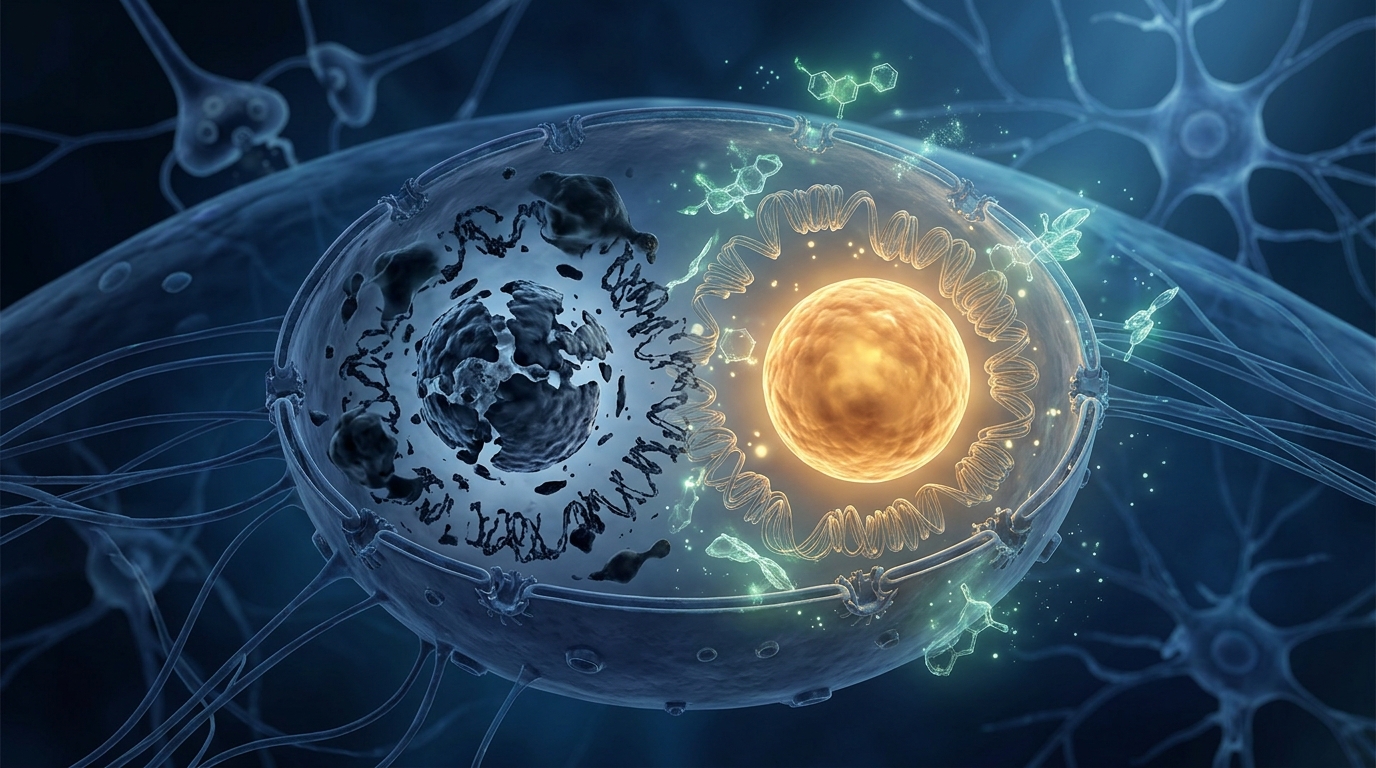
The nucleolus is the most prominent compartment inside the cell nucleus and serves as the central hub for ribosome biogenesis, encompassing ribosomal DNA transcription, rRNA processing and the assembly of ribosomal subunits. When metabolic activity rises, rRNA transcription increases and the nucleolus enlarges. But the organelle also acts as a stress sensor, responding to growth signals, tumor suppressors, viral infection, and genotoxic, metabolic and oxidative stress. The collective reaction is termed the nucleolar stress response, and it is characterized by reduced rRNA transcription, disruption of nucleolar architecture, altered rDNA chromatin and changes in the expression and distribution of nucleolar proteins. Methylation of rDNA contributes to this process by repressing rRNA gene transcription, thereby limiting ribosome biogenesis under stress.
A key downstream consequence involves the tumor suppressor protein p53. Under basal conditions, p53 is ubiquitinated by mouse double minute 2, or MDM2, and kept at low levels through proteasomal degradation. When nucleolar stress impairs ribosome biogenesis, ribosomal proteins, notably RPL5 and RPL11, are released into the nucleoplasm, where they bind and inhibit MDM2, allowing p53 to accumulate. This pathway has been implicated in several neurodegenerative diseases, including Parkinson’s disease, Huntington’s disease, amyotrophic lateral sclerosis and Alzheimer’s disease. In Alzheimer’s disease specifically, nucleolar dysfunction and associated protein synthesis defects have emerged as potential contributors to progressive neuronal atrophy, and similar changes have been reported even in patients with mild cognitive impairment, suggesting the nucleolar stress response is among the earliest neurochemical changes in the disease.
To test whether icariin could counteract this response, the researchers used two established models. In the in vitro arm, BV2 microglial cells were exposed to Aβ25–35 peptide, a fragment of amyloid-beta used to simulate Alzheimer-related toxicity in culture. In the in vivo arm, three-month-old male APP/PS1 transgenic mice, which carry human mutant amyloid precursor protein and presenilin 1 genes and typically develop significant amyloid deposition, synaptic damage and impaired learning and memory around six to seven months of age, were randomly divided into three groups of 12 mice each and given icariin intragastrically at 40 or 80 milligrams per kilogram per day for three months, while age-matched wild-type mice and vehicle-treated APP/PS1 mice received equal amounts of distilled water. Cognitive function was assessed with the Morris water maze, in which mice were trained four times daily over four days to locate a submerged platform, followed by a probe test and a contraposition exploration test.
In the probe test, vehicle-treated APP/PS1 mice crossed the former platform location significantly fewer times than wild-type mice, and icariin administration effectively upregulated the number of crossings. In the contraposition exploration test, APP/PS1 mice spent more time and swam longer distances to find the hidden platform than wild-type mice, and icariin treatment significantly reversed the swimming distance deficit, although the time to find the platform did not differ significantly between icariin-treated and vehicle-treated animals.
At the molecular level, both models displayed the hallmarks of pronounced nucleolar stress. Pre-rRNA transcription, measured by quantitative reverse transcription PCR targeting the 5′ external transcribed spacer of the rDNA gene, was significantly reduced in Aβ25–35-stimulated BV2 cells at 6, 12 and 24 hours, and was also inhibited in the hippocampi of the AD model mice compared with wild-type controls. Bisulfite sequencing of an 11-CpG-site region within the 45S rDNA promoter revealed very low methylation in normal BV2 cells, increased methylation at several CpG sites after Aβ25–35 stimulus, and significantly elevated methylation in the hippocampi of APP/PS1 mice relative to wild-type animals. Immunostaining for fibrillarin, a nucleolar marker, showed that the large, brightly stained nucleolar domain of control BV2 cells shrank dramatically under Aβ25–35 treatment, and that both the number of hippocampal cells and the proportion of fibrillarin-positive cells were significantly reduced in APP/PS1 mice.
The expression of key signaling proteins followed the same pattern. Western blotting revealed that RPL5, RPL11, MDM2 and p53 were all significantly upregulated in Aβ25–35-stimulated BV2 cells and in the hippocampi of APP/PS1 mice compared with their respective controls. The authors interpret this as evidence that nucleolar stress under the AD models promotes high-level expression of ribosomal proteins, which then act as signal molecules transmitting the stress to MDM2. Although MDM2 expression also increased under stress, the authors propose that more MDM2 was sequestered by the abundant ribosomal proteins, leaving less available to mediate ubiquitination and degradation of p53, thereby allowing p53 to accumulate.
Icariin treatment reversed essentially all of these changes. In cultured cells, pre-treatment with 10 micromolar icariin for two hours before Aβ25–35 exposure prominently attenuated the Aβ25–35-induced decrease in cell viability as measured by CCK-8 assay, and morphological observations showed reduced signs of inflammatory stimulation compared with cells exposed to the peptide alone. Icariin at 10 micromolar effectively reversed the decreased pre-rRNA trend at 12 and 24 hours, though 6-hour treatment showed no significant effect. It restored the extremely low rDNA promoter methylation state, in fact returning methylation to levels even lower than the normal situation in cultured cells, and it significantly reversed the shrunken nucleolar morphology. In the mice, high-dose icariin effectively increased hippocampal pre-rRNA levels, alleviated rDNA promoter hypermethylation, and effectively increased both the number of hippocampal cells and the proportion of fibrillarin-positive cells. Western blotting confirmed that the upregulated RPL5, RPL11, MDM2 and p53 levels were remarkably reversed after icariin administration in both models.
The study’s authors connect these molecular findings to a hypothesis about the relationship between the nucleolus and cognition, which asserts that nucleolar activity loss is an essential part of the cognitive deficits observed in Alzheimer’s disease and that nucleolar integrity and training-induced rRNA synthesis are required for memory. Under that framework, the recovery of the nucleolar stress response in the hippocampus under icariin intervention might be one reason for the improved cognitive ability of the AD mice.
Nevertheless, the authors conclude that regulating the nucleolar stress response pathway might be a therapeutic strategy for Alzheimer’s disease and that icariin could be developed as a potent and promising natural compound candidate for treatment. The datasets generated and analysed during the study are available from the corresponding author on reasonable request.
Subject of Research: Nucleolar stress response modulation by icariin in cell and mouse models of Alzheimer's disease
Article Title: Icariin alleviates nucleolar stress response in both in vivo and in vitro models of Alzheimer’s disease
Article References: Zheng, X., Ke, W., Meng, Z., Wang, P., & Huang, M. (2026). Icariin alleviates nucleolar stress response in both in vivo and in vitro models of Alzheimer’s disease. Food, Nutrition and Health, 3(1), Article 22. https://doi.org/10.1007/s44403-026-00067-y
Image Credits: AI Generated
DOI: 10.1007/s44403-026-00067-y
Keywords: icariin, nucleolar stress, Alzheimer's disease, rRNA transcription, rDNA methylation, p53, MDM2, APP/PS1 mice, BV2 microglial cells, ribosome biogenesis, Morris water maze, Herba Epimedii
News Source: Diana Fleming. (November 3, 2026). Icariin calms nucleolar stress in cell and mouse models of Alzheimer’s disease. Scienmag.