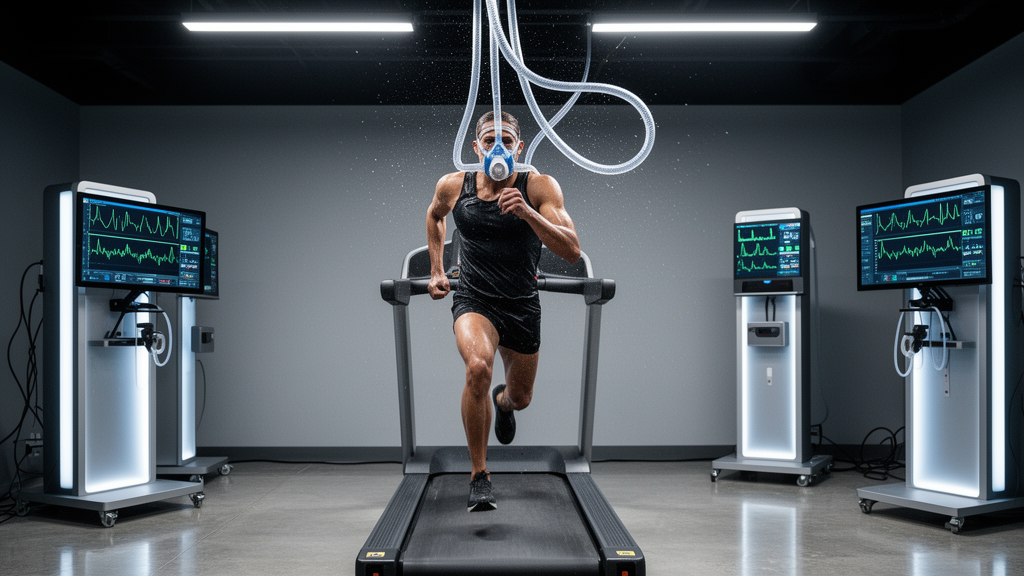
A comprehensive systematic review and meta-analysis of twenty-one randomized controlled trials indicates that repeated-sprint training conducted under hypoxic conditions generates small but meaningful improvements in both best and mean repeated-sprint performance compared with identical training conducted in normoxia. However, exploratory study-level dose-response modeling revealed that greater cumulative external hypoxic exposure does not lead to progressively larger adaptations in sprint capacity. Across multiple linear and nonlinear regression models, researchers identified neither a clear dose-response curve nor an optimal environmental altitude threshold for training prescription. These findings indicate that while performing repeated sprints in low-oxygen environments can enhance sea-level sprint performance, simply accumulating more hours or training at increasingly severe simulated altitudes does not automatically amplify physiological conditioning or mechanical sprint output.
Subsequent physiological investigations have sought to clarify the underlying biological mechanisms that might explain why intermittent sprints under oxygen restriction enhance performance. Scientific evidence suggests that repeating maximal short-duration sprints in hypoxia induces substantially greater muscular deoxygenation and subsequent reoxygenation amplitudes than normoxic training. These acute oxygen fluctuations trigger the upregulation of molecular and physiological pathways responsible for glycolysis, lactate transport, and capillary oxygen regulation. In turn, such adaptations are thought to enhance tolerance to repeated maximal-intensity efforts by improving localized muscle perfusion, oxygen delivery, and neuromuscular activation patterns. Over repeated sessions, these metabolic and neuromuscular adjustments may help athletes sustain mechanical power, preserve sprinting mechanics across successive efforts, and accelerate inter-sprint physiological recovery during intermittent high-intensity sports.
Despite the widespread adoption of hypoxic sprint conditioning across elite athletic disciplines, the relationship between external hypoxic severity, total exposure volume, and neuromuscular adaptation has remained unresolved. Exercise scientists have long hypothesized that an optimal hypoxic dose range must exist, wherein a sufficient low-oxygen stimulus triggers enhanced cellular signaling without inducing debilitating systemic fatigue. Training at excessive simulated altitudes exceeding approximately four thousand meters often causes pronounced acute performance declines, as severe reductions in peripheral capillary oxygen saturation directly compromise sprint velocity and power production. If athletes cannot maintain high mechanical output during training, their neuromuscular responsiveness and subsequent physiological adaptations can be severely blunted. Consequently, researchers frequently emphasize that higher altitudes do not necessarily produce superior training benefits. Nevertheless, prior meta-analyses had not established clear quantitative dose thresholds, leaving practitioners without objective guidelines regarding whether training duration or altitude severity dictates the overall magnitude of sea-level performance gains.
To rigorously evaluate these questions, researchers implemented a structured systematic review adhering strictly to the Preferred Reporting Items for Systematic Reviews and Meta-Analyses guidelines and prospectively registered the protocol within the PROSPERO database. An extensive literature search was conducted across eight major scientific databases, including PubMed, Web of Science, Scopus, SPORTDiscus, Cochrane Library, Embase, ProQuest, and ScienceDirect, capturing all eligible studies published through August 2026. The search strategy specifically targeted randomized controlled trials and randomized crossover studies that directly compared repeated-sprint training in hypoxia against matched normoxic controls in healthy individuals across at least two weeks of intervention. To qualify for synthesis, trials were required to enforce sprint intervals of ten seconds or less separated by incomplete rest periods of no more than sixty seconds, while reporting objective mechanical performance metrics representing either best single-sprint performance or mean repeated-sprint ability.
The screening and selection process identified twenty-one eligible trials comprising twenty newly identified studies and one trial retrieved via citation tracking. Participant training status spanned across all five tiers of the established McKay framework, ranging from recreational athletes in five studies to developing, highly trained national-level, and world-class competitors in sixteen studies. The analyzed cohorts were heavily male-dominated, with only one included investigation reporting sex-stratified performance data. Participants were predominantly young adult athletes competing in intermittent field sports such as rugby union, rugby sevens, and soccer, alongside smaller cohorts from endurance sports including cycling and cross-country skiing. Training protocols ranged between two and seven weeks in duration, typically delivering two to three weekly training sessions. Sprint modalities varied across trials, encompassing thirteen cycle ergometer protocols, six running-based sprint regimens, and two upper-body or double-poling ergometry protocols, with all twenty-one included investigations utilizing normobaric hypoxic chambers rather than hypobaric or terrestrial altitude.
For best repeated-sprint performance, evaluated across sixteen trials, hypoxic training yielded a standardized mean difference of 0.24 with a 95 percent confidence interval spanning 0.00 to 0.48, alongside low statistical heterogeneity. Mean repeated-sprint performance, synthesized across twenty studies, showed a slightly stronger pooled effect size of 0.31 with a 95 percent confidence interval from 0.09 to 0.53 and an observed heterogeneity of 13.6 percent. Complementary Bayesian meta-analyses substantiated these frequentist observations, generating posterior mean effect sizes of 0.25 for best performance and 0.32 for mean performance, corresponding to posterior probabilities of benefit of 98.4 percent and 99.9 percent, respectively. Egger regression tests and funnel plot inspections demonstrated no evidence of publication bias for either performance outcome.
The finding that repeated-sprint training in hypoxia elicited a more pronounced benefit for mean repeated-sprint performance than for single best sprint performance aligns with established physiological frameworks. Best sprint performance reflects an athlete’s maximal neuromuscular capacity and single-effort peak power output, whereas mean performance reflects the systemic capacity to sustain mechanical power and resist fatigue across repeated high-intensity efforts. The maintenance of sprint speed across multiple repetitions depends heavily upon efficient inter-sprint recovery kinetics, including rapid phosphocreatine resynthesis, aerobic energy replenishment, fast muscle reoxygenation, and sustained neuromuscular recruitment. Because hypoxic conditioning specifically stimulates metabolic transport mechanisms, tissue perfusion, and muscle oxygenation dynamics, its physiological benefits appear primarily directed toward accelerating recovery between sprints rather than elevating absolute anaerobic peak velocity. Consequently, athletes undergoing hypoxic conditioning demonstrate superior fatigue resistance and work retention across extended sprint series without necessarily displaying dramatic increases in single-sprint speed.
To evaluate whether performance improvements scaled with training volume or altitude severity, the researchers performed study-level random-effects meta-regressions using an objective training-structured hypoxic dose metric. Calculated in kilometer-hours by multiplying cumulative sprinting duration by simulated altitude, this index allowed direct comparison across varied sprint repetition counts, sets, and intervention lengths. When comparing intercept-only, linear, and quadratic regression models using the corrected Akaike information criterion, the intercept-only model demonstrated the lowest value for both best and mean sprint outcomes, outperforming more complex models. Leave-one-out sensitivity analyses confirmed these results, as the intercept-only specification remained consistently favored across all sixteen iterations for best performance and all twenty iterations for mean performance. Furthermore, exploratory Bayesian meta-regressions revealed posterior probabilities of only 0.10 and 0.35 for the existence of an inverted-U relationship, confirming the absence of any stable, study-level quadratic dose peak.
The lack of a discernible dose-response relationship highlights the physiological reality that external hypoxic exposure alone does not determine the effective training stimulus. During maximal sprints conducted under oxygen restriction, muscle oxygen availability drops rapidly, triggering cellular signaling pathways. However, increasing hypoxic severity also exacerbates systemic arterial desaturation, which progressively impairs neuromuscular drive and decreases the total mechanical power an athlete can sustain across repeated repetitions. Acute physiological studies illustrate that while initial sprint power may be preserved under severe hypoxia, subsequent sprint efforts suffer marked deteriorations in force application and mechanics. When severe hypoxia forces a substantial reduction in training speed and power output, the net neuromuscular stimulus is degraded. Maintaining high-quality mechanical work during training sessions appears to be at least as critical as the environmental oxygen deficit itself, meaning that arbitrarily escalating hypoxic exposure can undermine training quality rather than enhance physical conditioning.
Methodological assessments indicated moderate overall evidence certainty for best sprint performance due to confidence interval imprecision, and low certainty for mean performance driven by risk of bias concerns and indirectness. In addition, the meta-regression analyses were constrained by the clustering of published trials around moderate simulated altitudes between 3000 and 3500 meters, limiting observations across wider altitude spectra. In practical athletic settings, moderate simulated altitudes between 2000 and 3000 meters represent a defensible starting point for repeated-sprint training, provided that mechanical sprint quality and power outputs are strictly preserved. The authors concluded that future research must move beyond crude external altitude-duration metrics by continuously monitoring peripheral capillary oxygen saturation and mechanical training output in real time. Integrating internal physiological strain with completed mechanical work will allow sports scientists to identify true individualized dose thresholds and optimize repeated-sprint prescriptions under hypoxic conditions.
Subject of Research: Repeated-sprint training in hypoxia and repeated-sprint performance adaptations
Article Title: Repeated-Sprint Training in Hypoxia: A Systematic Review and Meta-Analysis with Exploratory Dose–Response Modeling
Article References: Gou, P., Liu, S., Xu, K., Xing, T., Liu, R., Tang, D., Faiss, R., Brocherie, F., Millet, G. P., & Girard, O. (2026). Repeated-Sprint Training in Hypoxia: A Systematic Review and Meta-Analysis with Exploratory Dose–Response Modeling. Sports Medicine – Open, 12(1), Article 188. https://doi.org/10.1186/s40798-026-01156-0
Image Credits: AI Generated
DOI: 10.1186/s40798-026-01156-0
Keywords: Repeated-sprint training, Hypoxia, Normoxia, Meta-analysis, Systematic review, Dose-response modeling, Repeated-sprint ability, Simulated altitude, Peripheral oxygen saturation, Mechanical power, Bayesian analysis, Random-effects model, Exercise physiology, Athletic performance, Intermittent sprints, Normobaric hypoxia
News Source: Ophelia Keating. (November 26, 2026). Hypoxic Sprint Training Yields Small Performance Gains Without Optimal Altitude Dose. Scienmag.