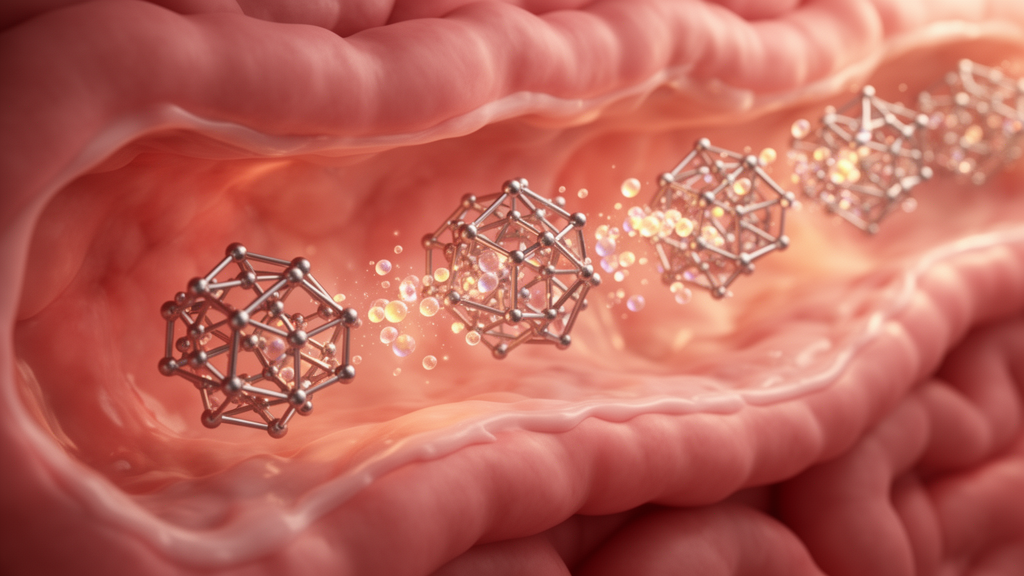
Molecular hydrogen has spent the past decade oscillating between laboratory promise and wellness-fad caricature. Hundreds of preclinical studies have reported that this smallest of gases can act as a selective antioxidant, quenching the most destructive reactive oxygen species while leaving beneficial signaling molecules untouched. Yet anyone who has tried to translate those findings into a practical therapy has run into the same wall: hydrogen barely dissolves in water, escapes from any container you put it in, and vanishes from the body long before it can do sustained good. A study published in Nature Communications now offers an unusually elegant way around that wall, and in doing so may have repositioned hydrogen from a dubious health drink into a serious candidate for treating inflammatory disease of the gut and liver.
The research, led by Junna Lu, Xiaochun Xie, and Chao Yang with corresponding authors He Shen, Fangman Chen, and Kam W. Leong, spans institutions in China and the United States, including the Institute of Biomedical Engineering of the Chinese Academy of Medical Sciences and Peking Union Medical College, South China University of Technology, and Columbia University. The team set out to solve a delivery problem that has dogged every hydrogen formulation to date. Hydrogen-rich water, the most common vehicle used in both experiments and consumer products, holds only a few parts per million of dissolved gas, and that gas begins diffusing out the moment the bottle is opened. Pills and capsules that generate hydrogen through chemical reactions tend to release it in an uncontrolled burst, much of it lost in the stomach before it ever reaches the intestine where many inflammatory diseases actually reside.
The researchers’ answer is a new class of materials they call gas-releasing frameworks, or GRFs. The name is a deliberate nod to metal-organic frameworks, the porous crystalline materials famous for storing gases at densities approaching their liquid state. GRFs apply that storage logic to a therapeutic gas, but with a twist: rather than merely adsorbing hydrogen into static pores, the framework is built from components that react dynamically to release the gas on cue. According to the study, the resulting material stores twenty thousand times more hydrogen than hydrogen-rich water of comparable volume. That figure is not a minor optimization; it is the difference between a formulation that is pharmacologically irrelevant and one that can plausibly deliver a therapeutic dose in a swallowable form.
Storage alone would be a modest achievement if the gas simply escaped at the first sign of acid. One of the central design challenges in gastrointestinal drug delivery is that the stomach is a chemically hostile environment, with a pH low enough to trigger premature reactions in many responsive materials. Conventional hydrogen-releasing formulations, the authors note, suffer burst leakage in acidic gastric fluid, dumping their payload where it is least useful. The GRFs were engineered to remain stable under those acidic conditions and instead release their hydrogen cargo in the intestine, where the pH rises and where inflamed tissue provides a distinct chemical microenvironment. The result is a formulation that behaves less like a leaky balloon and more like a targeted depot, sustaining release over time and preferentially at sites of inflammation.
The chemistry behind that selectivity is worth unpacking, because it illustrates how modern drug delivery increasingly borrows from materials science rather than classical pharmacology. A framework that stores hydrogen must contain reactive hydride-like components, and many of the most effective hydrogen-generating chemistries involve boron, an element with a complicated toxicological reputation. A naive design would simply dissolve or degrade, scattering boron-containing residues through the body. The GRF design instead anticipates its own afterlife. Once the hydrogen has been released, the framework reconstitutes itself into a silicon-oxygen-boron architecture that sequesters the toxic element within a stable solid matrix. The practical consequence, demonstrated in the study, is that boron is preferentially eliminated in the feces rather than absorbed into systemic circulation, a self-limiting safety feature built directly into the material’s degradation pathway.
That kind of end-to-end thinking, from payload to byproduct, is what separates this work from much of the hydrogen literature. The authors describe the frameworks as dynamic, meaning the material’s structure changes state as it performs its function: intact and hydrogen-loaded in the stomach, actively releasing gas in the inflamed intestine, and finally converting into a benign, excretable solid. Each transition is governed by the local chemical environment, so the same pill behaves differently depending on where it finds itself in the digestive tract. It is a level of environmental responsiveness that conventional hydrogen water or effervescent tablets cannot approach, and it addresses the tunability problem that the authors identify as a core weakness of prior formulations.
To test whether the delivery advantage translated into therapeutic benefit, the team turned to three established animal models of inflammatory disease. The first was colitis induced by dextran sulfate sodium, a widely used chemical model that damages the intestinal epithelium and recapitulates key features of inflammatory bowel disease. The second was radiation-induced colitis, a model relevant to the intestinal injury that patients undergoing pelvic or abdominal radiotherapy routinely suffer. The third was non-alcoholic fatty liver disease induced by a high-fat diet, extending the therapeutic question beyond the gut to the liver, an organ intimately connected to intestinal health through the portal circulation. In all three models, the GRF formulation outperformed hydrogen-rich water in mitigating oxidative damage and inflammation.
The consistency across those models matters. Oxidative stress and inflammation are intertwined processes: damaged tissue generates reactive oxygen species, which activate inflammatory signaling pathways, which recruit immune cells that generate still more reactive species. A therapy that interrupts this cycle at its source, by selectively neutralizing the most damaging oxidants, could in principle help across a spectrum of conditions rather than a single disease. The fact that a single delivery platform showed benefit in chemically induced colitis, radiation injury, and metabolic liver disease suggests that the limiting factor for hydrogen therapy has indeed been delivery rather than biology. When the gas actually arrives at the target tissue in sufficient quantity and lingers there, the preclinical promise reported across the hydrogen literature becomes reproducible.
None of this means hydrogen therapy is ready for the clinic, and the study’s authors are appropriately measured in their claims. The work was conducted in animal models, and the translation from mice to humans is littered with therapies that shone in colitis models but failed in patients with inflammatory bowel disease. Dosing is a particular unknown: the twenty-thousand-fold storage advantage is measured against hydrogen-rich water, but establishing a safe and effective human dose of a reactive gas-releasing solid will require its own body of pharmacology. The long-term fate of the reconstituted silicon-oxygen-boron framework, while demonstrably biased toward fecal elimination, will need to be characterized across repeated dosing and in diseased tissue environments that may alter degradation kinetics. The authors report no competing interests, and the work was funded by the National Natural Science Foundation of China and the CAMS Innovation Fund for Medical Sciences.
Still, the conceptual contribution is substantial and likely to ripple outward beyond hydrogen. Gasotransmitters, a class that includes nitric oxide, carbon monoxide, and hydrogen sulfide as well as hydrogen, are increasingly recognized as genuine signaling molecules with therapeutic potential, but all of them share the delivery problem that has frustrated hydrogen: they are volatile, poorly soluble, and hard to confine. A framework platform that stores a gas at high density, shields it from premature release, targets it to inflamed tissue, and then renders its own byproducts safely excretable is a template that could in principle be adapted to other therapeutic gases. The authors frame the GRFs as a feasible, safe, and translatable strategy for gastrointestinal delivery of therapeutic gases and for the treatment of inflammatory disorders, and on the evidence presented, that framing does not overreach. For a field that has struggled to separate credible science from hydrogen-water hype, the arrival of a rigorously engineered, peer-reviewed delivery platform may finally give molecular hydrogen the pharmacological credibility it has been missing.
Subject of Research: Gas-releasing framework materials for targeted gastrointestinal delivery of therapeutic molecular hydrogen to treat inflammatory diseases
Article Title: Gastrointestinal tract delivery of hydrogen by dynamic gas-releasing frameworks
Article References: Lu, J., Xie, X., Yang, C., Zhang, Y., Zhao, X., Lu, H., Sun, M., Chen, F., Wang, Y., Shao, D., Leong, K. W., & Shen, H. (2026). Gastrointestinal tract delivery of hydrogen by dynamic gas-releasing frameworks. Nature Communications. https://doi.org/10.1038/s41467-026-78290-6
Image Credits: AI Generated
DOI: 10.1038/s41467-026-78290-6
Keywords: molecular hydrogen, gasotransmitters, drug delivery, gas-releasing frameworks, colitis, inflammatory bowel disease, non-alcoholic fatty liver disease, oxidative stress, biomaterials, boron toxicity, gastrointestinal tract, Nature Communications
News Source: Ophelia Keating. (October 15, 2026). Hydrogen-Storing Frameworks Deliver Therapeutic Gas Deep Into the Gut. Scienmag.