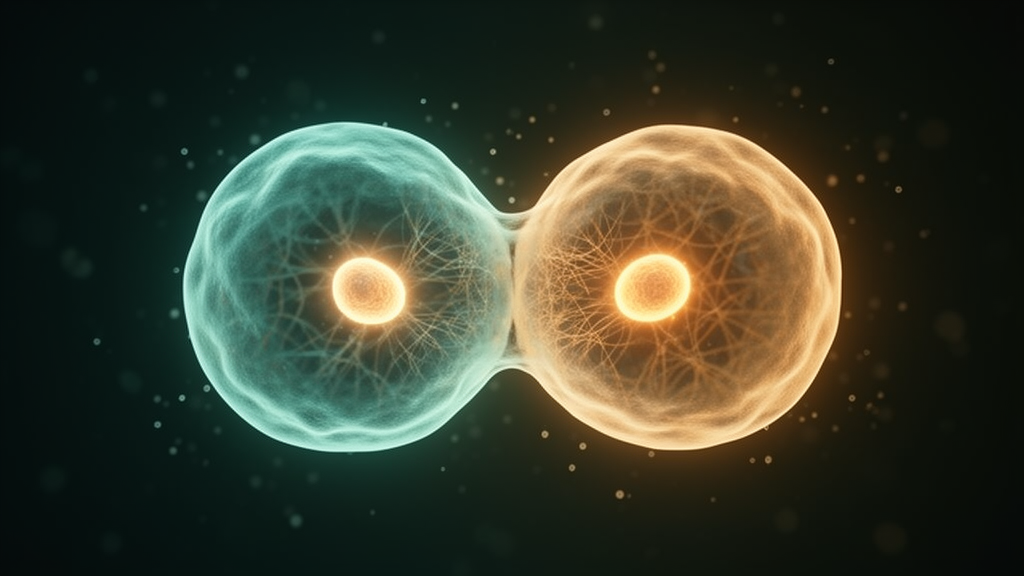
Cell fusion between mesenchymal stem/stromal cells (MSCs) and tissue-specific cells may hold a key to regenerating damaged organs, but a new systematic review concludes that the evidence in humans remains surprisingly thin. The review, published in Cellular & Molecular Biology Letters, systematically evaluated studies of fusion between human MSCs and various tissue-specific cells for the purpose of tissue regeneration, and found that only a small fraction of the published literature actually addresses the question.
Tissue regeneration is a rigorously regulated physiological process that maintains tissue homeostasis and restores the functionality of injured tissues and organs. MSCs play a key role in this process, and one of the mechanisms underpinning their regenerative capacity is cell fusion. While the fusion of various animal cells is well recognized and established, the authors note that the process of cell fusion between human MSCs and other somatic cell types is poorly understood, particularly regarding the mechanisms that induce membrane merging and the characteristics of the resulting hybrids, such as their regenerative potential.
To map the field, the researchers searched PubMed, Web of Science, and Scopus in July 2024, with the search updated in June 2026, using the terms “cell fusion” and “mesenchymal stem cells” or “mesenchymal stromal cells” filtered to humans and excluding cancer. They followed the Preferred Reporting Items for Systematic Reviews and Meta-Analyses (PRISMA) guidelines for reporting systematic reviews.
The search identified 206 publications across the three databases. After excluding studies evaluating osteoclastogenesis, myogenesis, neurogenesis, tumorigenesis, and nonhuman samples, only 47 references remained that addressed the topic of the review. The authors state that this figure indicates that knowledge of human MSC fusion for regenerative purposes remains limited.
Most of the research studies investigated fusion between adult bone marrow-derived MSCs using an in vitro coculture system, with two main goals: improving cardiac tissue regeneration and treating Duchenne muscular dystrophy. These laboratory-based coculture systems have allowed researchers to observe what happens when MSCs meet heart muscle cells or muscle cells directly, without the complexity of a living organism.
However, the review also reports a substantial number of studies providing evidence that fusion is not a mechanism of MSC plasticity and transdifferentiation. In other words, some of the apparent transformations of MSCs into other cell types reported in the literature may not actually involve fusion at all, challenging a long-standing hypothesis about how these cells contribute to repair.
Despite the mixed picture, the studies on MSC fusion reviewed here suggest the potential of the resulting hybrids for tissue regeneration, particularly in the cardiovascular, muscular, and nervous systems. At the same time, there is evidence that spontaneous MSC fusion is a rare event, which the authors highlight as a significant constraint on the mechanism’s natural contribution to repair.
The review concludes that further studies evaluating the generation and regenerative potential of hybrids that possess the best characteristics of both partner cells, such as self-renewal and tissue formation, are of utmost importance for developing advanced therapy medicinal products (ATMPs) for the treatment of genetic and degenerative disorders. The article is published as an open-access review, shared early to provide faster access to peer-reviewed, accepted research, with a version of record to follow.
For now, the field’s central message is one of cautious promise: human MSC fusion has been observed in laboratory settings and may contribute to regeneration in several organ systems, but with only 47 relevant studies in humans, the mechanisms that drive membrane merging and the true regenerative capacity of the resulting hybrids remain open questions that the next generation of studies will need to answer.
Subject of Research: Cell fusion between human mesenchymal stem/stromal cells and tissue-specific cells as a mechanism of tissue regeneration
Article Title: Fusion between mesenchymal stem/stromal cells and tissue specific cells as a mechanism of tissue regeneration
Article References: Burnik, T., Pirnat, M., Jeras, M., Kandušer, M., & Zupan, J. (2026). Fusion between mesenchymal stem/stromal cells and tissue specific cells as a mechanism of tissue regeneration. Cellular & Molecular Biology Letters. https://doi.org/10.1186/s11658-026-01018-3
Image Credits: AI Generated
DOI: 10.1186/s11658-026-01018-3
Keywords: mesenchymal stem cells, cell fusion, tissue regeneration, systematic review, regenerative medicine, cardiac repair, Duchenne muscular dystrophy, cell plasticity, advanced therapy medicinal products, stem cell hybrids, Fusion, between
News Source: Drew Townsend. (October 29, 2026). Human Stem Cell Fusion Emerges as a Rare but Promising Route to Tissue Repair. Scienmag.