• HOME
  • NEWS
  • EXPLORE
    • CAREER
      • Companies
      • Jobs
    • EVENTS
    • iGEM
      • News
      • Team
    • PHOTOS
    • VIDEO
    • WIKI
  • BLOG
  • COMMUNITY
    • FACEBOOK
    • INSTAGRAM
    • TWITTER
Wednesday, June 24, 2026
BIOENGINEER.ORG
No Result
View All Result
  • Login
  • HOME
  • NEWS
  • EXPLORE
    • CAREER
      • Companies
      • Jobs
        • Lecturer
        • PhD Studentship
        • Postdoc
        • Research Assistant
    • EVENTS
    • iGEM
      • News
      • Team
    • PHOTOS
    • VIDEO
    • WIKI
  • BLOG
  • COMMUNITY
    • FACEBOOK
    • INSTAGRAM
    • TWITTER
  • HOME
  • NEWS
  • EXPLORE
    • CAREER
      • Companies
      • Jobs
        • Lecturer
        • PhD Studentship
        • Postdoc
        • Research Assistant
    • EVENTS
    • iGEM
      • News
      • Team
    • PHOTOS
    • VIDEO
    • WIKI
  • BLOG
  • COMMUNITY
    • FACEBOOK
    • INSTAGRAM
    • TWITTER
No Result
View All Result
Bioengineer.org
No Result
View All Result
Home NEWS Science News Biology

Human land use wasn’t always at nature’s expense

Bioengineer by Bioengineer
April 20, 2021
in Biology
Reading Time: 2 mins read
0
IMAGE
Share on FacebookShare on TwitterShare on LinkedinShare on RedditShare on Telegram

IMAGE

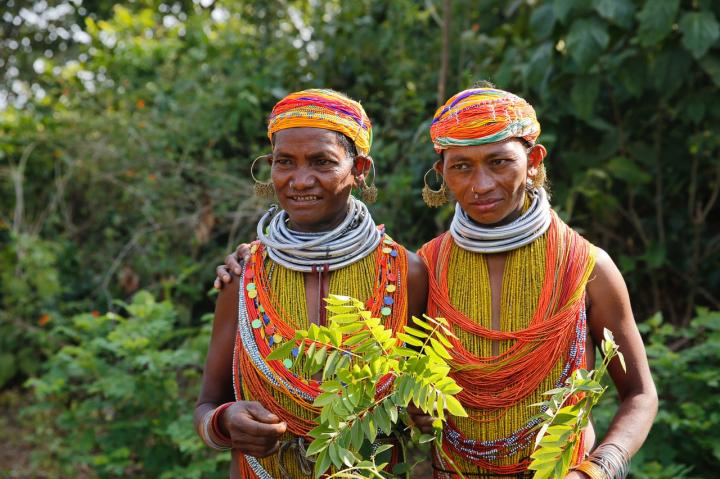
Credit: Ganta Srinivas

Nearly three-quarters of Earth’s land had been transformed by humans by 10,000BC, but new research shows it largely wasn’t at the expense of the natural world.

A study involving University of Queensland researchers combined global maps of population and land use over the past 12,000 years with current biodiversity data, demonstrating the effective environmental stewardship of Indigenous and traditional peoples.

UQ’s Professor James Watson said the findings challenged the modern assumption that human ‘development’ inevitably led to environmental destruction.

“There’s a paradigm among natural scientists, conservationists and policymakers that human transformation of terrestrial nature is mostly recent and inherently destructive,” Professor Watson said.

“But lands now characterised as ‘natural’, ‘intact’, and ‘wild’ generally exhibit long histories of human use.

“Even 12,000 years ago, most of Earth’s land had been shaped by humans, including more than 95 per cent of temperate lands and 90 per cent of tropical woodlands.

“And, importantly, current global patterns of vertebrate species richness and key biodiversity areas are strongly associated with past patterns of human land use, when compared to current, ‘natural’, recently-untouched landscapes.

“Humans have been intertwined with nature for most of humanity’s existence and this is critical for how we should plan for conservation in the future.”

The researchers argue that the modern world’s biodiversity crisis has been caused by more complicated factors than simple human expansion.

“Modern environmental destruction has resulted from the appropriation, colonisation and intensifying use of biodiverse cultural landscapes, long shaped and sustained by prior societies,” Professor Watson said.

“As such, we need to harness the knowledge of traditional and Indigenous peoples.

“We’re in a biodiversity crisis – an enormous extinction event – and lessons learned through millennia of stewardship are, and will be, invaluable.

“Areas under Indigenous management today are now some of the most biodiverse areas remaining on the planet.

“Landscapes under traditional low-intensity use are generally much more biodiverse than those governed by high-intensity agricultural and industrial economies.

“Here in Australia, our Indigenous peoples have lived in sync with incredible biodiversity for the last 50,000 years.”

Erle Ellis, Professor of Geography and Environmental Systems at the University of Maryland said the results showed Indigenous collaboration was critical.

“Effective, sustainable and equitable conservation of biodiversity needs to recognise and empower Indigenous, traditional and local peoples and foster their cultural heritage of sustainable ecosystem management,” Professor Ellis said.

###

The research has been published in the Proceedings of the National Academy of Sciences (DOI: 10.1073/pnas.2023483118).

Media Contact
James Watson
[email protected]

Related Journal Article

http://dx.doi.org/10.1073/pnas.2023483118

Tags: ArchaeologyBiologyClimate ChangeEarth ScienceEcology/EnvironmentGeographyOld World
Share13Tweet8Share2ShareShareShare2

Related Posts

Copal Tree Genetics Reveal Tropical Forest Connectivity — Biology

Copal Tree Genetics Reveal Tropical Forest Connectivity

June 24, 2026
How Intestinal Mucus Influences Klebsiella pneumoniae Colonization and Antibiotic Effectiveness — Biology

How Intestinal Mucus Influences Klebsiella pneumoniae Colonization and Antibiotic Effectiveness

June 24, 2026

From Darkness to Light: How Blind Mexican Cavefish Reveal Brain Evolution

June 24, 2026

Reevaluating the Impact of ‘Yo-Yo Dieting’: Is It Less Harmful Than Commonly Thought?

June 24, 2026
Please login to join discussion

POPULAR NEWS

  • Saying Goodbye to PGY-6: Pediatric Fellowship Realities

    103 shares
    Share 41 Tweet 26
  • Multi-Hospital Study Reveals Long Covid Burden Is Twice as High as Current Estimates

    92 shares
    Share 36 Tweet 23
  • Detection of EDCs in Breast Milk and Infant Urine Up to Six Months Highlights Early Exposure Risks

    77 shares
    Share 31 Tweet 19
  • New Drug Candidate Developed at McMaster Shows Potential for Treating Brain Cancer

    58 shares
    Share 23 Tweet 15

About

We bring you the latest biotechnology news from best research centers and universities around the world. Check our website.

Follow us

Recent News

Building Trust as the Foundation of Digital Behavioral Health

Virtual Reality Study Conducted Remotely Advances Insights into Cybersickness

Global Drop in Intimate Partner Violence Linked to Shifts in Attitudes and Behavior

Subscribe to Blog via Email

Enter your email address to subscribe to this blog and receive notifications of new posts by email.

Join 82 other subscribers
  • Contact Us

Bioengineer.org © Copyright 2023 All Rights Reserved.

Welcome Back!

Login to your account below

Forgotten Password?

Retrieve your password

Please enter your username or email address to reset your password.

Log In
No Result
View All Result
  • Homepages
    • Home Page 1
    • Home Page 2
  • News
  • National
  • Business
  • Health
  • Lifestyle
  • Science

Bioengineer.org © Copyright 2023 All Rights Reserved.