• HOME
  • NEWS
  • EXPLORE
    • CAREER
      • Companies
      • Jobs
    • EVENTS
    • iGEM
      • News
      • Team
    • PHOTOS
    • VIDEO
    • WIKI
  • BLOG
  • COMMUNITY
    • FACEBOOK
    • INSTAGRAM
    • TWITTER
Thursday, June 25, 2026
BIOENGINEER.ORG
No Result
View All Result
  • Login
  • HOME
  • NEWS
  • EXPLORE
    • CAREER
      • Companies
      • Jobs
        • Lecturer
        • PhD Studentship
        • Postdoc
        • Research Assistant
    • EVENTS
    • iGEM
      • News
      • Team
    • PHOTOS
    • VIDEO
    • WIKI
  • BLOG
  • COMMUNITY
    • FACEBOOK
    • INSTAGRAM
    • TWITTER
  • HOME
  • NEWS
  • EXPLORE
    • CAREER
      • Companies
      • Jobs
        • Lecturer
        • PhD Studentship
        • Postdoc
        • Research Assistant
    • EVENTS
    • iGEM
      • News
      • Team
    • PHOTOS
    • VIDEO
    • WIKI
  • BLOG
  • COMMUNITY
    • FACEBOOK
    • INSTAGRAM
    • TWITTER
No Result
View All Result
Bioengineer.org
No Result
View All Result
Home NEWS Science News

Human activities sound an alarm for sea life

Bioengineer by Bioengineer
April 6, 2021
in Science News
Reading Time: 2 mins read
0
IMAGE
Share on FacebookShare on TwitterShare on LinkedinShare on RedditShare on Telegram

IMAGE

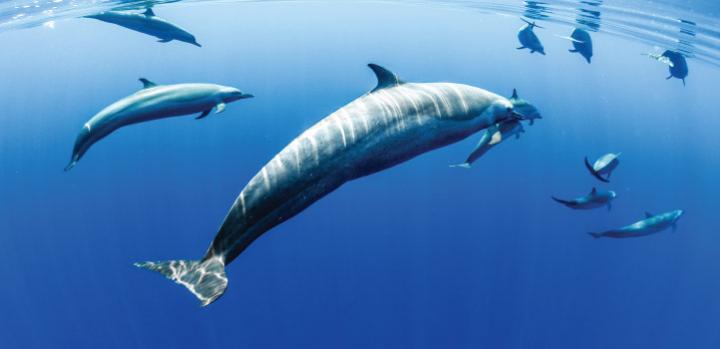
Credit: © 2021 Morgan Bennett Smith

Humans have altered the ocean soundscape by drowning out natural noises relied upon by many marine animals, from shrimp to sharks.

Sound travels fast and far in water, and sea creatures use sound to communicate, navigate, hunt, hide and mate. Since the industrial revolution, humans have introduced their own underwater cacophony from shipping vessels, seismic surveys searching for oil and gas, sonar mapping of the ocean floor, coastal construction and wind farms. Global warming could further alter the ocean soundscape as the melting Arctic opens up more shipping routes and wind and rainfall patterns change.

Yet noise has been conspicuously absent from global assessments of ocean health.

A team led by Carlos Duarte, distinguished professor at KAUST, trawled more than 10,000 papers and extracted the most rigorous quantitative studies of how noise affects marine animals. “The research goes back nearly 50 years, but this is the first time all the scattered evidence has been assembled and systematically assessed,” says Duarte.

Examining the literature, Duarte’s team sought to describe ocean soundscapes, how these soundscapes have changed in the Anthropocene, the negative impacts they have on marine animals, and possible solutions. “We were stunned by the contrast between the wealth of evidence and the general neglect of the problem in scientific debates and policymaking,” says Duarte.

Of the 538 carefully chosen papers, 90 percent revealed significant impacts of human sounds on marine mammals, while 80 percent identified effects on fish and invertebrates, such as jellyfish. “But there’s still a gap in our understanding of the impacts on diving birds and sea turtles,” adds Duarte.

Shipping is a widespread problem, disrupting travel, foraging, communication behaviors and the ability of young fish to learn to avoid predators. Particularly concerning was the effect of dampened soundscapes on the hearing of larvae trying to navigate to suitable habitats. “If they miss the call home, they will likely starve to death or be eaten,” says Duarte.

Noise pollution has driven many marine animals from their natural territory, although escape is not always possible for species with specific ranges, such as the endangered Maui dolphin. In 2020, when global lockdowns were enforced during the COVID-19 pandemic, noise from shipping fell by 20 percent, and dolphins and sharks were spotted swimming through formerly busy, noisy waterways. “This is promising evidence of an almost immediate response of marine life to a relaxing of acoustic pressures,” says Duarte.

The researchers highlight ways to alleviate anthropogenic noise, such as reducing shipping speeds, fitting boats with quieter propellers and using floating wind turbines. “Retrofitting only one-tenth of the noisiest boats with better propellers would have widespread benefits,” says Duarte. However, marine ecosystems and noise pollution cross international boundaries, meaning that solutions require binding global agreements for restoring a sustainable ocean economy.

###

Media Contact
Michael Cusack
[email protected]

Original Source

https://discovery.kaust.edu.sa/en/article/1104/human-activities-sound-an-alarm-for-sea-life

Related Journal Article

http://dx.doi.org/10.1126/science.aba4658

Tags: Animal Research/RightsBiodiversityBiologyEcology/EnvironmentFisheries/AquacultureMarine/Freshwater BiologyOceanographyPollution/RemediationZoology/Veterinary Science
Share12Tweet8Share2ShareShareShare2

Related Posts

Tracking Lanthanide-Labeled Microplastics in Plants

June 25, 2026

POSTECH Researchers Slash Cost of Reconstituted Cell-Free Systems by 95%

June 25, 2026

AI and Physics Collaborate to Design Advanced Hydrogen Storage Materials

June 25, 2026

Natural Hallucinogens: Evolution’s Ecological Tools, Not Mere Chemical Byproducts

June 25, 2026
Please login to join discussion

POPULAR NEWS

  • Saying Goodbye to PGY-6: Pediatric Fellowship Realities

    103 shares
    Share 41 Tweet 26
  • Multi-Hospital Study Reveals Long Covid Burden Is Twice as High as Current Estimates

    92 shares
    Share 36 Tweet 23
  • Detection of EDCs in Breast Milk and Infant Urine Up to Six Months Highlights Early Exposure Risks

    77 shares
    Share 31 Tweet 19
  • New Drug Candidate Developed at McMaster Shows Potential for Treating Brain Cancer

    58 shares
    Share 23 Tweet 15

About

We bring you the latest biotechnology news from best research centers and universities around the world. Check our website.

Follow us

Recent News

Tracking Lanthanide-Labeled Microplastics in Plants

POSTECH Researchers Slash Cost of Reconstituted Cell-Free Systems by 95%

AI and Physics Collaborate to Design Advanced Hydrogen Storage Materials

Subscribe to Blog via Email

Enter your email address to subscribe to this blog and receive notifications of new posts by email.

Join 82 other subscribers
  • Contact Us

Bioengineer.org © Copyright 2023 All Rights Reserved.

Welcome Back!

Login to your account below

Forgotten Password?

Retrieve your password

Please enter your username or email address to reset your password.

Log In
No Result
View All Result
  • Homepages
    • Home Page 1
    • Home Page 2
  • News
  • National
  • Business
  • Health
  • Lifestyle
  • Science

Bioengineer.org © Copyright 2023 All Rights Reserved.