• HOME
  • NEWS
  • EXPLORE
    • CAREER
      • Companies
      • Jobs
    • EVENTS
    • iGEM
      • News
      • Team
    • PHOTOS
    • VIDEO
    • WIKI
  • BLOG
  • COMMUNITY
    • FACEBOOK
    • INSTAGRAM
    • TWITTER
Saturday, May 23, 2026
BIOENGINEER.ORG
No Result
View All Result
  • Login
  • HOME
  • NEWS
  • EXPLORE
    • CAREER
      • Companies
      • Jobs
        • Lecturer
        • PhD Studentship
        • Postdoc
        • Research Assistant
    • EVENTS
    • iGEM
      • News
      • Team
    • PHOTOS
    • VIDEO
    • WIKI
  • BLOG
  • COMMUNITY
    • FACEBOOK
    • INSTAGRAM
    • TWITTER
  • HOME
  • NEWS
  • EXPLORE
    • CAREER
      • Companies
      • Jobs
        • Lecturer
        • PhD Studentship
        • Postdoc
        • Research Assistant
    • EVENTS
    • iGEM
      • News
      • Team
    • PHOTOS
    • VIDEO
    • WIKI
  • BLOG
  • COMMUNITY
    • FACEBOOK
    • INSTAGRAM
    • TWITTER
No Result
View All Result
Bioengineer.org
No Result
View All Result
Home NEWS Science News Biology

Huddersfield scientists first to show how coronavirus triggers immune response in brain

Bioengineer by Bioengineer
March 17, 2022
in Biology
Reading Time: 3 mins read
0
SARS-CoV-2 Spike Glycoprotein S1 Induces Neuroinflammation in BV-2 Microglia2
Share on FacebookShare on TwitterShare on LinkedinShare on RedditShare on Telegram

The study, published in the journal Molecular Neurobiology led by the University’s Dr Mayo Olajide, describes how the spike protein used by the coronavirus to enter human cells can have a similar effect on the brain’s immune cells as it does with the rest of the body
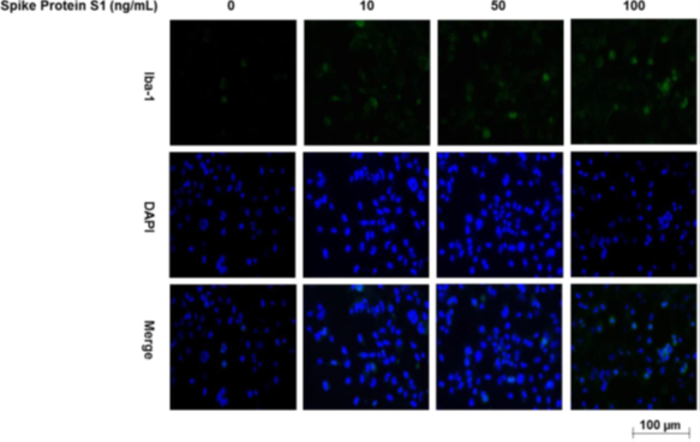
SARS-CoV-2 Spike Glycoprotein S1 Induces Neuroinflammation in BV-2 Microglia2

Credit: University of Huddersfield

The study, published in the journal Molecular Neurobiology led by the University’s Dr Mayo Olajide, describes how the spike protein used by the coronavirus to enter human cells can have a similar effect on the brain’s immune cells as it does with the rest of the body

HUDDERSFIELD researchers were among the first to demonstrate how the induction of brain inflammation accounts for neurological damage in COVID19 patients and now, their findings have been published in a peer-reviewed medical journal.

The study, published in the journal Molecular Neurobiology led by the University of Huddersfield’s Dr Mayo Olajide, describes how the spike protein used by the coronavirus to enter human cells can have a similar effect on the brain’s immune cells as it does with the rest of the body.

Dr Olajide, who’s previous research discovered how the onset of Alzheimer’s disease can be slowed and some of its symptoms curbed by a natural compound that is found in pomegranate, conducted the potential impact of the Spike Glycoprotein S1 using immune cell lines obtained from mice and is now applying for funding to develop the research further using brain cells from humans.

“Following our hypothesis,” said Dr Olajide, “we are now questioning when the coronavirus has affected the brain, could this pose a risk for neurodegenerative disorders further down the line, like Alzheimer’s or Parkinson’s?”

How the coronavirus activate the brain’s own immune response

According to Dr Olajide, whilst other research demonstrated the mechanism of why the virus was able to gain access into the brain through the nose, theirs was among the first to demonstrate how the coronavirus activated the brain’s own immune response.

“It may not be multiplying in the brain, but when it gets into the brain, it can actually induce immune responses and this explains some of the trends people have reported when they have been infected such as continued brain fog and memory loss,” he said.

Dr Olajide believes if adequate funding can be achieved the research could prove significant.

“The thing with COVID research is so many researchers speculate but less actually carry out the experiments needed to prove their research because it takes such a long time to complete.”

Dr Olajide is a Reader within the University’s Department of Pharmacy in the School of Applied Sciences. His academic career includes a post as a Humboldt Postdoctoral Research Fellow at the Centre for Drug Research at the University of Munich. His PhD was awarded from the University of Ibadan in his native Nigeria, after an investigation of the anti-inflammatory properties of natural products.


Journal

Molecular Neurobiology

DOI

10.1007/s12035-021-02593-6

Method of Research

Observational study

Subject of Research

Cells

Article Title

SARS-CoV-2 Spike Glycoprotein S1 Induces Neuroinflammation in BV-2 Microglia

Article Publication Date

1-Jan-2022

COI Statement

No conflicting areas of interest to state

Share12Tweet8Share2ShareShareShare2

Related Posts

Rising Sightings of Blue and Fin Whales in the South East Atlantic — Biology

Rising Sightings of Blue and Fin Whales in the South East Atlantic

May 23, 2026
New Maps Reveal How European Landscapes Can Simultaneously Promote Climate Action and Biodiversity Conservation — Biology

New Maps Reveal How European Landscapes Can Simultaneously Promote Climate Action and Biodiversity Conservation

May 22, 2026

University of Cincinnati Structural Biologists Achieve World First in Visualizing Crucial Cell Protein

May 22, 2026

Reducing Fertilizer Use Through Strategic Scientific Partnerships

May 22, 2026

POPULAR NEWS

  • blank

    New Study Reveals Plants Can Detect the Sound of Rain

    734 shares
    Share 293 Tweet 183
  • ESMO 2025: mRNA COVID Vaccines Enhance Efficacy of Cancer Immunotherapy

    311 shares
    Share 124 Tweet 78
  • Research Indicates Potential Connection Between Prenatal Medication Exposure and Elevated Autism Risk

    847 shares
    Share 339 Tweet 212
  • Common Food Preservatives Associated with Elevated Blood Pressure and Increased Heart Disease Risk

    55 shares
    Share 22 Tweet 14

About

We bring you the latest biotechnology news from best research centers and universities around the world. Check our website.

Follow us

Recent News

Assessing Osteoporotic Pelvis Fracture Score Feasibility

Eco-Friendly Pomegranate Peel Carbon Removes Amoxicillin

CD5L Protein Shields Kidneys by Reducing Oxidative Stress

Subscribe to Blog via Email

Enter your email address to subscribe to this blog and receive notifications of new posts by email.

Join 83 other subscribers
  • Contact Us

Bioengineer.org © Copyright 2023 All Rights Reserved.

Welcome Back!

Login to your account below

Forgotten Password?

Retrieve your password

Please enter your username or email address to reset your password.

Log In
No Result
View All Result
  • Homepages
    • Home Page 1
    • Home Page 2
  • News
  • National
  • Business
  • Health
  • Lifestyle
  • Science

Bioengineer.org © Copyright 2023 All Rights Reserved.