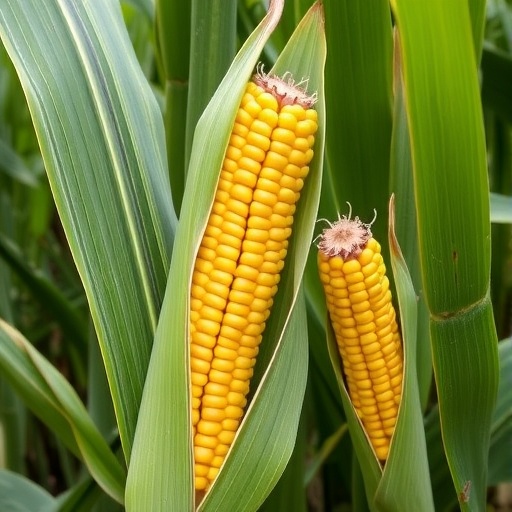
Maize breeders may have gained a powerful new genetic tool after researchers identified two sugar transporters that are essential for the development of fertile pollen. The study, led by scientists at China Agricultural University in collaboration with Tianjin Agricultural University and the University of São Paulo, shows that the proteins ZmSWEET6a and ZmSWEET6b do far more than move sugars across cell membranes. Acting together in the maize anther, they coordinate the construction of the pollen wall, regulate cellular energy balance and prevent the early activation of destructive oxidative stress pathways. When both genes are disabled, maize plants produce no viable pollen and become completely male sterile.
The discovery addresses a long-standing question in plant reproductive biology: how does the metabolism of sugars influence the physical construction of pollen and the survival of developing male reproductive tissues? Pollen formation is an energetically demanding process. Before a microspore matures into pollen, it must acquire a highly specialized outer wall capable of protecting it from dehydration, temperature fluctuations and other environmental stresses. The first layer of this wall, known as the primexine, provides a temporary scaffold on which later pollen-wall materials are organized. If this structure fails, pollen development cannot proceed normally.
The researchers focused on two anther-specific members of the SWEET family of sugar transporters. SWEET proteins are embedded in the plasma membrane and facilitate the movement of sugars, including hexoses, into or out of cells. In developing maize anthers, ZmSWEET6a and ZmSWEET6b become especially active during stages S5 and S6, when microspores are beginning to establish the foundations of their pollen walls. According to the team, the two transporters operate redundantly and synergistically, meaning that one can partially compensate for the loss of the other, but the simultaneous loss of both causes a catastrophic developmental defect.
Detailed genetic and cytological analyses revealed that double-mutant plants were unable to maintain normal sugar homeostasis in their anthers. This imbalance had immediate consequences for the formation of the primexine. Pectin and xylan, two classes of polysaccharides that contribute to the structural framework of the developing pollen wall, were not deposited correctly. Without the proper arrangement of these materials, the primexine scaffold collapsed, leaving the young microspores unable to build a functional protective wall.
The effects of the mutations extended beyond the pollen surface. The researchers found that ZmSWEET6a and ZmSWEET6b also help maintain redox balance, the controlled equilibrium between oxidizing molecules and antioxidant defenses inside cells. Reactive oxygen species, or ROS, are chemically reactive molecules that can serve as signals when produced in carefully regulated amounts. However, an uncontrolled ROS surge can damage proteins, membranes and genetic material, and can trigger programmed cell death, or PCD. In the mutant anthers, ROS accumulated prematurely at stage S6, several developmental stages earlier than the major ROS increase observed in normal maize anthers.
This early oxidative burst initiated ectopic PCD throughout all four layers of the anther wall. These tissues normally provide nutrients, structural support and developmental signals to the growing microspores. Their premature destruction deprived the developing pollen of essential support precisely when the primexine was being assembled. The combined failure of wall construction and anther-tissue maintenance ultimately caused the microspores to collapse and resulted in complete male sterility.
The study’s multi-omics analyses and microscopic observations allowed the researchers to connect these events into a single regulatory model. In this model, ZmSWEET6a and ZmSWEET6b transport sugars at a critical point in anther development, helping supply the carbon resources required for polysaccharide synthesis. At the same time, their activity supports the metabolic conditions needed to restrain ROS accumulation. Sugar transport therefore acts as a bridge between metabolism and development: it provides both the raw materials for pollen-wall construction and the biochemical stability required to keep reproductive cells alive.
The findings may have practical implications for maize hybrid breeding. Male-sterile lines cannot produce functional pollen and must therefore be fertilized by another selected parent, making them useful for producing hybrid seed without labor-intensive removal of male reproductive structures. Hybrid maize often benefits from heterosis, in which offspring display improved yield, vigor or stress performance compared with their parents. By manipulating genes such as ZmSWEET6a and ZmSWEET6b, breeders could potentially develop new male-sterile systems or refine existing approaches for controlling pollen fertility. Such applications would require careful evaluation because sugar transporters are connected to broader aspects of plant growth and metabolism.
The researchers describe ZmSWEET6a and ZmSWEET6b as central coordinators of anther development rather than simple sugar channels. Their work highlights how a plant’s reproductive success depends on the close timing of carbohydrate allocation, cell-wall construction and redox signaling. It also suggests that other sugar-related genes may have previously overlooked roles in male gametophyte development. By revealing how metabolic regulation can determine whether pollen survives or fails, the study offers a clearer view of the molecular events underlying maize fertility and provides a foundation for future strategies in crop improvement.
Subject of Research: Molecular mechanisms regulating maize pollen development and male fertility
Article Title: Hexose transporters ZmSWEET6a/6b are essential for primexine formation and redox homeostasis in maize anthers
Web References: https://doi.org/10.1016/j.cj.2026.06.016
References: The Crop Journal; DOI: 10.1016/j.cj.2026.06.016
Image Credits: Weiwei Jin, Wei Huang, et al.
Keywords: maize, pollen development, male sterility, ZmSWEET6a, ZmSWEET6b, sugar transporters, SWEET proteins, primexine, pollen wall, redox homeostasis, reactive oxygen species, programmed cell death, hybrid breeding, plant reproduction