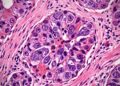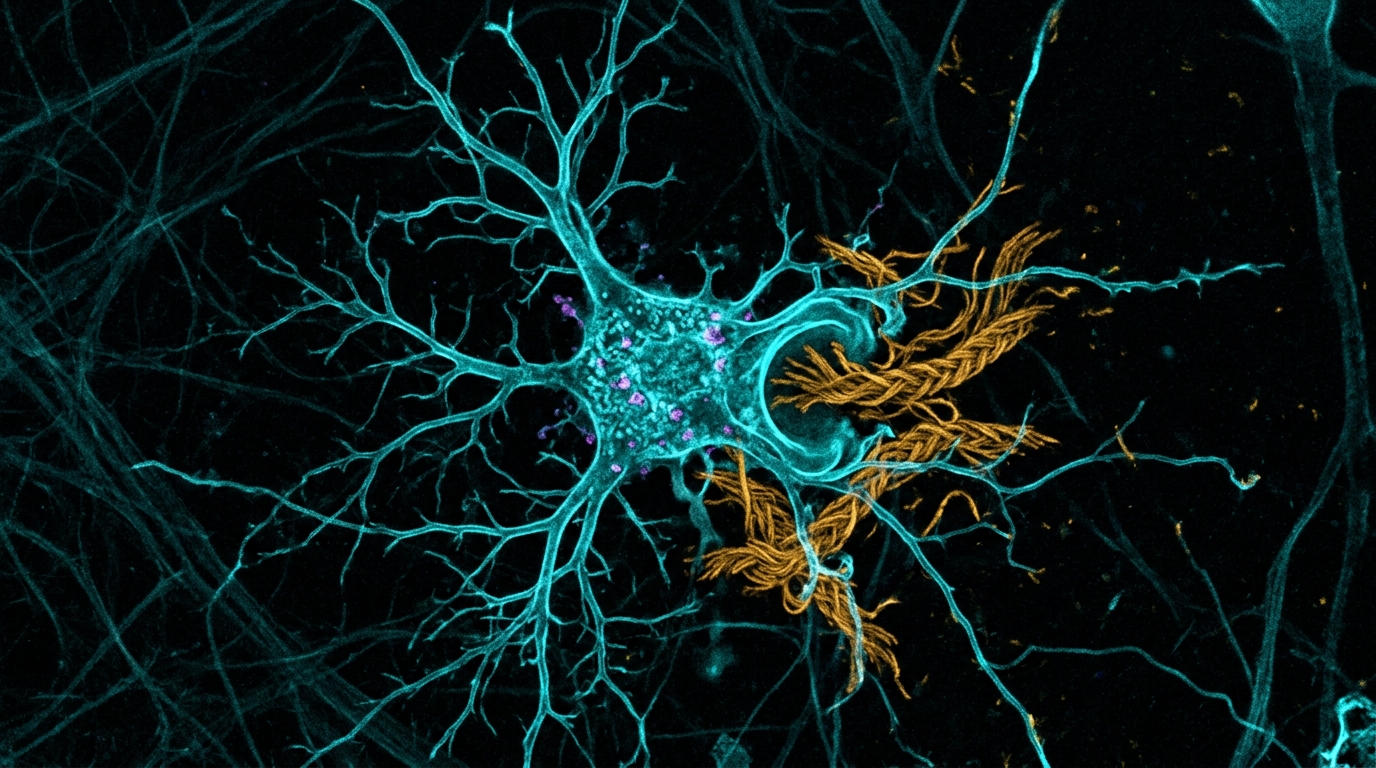
Human induced pluripotent stem cell-derived microglia fail to clear extracellular tau through two distinct cellular mechanisms determined by the physical structure of the protein, according to an investigation combining high-resolution imaging, biochemical assays, and genetic screens. Extracellular forms of the microtubule-associated protein tau accumulate and propagate across brain regions in neurodegenerative disorders known as tauopathies, most notably Alzheimer’s disease. Although microglia serve as the primary resident macrophages of the central nervous system tasked with clearing and degrading aberrant proteins, accumulating evidence indicates that these immune cells can also enhance the spread of tau pathology. Using mature human microglia differentiated from stem cell lines alongside comparative experiments in primary mouse microglia and human monocyte-derived macrophages, researchers tracked the structural trafficking of monomeric and aggregated fibrillar tau proteoforms to uncover why microglial clearance mechanisms break down.
Tracking the simplest structural form of tau revealed that human microglia rapidly internalize monomeric tau through surface receptor endocytosis but fail to route the ingested protein into terminal degradative compartments. Following twenty-four hours of exposure to recombinant full-length 2N4R tau monomers at a concentration of ten micrograms per milliliter, mature human microglia exhibited marked intracellular accumulation of tau foci. Quantitative co-localization analyses revealed that sixty-three percent of these monomeric tau foci coincided with early endosomal antigen 1-positive early endosomes and seventy-five percent localized with vesicles containing low-density lipoprotein receptor-related protein 1, known as LRP1. In striking contrast, only twenty-three percent of the internalized tau signal co-localized with lysosomal-associated membrane protein 1-positive late endosomes and lysosomes. Reducing the monomer concentration to two micrograms per milliliter produced a virtually identical distribution pattern, with sixty-eight percent of tau foci found in early endosomes, seventy-four percent in LRP1-positive vesicles, and only twenty-five percent in lysosomes.
To evaluate whether the low proportion of monomeric tau in lysosomes reflected rapid enzymatic degradation upon entry rather than a failure of trafficking, researchers co-treated the human microglia with lysosomal protease inhibitors during the final four hours of protein incubation. Administering a combination of ten micromolar E64d and one micromolar pepstatin A did not alter the total cellular tau signal or increase the co-localization between monomeric tau and late endosomal or lysosomal compartments. This absence of accumulation confirmed that tau monomers do not enter lysosomes to undergo rapid proteolysis. By comparison, parallel assays evaluating the trafficking dynamics of one micromolar amyloid-beta 1-42 peptide demonstrated that sixty-one percent of amyloid foci localized to lysosomes under basal conditions, remaining stable at sixty-six percent following protease inhibition. These comparative measurements confirmed that human microglia maintain the functional capacity to transport extracellular neurodegenerative peptides into terminal lysosomes, but specifically fail to direct internalized tau monomers toward degradative compartments.
Rather than accumulating permanently in early endosomal vesicles, internalized tau monomers undergo rapid exocytic recycling back into the surrounding extracellular environment. Following twenty-four hours of monomer incubation, researchers replaced the culture medium with fresh, tau-free medium and monitored the remaining cellular protein at subsequent time points. Within fifteen minutes of medium replacement, approximately ninety-eight percent of the intracellular tau signal disappeared from the human microglia. Total human tau enzyme-linked immunosorbent assays confirmed that intracellular tau concentrations steadily dropped while tau abundance in the cell culture supernatants rose proportionally. Washout assays conducted across other myeloid lineages demonstrated that this exocytic clearance is widespread, with primary mouse microglia discharging more than ninety-nine percent of their intracellular tau within ten minutes of washout. Primary human monocyte-derived macrophages also recycled the protein, exhibiting an eighty-three percent loss of intracellular tau signal within fifteen minutes, indicating that myeloid cells generally fail to retain internalized monomeric tau.
Investigating the cell-surface receptors required for monomer uptake identified the endocytic receptor LRP1 as the indispensable mediator of monomeric tau internalization. Utilizing CRISPR-Cas9 ribonucleoprotein delivery, the investigators knocked out the LRP1 gene in human microglia, achieving substantial protein depletion within five days of nucleofection compared to non-targeting control cells. When exposed to ten micrograms per milliliter of tau monomers, LRP1-deficient microglia displayed a drastic reduction in intracellular tau uptake relative to controls. To rule out broad disruptions in general pinocytosis, the researchers administered Alexa Fluor 488-labeled bovine serum albumin to the cells, finding no reduction in endocytic signal in the knockout population. Notably, genetic ablation of LRP1 did not alter the binding of fibrillar tau or diminish fibril-induced inflammatory cytokine release, demonstrating that LRP1 functions specifically to internalize monomeric tau without governing microglial engagement with aggregated fibrillar tau structures.
In complete contrast to monomers, aggregated fibrillar tau species evaded internalization and remained anchored to the external microglial surface. Immunofluorescence imaging revealed that twenty-four hours of exposure to ten micrograms per milliliter of tau fibrils produced sporadic staining across approximately half the human microglia, with fibril foci rarely coinciding with internal organelle markers. Three-dimensional reconstruction and iso-surface rendering from Airyscan enhanced-resolution microscopy established that monomeric foci localized inside the plasma membrane, whereas fibril clusters resided predominantly at the outer cell surface. To independently verify surface retention, researchers stained permeabilized and non-permeabilized microglia, finding that fibrillar tau signal intensity was statistically indistinguishable between both preparations, whereas monomeric tau signal dropped precipitously in non-permeabilized cells. Washout experiments further showed that surface-bound tau fibrils remained persistently attached to the plasma membrane over time rather than being exocytosed or degraded, establishing a stable extracellular reservoir.
Nanoscale structural investigations resolved the physical architecture of fibrillar tau adherence to myeloid membranes in native cellular contexts. Cryogenic electron tomography of plunge-frozen human monocyte-derived macrophages exposed to twenty micrograms per milliliter of tau fibrils captured short fibril bundles resting directly on external pseudopodial surfaces, highlighting distinct contact points representing protein densities on the plasma membrane. Complementary DNA points accumulation for imaging in nanoscale topography, or DNA-PAINT microscopy, distinguished surface-bound from internalized protein clusters at single-molecule resolution across both cell-penetrant and total internal reflection fluorescence imaging modes. Membrane-associated fibrillar tau clusters measured an average area of 0.059 square micrometers, substantially exceeding the 0.022 square micrometer footprint of internalized monomeric clusters. Furthermore, single-molecule quantification confirmed that monomeric clusters contained a significantly higher density of co-localized LRP1 molecules, whereas membrane-bound fibril clusters exhibited low LRP1 association, confirming that fibrils adhere through an LRP1-independent mechanism.
Surface retention of tau fibrils triggered potent inflammatory activation in human microglia, contrasting sharply with the inert profile of internalized monomers. Multiplex Luminex analyses of culture supernatants demonstrated that exposure to tau fibrils provoked robust secretion of tumor necrosis factor, interleukin-6, and interleukin-10, whereas monomeric tau produced minimal cytokine modulation. Denaturing the fibrils by boiling completely eliminated cytokine release, demonstrating that inflammatory stimulation depends strictly on the physical conformation of the fibril assembly. To ensure that trace bacterial contaminants did not confound the results, the researchers administered increasing concentrations of lipopolysaccharide to the microglia. Despite delivering approximately one hundred times more endotoxin, lipopolysaccharide-treated cells secreted roughly one hundred-fold fewer pro-inflammatory cytokines than fibril-treated cultures. Genetic dissection of microglial signaling pathways identified the toll-like receptor 4 and myeloid differentiation primary response 88 pathway as the central mediator of this fibril-induced inflammatory activation. Systematically knocking out individual candidate genes via CRISPR-Cas9 revealed that human microglia lacking either TLR4 or the downstream intracellular adaptor MYD88 exhibited significant reductions in fibrillar tau-mediated secretion of tumor necrosis factor and interleukin-6 compared to non-targeting controls. In contrast, knocking out toll-like receptor 2 had no discernible effect on cytokine production. Beyond orchestrating downstream immune signaling, TLR4 deficiency also led to a modest reduction in the total amount of membrane-bound tau fibrils, suggesting that the receptor contributes directly to anchoring fibrils at the plasma membrane. Knockout of MYD88 did not alter fibril adherence, reflecting its downstream role as a cytosolic transducer, and neither TLR2, TLR4, nor MYD88 deletion influenced the cellular uptake of monomeric tau.
In parallel with toll-like receptors, microglial cell-surface heparan sulfate proteoglycans were found to modulate fibril adherence and subsequent cytokine activation. Transcriptomic and proteomic data confirmed that human microglia express seven of the fifteen transmembrane and membrane-anchored heparan sulfate proteoglycans present in mammalian brain tissue. A targeted knockout screen demonstrated that individual deletion of syndecan-2, syndecan-4, glypican-1, or glypican-3 modestly reduced fibril-induced tumor necrosis factor release, pointing to functional redundancy across shared heparan sulfate chains. Detailed examination of syndecan-2 knockout microglia revealed a significant reduction in fibrillar tau binding without any alteration in monomer uptake. To chemically disrupt these surface interactions, researchers treated cells with 0.5 micrograms per milliliter of heparin sodium, which competes with cell-surface proteoglycans for tau binding. Heparin sequestration significantly reduced microglial attachment of both monomers and fibrils, markedly suppressed cytokine release triggered by synthetic fibrils and Alzheimer’s patient-derived cortical tau extracts, but did not diminish lipopolysaccharide-induced tumor necrosis factor.
Further experiments demonstrated that both genetic risk factors and targeted antibody interventions markedly reshape these microglial interactions. Testing lipidated human apolipoprotein E isoforms showed that the Alzheimer’s disease risk-associated APOE4 variant significantly reduced both tau monomer internalization and fibril membrane binding compared to the protective APOE3 and APOE3 Christchurch variants. By competing more aggressively for cell-surface LRP1 and heparan sulfate proteoglycans, APOE4 appears to displace tau, leaving more unsequestered protein in the extracellular milieu to seed adjacent neurons. Conversely, complexing tau fibrils with an anti-tau antibody prior to cell exposure significantly reduced inflammatory cytokine release in a dose-dependent manner. This antibody treatment slightly increased overall fibrillar tau signal and enhanced co-localization with lysosomal-associated membrane protein 1-positive vesicles, suggesting that antibody binding promotes partial fibril internalization into degradative compartments. Together, these cellular findings indicate that microglia fail to act as sinks for pathogenic tau, instead recycling monomers and stably displaying inflammatory fibrils.
Subject of Research: Mechanisms of microglial trafficking, recycling, and clearance evasion by extracellular tau proteoforms
Article Title: Tau monomers and fibrils escape microglial clearance via distinct cellular mechanisms
Article References: Kulkarni, V. V., Fredrickson, C., Adrian, M., Town, J., Ho, H., Dutka, P., Shangguan, J., Reid, D., Hayne, M., Kschonsak, M., Ndoja, A., Jeong, C. G., & Hoogenraad, C. C. (2026). Tau monomers and fibrils escape microglial clearance via distinct cellular mechanisms. Nature Cell Biology. https://doi.org/10.1038/s41556-026-02118-0
Image Credits: AI Generated
DOI: 10.1038/s41556-026-02118-0
Keywords: Microglia, Tau Protein, Alzheimer's Disease, LRP1, HSPG, Neuroinflammation, TLR4, Endocytosis, APOE4, monomers, fibrils, escape
News Source: Cassandra Pierce. (November 6, 2026). How Toxic Tau Evades Microglial Degradation Through Divergent Cellular Pathways. Scienmag.