• HOME
  • NEWS
  • EXPLORE
    • CAREER
      • Companies
      • Jobs
    • EVENTS
    • iGEM
      • News
      • Team
    • PHOTOS
    • VIDEO
    • WIKI
  • BLOG
  • COMMUNITY
    • FACEBOOK
    • INSTAGRAM
    • TWITTER
Sunday, May 17, 2026
BIOENGINEER.ORG
No Result
View All Result
  • Login
  • HOME
  • NEWS
  • EXPLORE
    • CAREER
      • Companies
      • Jobs
        • Lecturer
        • PhD Studentship
        • Postdoc
        • Research Assistant
    • EVENTS
    • iGEM
      • News
      • Team
    • PHOTOS
    • VIDEO
    • WIKI
  • BLOG
  • COMMUNITY
    • FACEBOOK
    • INSTAGRAM
    • TWITTER
  • HOME
  • NEWS
  • EXPLORE
    • CAREER
      • Companies
      • Jobs
        • Lecturer
        • PhD Studentship
        • Postdoc
        • Research Assistant
    • EVENTS
    • iGEM
      • News
      • Team
    • PHOTOS
    • VIDEO
    • WIKI
  • BLOG
  • COMMUNITY
    • FACEBOOK
    • INSTAGRAM
    • TWITTER
No Result
View All Result
Bioengineer.org
No Result
View All Result
Home NEWS Science News Biology

How ticks get a proper foothold

Bioengineer by Bioengineer
February 13, 2018
in Biology
Reading Time: 2 mins read
0
Share on FacebookShare on TwitterShare on LinkedinShare on RedditShare on Telegram
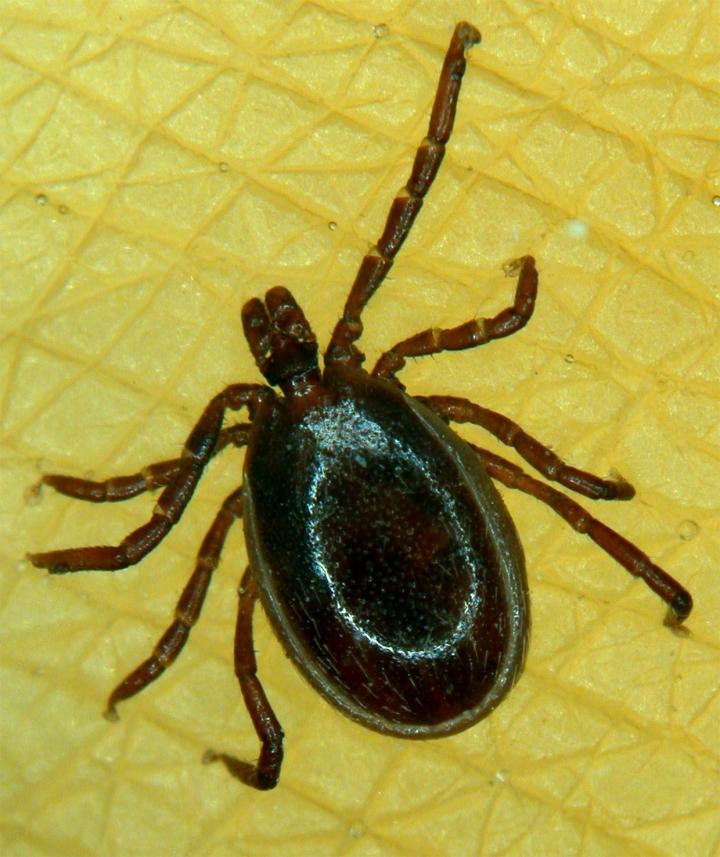
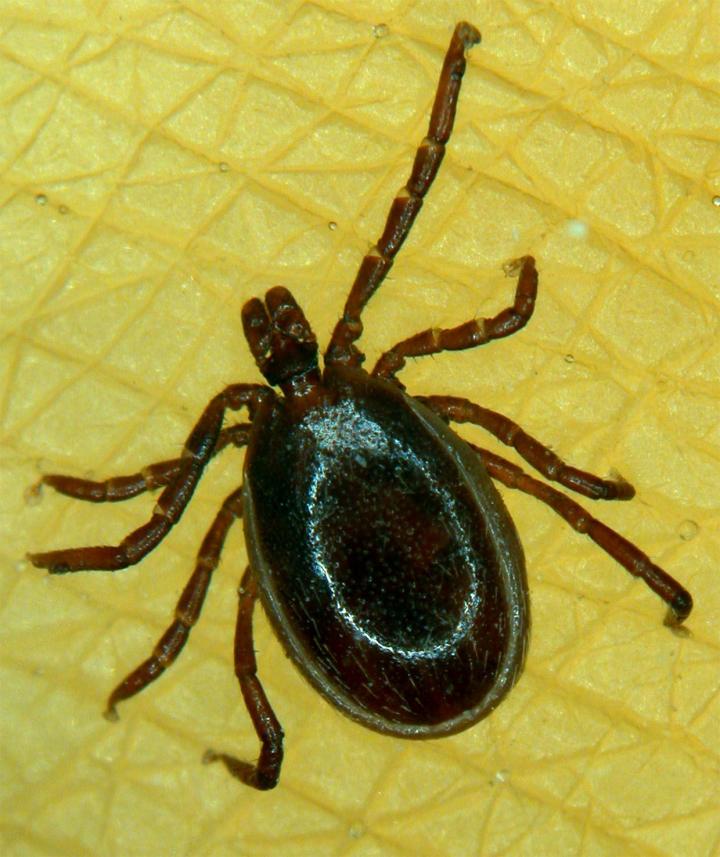
IMAGE

Credit: Copyright: Dagmar Voigt

Ticks spend more than 90 percent of their up to three-year-long life starving and clambering around in leaf litter and on vegetation. They walk remarkable distances while periodically exploring distal plant parts in order to prey on their victims. Once they get to humans and animals, the little parasites walk along skin and hairs, searching for suitable feeding sites.

160 years after a first note by Hermann Burmeister about the ticks' feet composition of paired, curved, tapered tarsal claws and between them a pad, the current morphological details and adhesion experiments led to new deductions on the function of ticks' feet. "The fact that not only the pad, but also the transparent claws contain the elastic protein resilin is surprising, because we have never observed resilin in arthropod claws before," said Dagmar Voigt from the Institute for Botany of Technische Universität Dresden. With these sticky pads, ticks are able to attach easily to smooth surfaces like human skin and glass. Depending on the situation and required power, the pads can be folded and unfolded – similar to an accordion. An adhesion-mediated fluid adds to the adhesion of the pad. While walking in litter or on contaminated surfaces, ticks frequently fold back their feet and run on their tarsal-tibial joint.

Males are rather small and access the host body for copulation purposes only. Thus, their feet are smaller and attach less than females. On glass, females generate forces corresponding to more than 500-fold of their own body weight in order to ensure their safety. During blood sucking, the female body weight can increase up to 135 times. Voigt and Gorb also showed that the attachment was worse on skin silicon replicas and on micro-rough resin surfaces. "As to attachment, ticks are almost generalists due to the combination of their soft adhesive pads and tapered claws; but not entirely. Our experiments clearly show, how a future technical surface, having anti-adhesive properties for ticks, could look like," summarised Stanislav Gorb from the Zoological Institute of Kiel University. Thus, ticks could be prevented from attaching to skin and hair.

###

Movie of female ticks walking on a glass ceiling: http://movie.biologists.com/video/10.1242/jeb.152942/video-1

Media inquiries:

Dr Dagmar Voigt
Technische Universität Dresden
Phone: +49 351 463 35834
Email: [email protected]

Prof. Stanislav N. Gorb
Kiel University
Phone: +49 431880 4513
E-mail: [email protected]

Media Contact

Kim-Astrid Magister
[email protected]
49-035-146-332-398
@tudresden_de

http://tu-dresden.de/en

Related Journal Article

http://dx.doi.org/10.1242/jeb.152942

Share12Tweet8Share2ShareShareShare2

Related Posts

Uncovering C. elegans Immunity via Genetic Screens — Biology

Uncovering C. elegans Immunity via Genetic Screens

May 16, 2026
Single mother must adapt swiftly — the survival of her colony depends on it — Biology

Single mother must adapt swiftly — the survival of her colony depends on it

May 15, 2026

Why Are Nearly Everyone Right-Handed? It Might Be Linked to How We Learned to Walk

May 15, 2026

Excessive Neuronal Activity Initiates Severe Autoimmune Brain Disorder

May 15, 2026
Please login to join discussion

POPULAR NEWS

  • Research Indicates Potential Connection Between Prenatal Medication Exposure and Elevated Autism Risk

    844 shares
    Share 338 Tweet 211
  • New Study Reveals Plants Can Detect the Sound of Rain

    730 shares
    Share 291 Tweet 182
  • Salmonella Haem Blocks Macrophages, Boosts Infection

    62 shares
    Share 25 Tweet 16
  • Breastmilk Balances E. coli and Beneficial Bacteria in Infant Gut Microbiomes

    58 shares
    Share 23 Tweet 15

About

We bring you the latest biotechnology news from best research centers and universities around the world. Check our website.

Follow us

Recent News

Age Discrimination Affects Healthcare Use in India

Lavandula-Zn(II) Hybrid Shields Steel from Corrosion

Targeted Radiotherapy Extends Control of Early-Stage Breast Cancer Spread

Subscribe to Blog via Email

Enter your email address to subscribe to this blog and receive notifications of new posts by email.

Join 82 other subscribers
  • Contact Us

Bioengineer.org © Copyright 2023 All Rights Reserved.

Welcome Back!

Login to your account below

Forgotten Password?

Retrieve your password

Please enter your username or email address to reset your password.

Log In
No Result
View All Result
  • Homepages
    • Home Page 1
    • Home Page 2
  • News
  • National
  • Business
  • Health
  • Lifestyle
  • Science

Bioengineer.org © Copyright 2023 All Rights Reserved.