

• HOME
  • NEWS
  • EXPLORE
    • CAREER
      • Companies
      • Jobs
    • EVENTS
    • iGEM
      • News
      • Team
    • PHOTOS
    • VIDEO
    • WIKI
  • BLOG
  • COMMUNITY
    • FACEBOOK
    • INSTAGRAM
    • TWITTER
Monday, January 12, 2026
BIOENGINEER.ORG
No Result
View All Result
  • Login
  • HOME
  • NEWS
  • EXPLORE
    • CAREER
      • Companies
      • Jobs
        • Lecturer
        • PhD Studentship
        • Postdoc
        • Research Assistant
    • EVENTS
    • iGEM
      • News
      • Team
    • PHOTOS
    • VIDEO
    • WIKI
  • BLOG
  • COMMUNITY
    • FACEBOOK
    • INSTAGRAM
    • TWITTER
  • HOME
  • NEWS
  • EXPLORE
    • CAREER
      • Companies
      • Jobs
        • Lecturer
        • PhD Studentship
        • Postdoc
        • Research Assistant
    • EVENTS
    • iGEM
      • News
      • Team
    • PHOTOS
    • VIDEO
    • WIKI
  • BLOG
  • COMMUNITY
    • FACEBOOK
    • INSTAGRAM
    • TWITTER
No Result
View All Result
Bioengineer.org
No Result
View All Result
Home NEWS Science News Health

How the mosquito immune system fights off the malaria parasite

Bioengineer by Bioengineer
July 10, 2019
in Health
Reading Time: 2 mins read
0
IMAGE
Share on FacebookShare on TwitterShare on LinkedinShare on RedditShare on Telegram

IMAGE

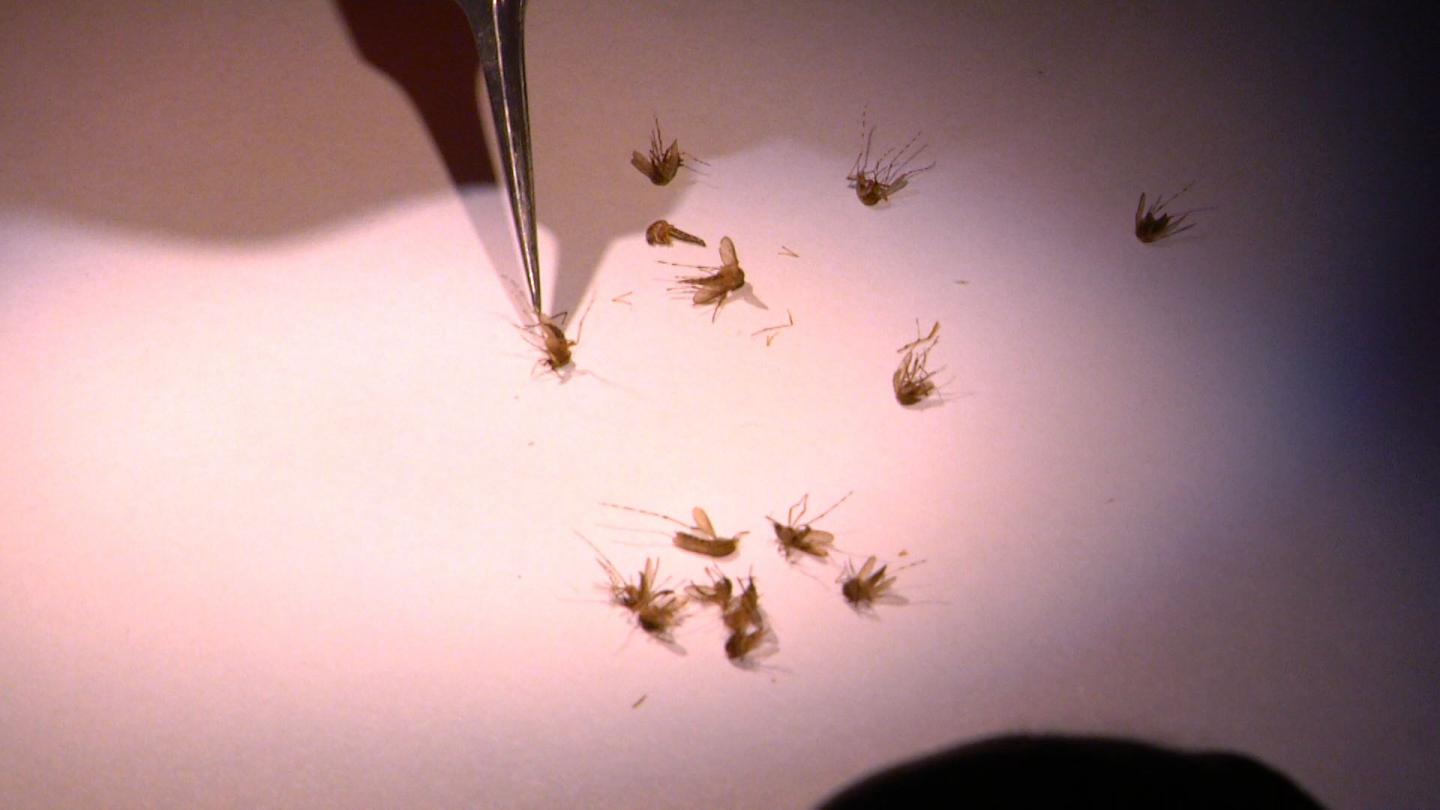
Credit: Iowa State University News Service

AMES, Iowa – A new study from Iowa State University entomologists describes how mosquitoes fight off parasites that cause malaria, a disease that sickens millions of people every year.

The study, published recently in the scientific journal Proceedings of the National Academy of Sciences, shows how the mosquito immune system combats malaria parasites at multiple stages of development. A better understanding of the mosquito immune response could lay the groundwork for future research to combat the transmission of malaria, said Ryan Smith, assistant professor of entomology and lead author of the study.

Roughly 219 million cases of malaria, a disease transmitted to humans by the bite of infected mosquitoes, occurred worldwide in 2017, according to the Centers for Disease Control and Prevention. Most cases are concentrated in tropical and subtropical climates such as sub-Saharan Africa and South Asia. The disease resulted in 435,000 deaths in 2017, according to the CDC.

Mosquitoes are required to transmit malaria, acquiring malaria parasites by biting an infected person, then transmitting the disease weeks later after the parasite has completed development in the mosquito. The new study focused on how the mosquito immune system responds to the parasite.

“Mosquitoes are generally pretty good at killing off the parasite,” Smith said. “We wanted to figure out the mechanisms and pathways that make that happen.”

The researchers treated mosquitoes with a chemical that depleted their immune cells, which are needed to defend the mosquito against pathogens. The experiments showed that malaria parasites survived at greater rates in mosquitoes when the immune cells were depleted. The research also illuminated how these immune cells promoted different “waves” of the mosquito immune response targeting distinct stages of malaria parasites in the mosquito host.

Smith, who also leads the ISU Medical Entomology Laboratory, said the findings increase the understanding of a complement-like pathway that is involved in the initial recognition and killing of parasites, similar to that found in mammals. The work also implicates phenoloxidases, an insect-specific immune response, in causing a secondary immune response directed at later stages of the malaria parasite, he said.

Understanding these immune responses could lead to opportunities to eliminate malaria parasites in the mosquito, thus reducing the transmission of malaria. For instance, Smith said scientists could use genetic approaches to make mosquitoes resistant to malaria parasites. Introducing mosquitoes with enhanced immunity in endemic areas of malaria could significantly reduce human malaria cases.

“There are more steps required to validate that kind of approach, but we think this study lays a foundation for those future experiments,” Smith said.

###

Hyeog Sun Kwon, an assistant scientist in entomology, also contributed to the study.

Media Contact
Fred Love
[email protected]

Related Journal Article

http://dx.doi.org/10.1073/pnas.1900147116

Tags: BiologyDisease in the Developing WorldEntomologyInfectious/Emerging DiseasesMedicine/HealthParasitologyPublic Health
Share12Tweet8Share2ShareShareShare2

Related Posts

Senior Nursing Students Encounter End-of-Life Experiences

January 11, 2026

Kawasaki Disease Linked to Hepatitis and Torque Teno Virus

January 11, 2026

Developing Efficient Protocols for Respiratory Virus Biobank

January 11, 2026

Young Male Refugees’ Mental and Sexual Health Insights

January 11, 2026
Please login to join discussion

POPULAR NEWS

  • Enhancing Spiritual Care Education in Nursing Programs

    154 shares
    Share 62 Tweet 39
  • PTSD, Depression, Anxiety in Childhood Cancer Survivors, Parents

    146 shares
    Share 58 Tweet 37
  • Robotic Ureteral Reconstruction: A Novel Approach

    68 shares
    Share 27 Tweet 17
  • Impact of Vegan Diet and Resistance Exercise on Muscle Volume

    47 shares
    Share 19 Tweet 12

About

We bring you the latest biotechnology news from best research centers and universities around the world. Check our website.

Follow us

Recent News

Diving Deep: Sindiplozoon Coreius Mitochondrial Genome Unveiled

Deep Learning Revolutionizes Personalized Entrepreneurship Education

Senior Nursing Students Encounter End-of-Life Experiences

Subscribe to Blog via Email

Enter your email address to subscribe to this blog and receive notifications of new posts by email.

Join 71 other subscribers
  • Contact Us

Bioengineer.org © Copyright 2023 All Rights Reserved.

Welcome Back!

Login to your account below

Forgotten Password?

Retrieve your password

Please enter your username or email address to reset your password.

Log In
No Result
View All Result
  • Homepages
    • Home Page 1
    • Home Page 2
  • News
  • National
  • Business
  • Health
  • Lifestyle
  • Science

Bioengineer.org © Copyright 2023 All Rights Reserved.


