• HOME
  • NEWS
  • EXPLORE
    • CAREER
      • Companies
      • Jobs
    • EVENTS
    • iGEM
      • News
      • Team
    • PHOTOS
    • VIDEO
    • WIKI
  • BLOG
  • COMMUNITY
    • FACEBOOK
    • INSTAGRAM
    • TWITTER
Thursday, May 14, 2026
BIOENGINEER.ORG
No Result
View All Result
  • Login
  • HOME
  • NEWS
  • EXPLORE
    • CAREER
      • Companies
      • Jobs
        • Lecturer
        • PhD Studentship
        • Postdoc
        • Research Assistant
    • EVENTS
    • iGEM
      • News
      • Team
    • PHOTOS
    • VIDEO
    • WIKI
  • BLOG
  • COMMUNITY
    • FACEBOOK
    • INSTAGRAM
    • TWITTER
  • HOME
  • NEWS
  • EXPLORE
    • CAREER
      • Companies
      • Jobs
        • Lecturer
        • PhD Studentship
        • Postdoc
        • Research Assistant
    • EVENTS
    • iGEM
      • News
      • Team
    • PHOTOS
    • VIDEO
    • WIKI
  • BLOG
  • COMMUNITY
    • FACEBOOK
    • INSTAGRAM
    • TWITTER
No Result
View All Result
Bioengineer.org
No Result
View All Result
Home NEWS Science News Biology

How plants handle stress

Bioengineer by Bioengineer
November 20, 2019
in Biology
Reading Time: 3 mins read
0
IMAGE
Share on FacebookShare on TwitterShare on LinkedinShare on RedditShare on Telegram

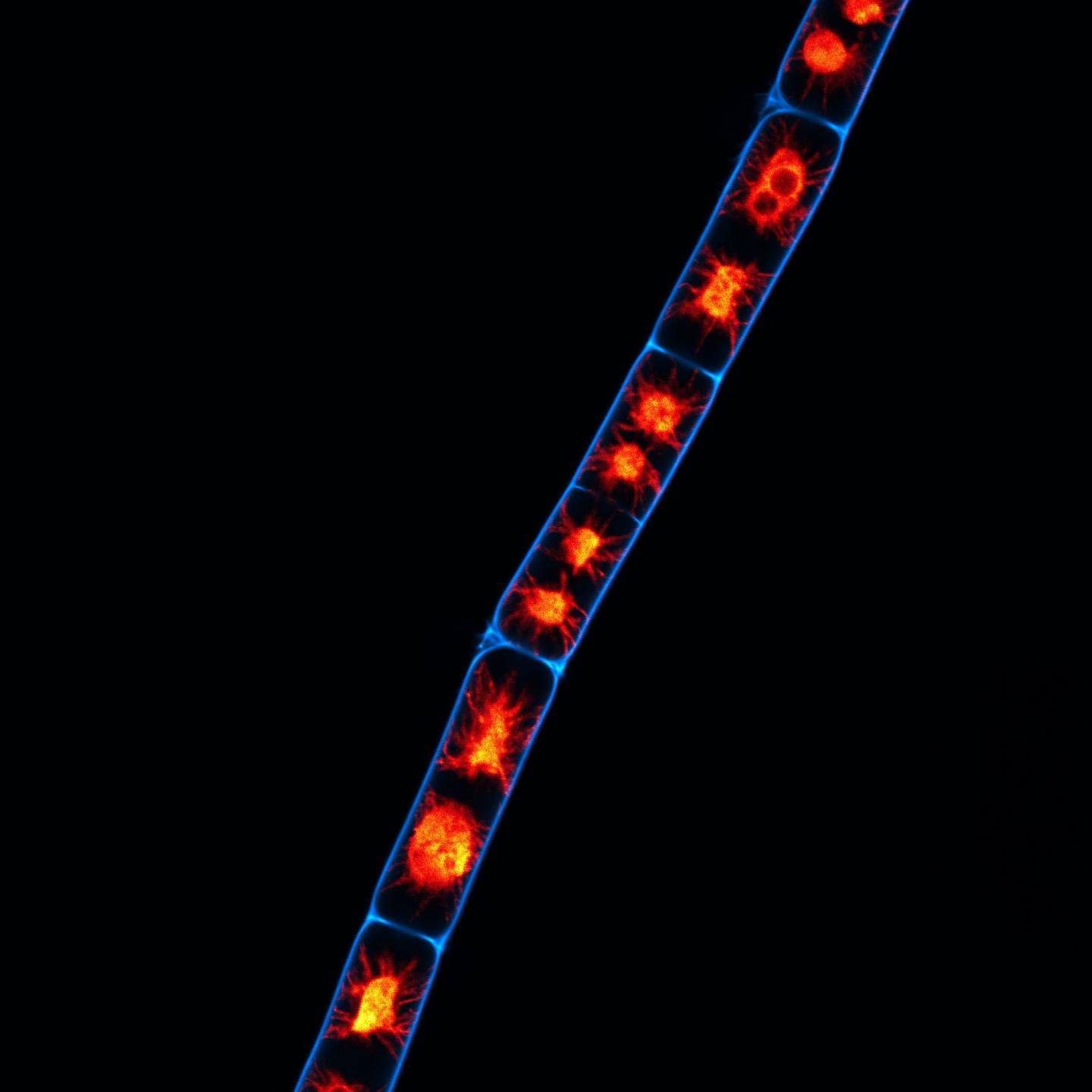
An international research team including Göttingen University investigates evolutionary development
IMAGE

Credit: Jan de Vries


Plants get stressed too. Environmental factors such as drought or a high concentration of salt in the soil disrupt their physiology. All land plants, from liverwort to rye, use a complex signalling cascade under stressful conditions. An international research team led by the Hebrew University of Jerusalem with the participation of the University of Göttingen investigated how evolutionary changes in receptor proteins led to their ability to sense the plant hormone abscisic acid (ABA). This enabled them to develop sensing mechanisms that aided their colonization of dry land and their response to stress conditions. The results were published in the journal Proceedings of the National Academy of Sciences (PNAS).

The signalling cascade of stress in “land plants”, ie all plants that grow on land from moss to trees but not algae, is based on the detection of the messenger substance abscisic acid, which is a plant hormone. According to scientific understanding, this hormone’s action has long been regarded as a key characteristic of land plants. Scientists suspected that this hormone, which regulates stress responses, helped plants early on in their evolution to cope with the stress they were exposed to during the “conquest” of the land.

Co-author Professor Jan de Vries from the Institute of Microbiology and Genetics at the University of Göttingen says: “We were able to show that the closest living algae relatives of land plants, the zygnematophyceaen green algae (to some unflatteringly known as ‘pond scum’), have a complete set of genes that strongly resembles the genetic framework that land plants use for the detection of abscisic acid. In particular, we found that the first step in the signalling cascade was present: a possible receptor for the hormone.”

In the current study, an international team consisting of researchers from four different countries and led by the Hebrew University of Jerusalem, investigated whether and how this receptor gene integrates into the signalling cascade. “Using molecular biological methods, we found out that it integrates into the signalling cascade and is able to regulate it,” says de Vries. “However, it does this independently of the hormone abscisic acid.”

In land plants, the signalling cascade hinges on the action of the stress hormone. However, algae do not use the hormone as a trigger for the signalling cascade — so the cascade has an origin independent from this function as hormone-dependent signalling framework. Interestingly, this original mechanism still functions in land plants – in addition to the well-known hormone-dependent mechanism that every biology student learns.

###

Original publication: Yufei Sun et al. A ligand-independent origin of abscisic acid perception. Proceedings of the National Academy of Sciences (2019). Doi: 10.1073/pnas.1914480116

Publication: https://www.pnas.org/content/early/2019/11/18/1914480116

Contact:

Professor Jan de Vries

University of Göttingen

Faculty of Biology and Psychology

Institute of Microbiology and Genetics

Department of Applied Bioinformatics

Goldschmidtstraße 1, 37077 Göttingen

Tel: 0551 39-13995

Email: [email protected]

http://www.uni-goettingen.de/en/613776.html

Media Contact
Melissa Sollich
[email protected]
49-055-139-26228

Original Source

https://www.uni-goettingen.de/en/3240.html?id=5712

Related Journal Article

http://dx.doi.org/10.1073/pnas.1914480116

Tags: BiochemistryBiologyCell BiologyEcology/EnvironmentEvolutionGeneticsPlant Sciences
Share12Tweet8Share2ShareShareShare2

Related Posts

UMass Chan Scientists Pioneer Gene Editing Technology That Rewrites Entire Genome Chapters — Biology

UMass Chan Scientists Pioneer Gene Editing Technology That Rewrites Entire Genome Chapters

May 13, 2026
Scientists Observe Rice Plants Capturing and Eliminating Fall Armyworm Caterpillars — Biology

Scientists Observe Rice Plants Capturing and Eliminating Fall Armyworm Caterpillars

May 13, 2026

Study Finds Genetic Risk for Schizophrenia Emerges in Early Adolescence

May 13, 2026

How Water Fleas Sense Their Predators: A Scientific Insight

May 13, 2026
Please login to join discussion

POPULAR NEWS

  • Research Indicates Potential Connection Between Prenatal Medication Exposure and Elevated Autism Risk

    842 shares
    Share 337 Tweet 211
  • New Study Reveals Plants Can Detect the Sound of Rain

    729 shares
    Share 291 Tweet 182
  • Salmonella Haem Blocks Macrophages, Boosts Infection

    62 shares
    Share 25 Tweet 16
  • Breastmilk Balances E. coli and Beneficial Bacteria in Infant Gut Microbiomes

    57 shares
    Share 23 Tweet 14

About

We bring you the latest biotechnology news from best research centers and universities around the world. Check our website.

Follow us

Recent News

Triple-Negative Breast Cancer Ecotypes and Chemotherapy Response

Maveropepimut-S Combo Shows Promise in Ovarian Cancer

Gaussian Boson Sampling: 1,024 Squeezed States, 8,176 Modes

Subscribe to Blog via Email

Enter your email address to subscribe to this blog and receive notifications of new posts by email.

Join 82 other subscribers
  • Contact Us

Bioengineer.org © Copyright 2023 All Rights Reserved.

Welcome Back!

Login to your account below

Forgotten Password?

Retrieve your password

Please enter your username or email address to reset your password.

Log In
No Result
View All Result
  • Homepages
    • Home Page 1
    • Home Page 2
  • News
  • National
  • Business
  • Health
  • Lifestyle
  • Science

Bioengineer.org © Copyright 2023 All Rights Reserved.