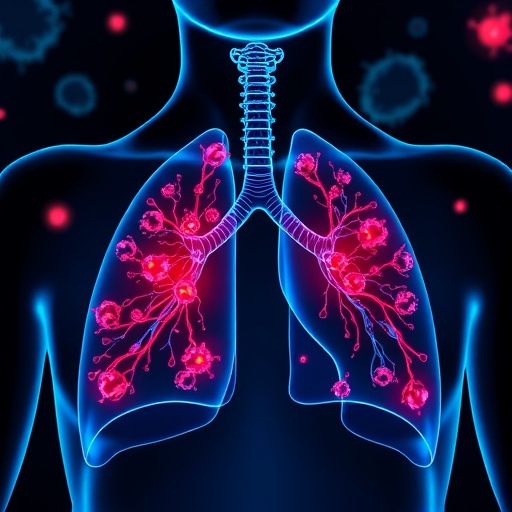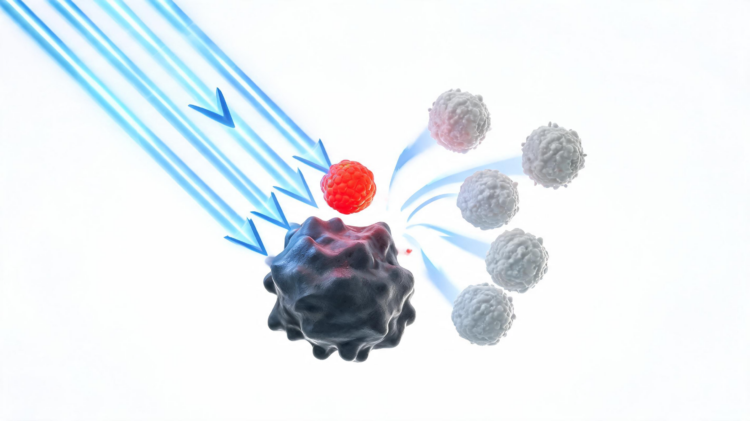
Radiotherapy has long been celebrated as one of the most reliable weapons in oncology, a therapy whose ionizing beams carve lethal double-strand breaks into tumor DNA and flood cancer cells with reactive oxygen species. Yet a comprehensive new review published in Clinical Cancer Bulletin argues that the story of radiation does not end with tumor killing. The same treatment that destroys cancer cells also triggers a profound and often damaging reorganization of the tumor microenvironment, and at the center of this remodeling sits a single chemokine: CCL2, also known as monocyte chemoattractant protein-1, and its cognate receptor CCR2. According to the review, authored by Baoxu Li, Dianrong Li, Qi Liu and Lin Ma, this signaling axis functions as a master orchestrator of post-radiation immunosuppression, converting localized tissue injury into a systemic program of immune evasion that helps explain why so many irradiated tumors eventually resist treatment and recur.
The molecular logic of this process begins within hours of the first radiation fraction. Ionizing radiation shatters genomic DNA in surviving tumor cells and simultaneously generates an overwhelming burst of intracellular reactive oxygen species. These two stress signals converge on the CCL2 promoter through parallel transcriptional highways. Along the first route, DNA double-strand breaks activate the ataxia-telangiectasia mutated kinase, ATM, which phosphorylates and partners with nuclear factor-kappa-B essential modulator, NEMO. This complex migrates to the cytoplasm, activates the IκB kinase machinery, and liberates the transcription factor NF-κB, which then returns to the nucleus and binds κB sites on the CCL2 promoter. Along the second route, radiation-generated ROS inhibit protein tyrosine phosphatases, releasing the brakes on JAK2 and Src kinases and sustaining activation of STAT3, while also firing the JNK and p38 mitogen-activated protein kinase cascades that stimulate the AP-1 complex. Because the CCL2 promoter carries binding sites for NF-κB, STAT3 and AP-1, these pathways do not act independently but converge synergistically, and together with recruited histone acetyltransferases such as p300/CBP they drive CCL2 transcription to remarkable heights even after the radiation beam is switched off.
Critically, the review emphasizes that surviving tumor cells are not the only source of this chemokine flood. In treatment-naïve tumors, CCL2 is held at basal levels sufficient for tissue homeostasis, but radiation abruptly disrupts this equilibrium and provokes what the authors describe as a chemokine storm. Radiation drives stromal fibroblasts into irreversible proliferative arrest, a state known as cellular senescence, which activates the senescence-associated secretory phenotype. Cancer-associated fibroblasts emerging from this program become exceptionally stable and durable factories of CCL2, sustaining elevated concentrations long after the acute phase of treatment and playing a predominant role in the late phases of microenvironmental remodeling. Radiation-damaged endothelial cells add to the chorus by upregulating CCL2 and adhesion molecules along the vasculature, establishing the physical prerequisite for early myeloid infiltration, while monocytes recruited into the hypoxic, fibrotic microenvironment themselves differentiate into macrophages that secrete additional CCL2. This creates a self-amplifying positive feedback loop in which macrophages recruit more macrophages, serving as the primary driver of persistent, late-stage secretion.
The dominant cellular source of CCL2 after irradiation is not fixed but context dependent, shaped by tumor lineage, stromal composition, hypoxia and intercellular communication. In glioblastoma, where microglia, macrophages and astrocytes constitute major stromal populations, CCL2 may be produced mainly by tumor cells and macrophages. In contrast, in tumors with dense mesenchymal stroma, such as breast and pancreatic cancers, cancer-associated fibroblasts may represent the dominant and most durable source. These producing populations do not act independently: in colorectal cancer models, direct contact between fibroblasts and recruited macrophages enhanced CCL2 secretion by both cell types, with macrophage CCL2 expression boosted by as much as forty-fold, underscoring the network nature of the response rather than a simple one-way relay from tumor cell to immune cell.
Once CCL2 spills into the circulation, it acts far beyond the irradiated field, reaching the bone marrow and spleen and triggering the massive egress of CCR2-expressing inflammatory monocytes into the bloodstream. Guided by the chemotactic gradient, these cells transmigrate across the radiation-damaged vascular endothelium and flood the tumor bed, where they undergo deep transcriptional reprogramming. CCL2 binding to CCR2, a classical G protein-coupled receptor, activates PI3K/Akt and MAPK/ERK survival pathways alongside JAK/STAT3, while the hypoxic, debris-laden microenvironment and its abundant transforming growth factor-beta steer the newcomers toward an M2-like, immunosuppressive macrophage fate marked by CD163 and arginase-1 expression. These tumor-associated macrophages then suppress antigen presentation by downregulating MHC-II and co-stimulatory molecules on dendritic cells, induce regulatory T cell proliferation, and release epidermal growth factor and vascular endothelial growth factor that nourish residual tumor cells. The review notes that the familiar M1/M2 dichotomy is an oversimplification, with single-cell sequencing revealing a continuum of macrophage states whose spatial positioning relative to vessels, stroma and excluded T cells shapes their pathological impact.
Monocytic myeloid-derived suppressor cells represent a second arm of this myeloid invasion. Local CCL2 concentrations after radiotherapy correlate strongly with intratumoral enrichment of these cells, and pharmacological CCR2 blockade with monoclonal antibodies or small molecules significantly impairs their infiltration. Once embedded in the tumor, MDSCs construct what the review describes as a biochemical barrier. Under STAT3 transactivation they upregulate arginase-1, which depletes local L-arginine, starving T cells of an amino acid required for CD3ζ chain expression and arresting their cell cycle at the G0/G1 boundary. Concurrently, inducible nitric oxide synthase generates nitric oxide that reacts with superoxide to form reactive nitrogen species, which nitrate tyrosine residues within the T cell receptor complex. The result is a recognition failure so profound that T cells can no longer identify tumor neoantigens, including those released during radiation-induced immunogenic cell death. Even if cytotoxic T cells physically reach the tumor, they arrive functionally exhausted and paralyzed, a phenomenon the authors argue elegantly explains why radiotherapy alone so often fails to elicit durable systemic immunity.
Beyond these cellular mechanisms, the CCL2/CCR2 axis drives physical remodeling that locks T cells out of the tumor entirely. Recruited macrophages engage in bidirectional cross-talk with cancer-associated fibroblasts, stimulating them through TGF-beta and platelet-derived growth factor to deposit dense type I collagen and highly polymerized hyaluronan. This aberrant desmoplasia forms a fibrotic wall that strands effector T cells in the peritumoral stroma, preventing their penetration into the tumor nest. Simultaneously, macrophage-derived matrix metalloproteinases proteolytically degrade the CXCL9 and CXCL10 chemokines that normally guide T cell trafficking, while TAM-secreted CCL20 and CCL22 recruit regulatory T cells that further entrench immunosuppression. The microenvironment thus transitions from an immune-inflamed state toward an immune-excluded or immune-desert phenotype in which radiation-induced antigen release cannot be converted into tumor killing.
The review also highlights how vascular remodeling compounds the problem. High-dose irradiation damages tumor vasculature and induces profound hypoxia, stabilizing hypoxia-inducible factor-1 alpha, which itself upregulates CCL2 and reinforces a positive feedback loop. Monocytes drawn into this hypoxic milieu differentiate into pro-angiogenic subpopulations, including Tie2-expressing macrophages, that become the principal sources of VEGF-A and MMP-9. The ensuing microvascular rebound provides residual tumor cells with nutrient supply and survival conduits within days to weeks of treatment, while a parallel pro-fibrotic cascade lays the groundwork for late-stage radiation-induced fibrosis. Together, abnormal angiogenesis, stromal stiffening and matrix deposition form an interlocking set of barriers that the authors summarize as biochemical, physical and vascular obstacles to effective immunity.
Notably, the immunological consequences of radiation are schedule dependent. Conventional fractionated radiotherapy at roughly 1.8 to 2.0 Gy per day inflicts chronic sublethal stress that pushes cells into senescence, sustaining ATM/NEMO/NF-κB signaling and a stable senescence-associated secretory phenotype in which CCL2 climbs steadily to an unremitting plateau. Ablative stereotactic body radiotherapy, by contrast, triggers massive acute cell death and a burst-like CCL2 surge that rapidly mobilizes Ly6C-positive inflammatory monocytes and drives pro-angiogenic macrophage differentiation. Dose also dictates the fate of competing immunostimulatory signals: moderate fractions of 8 to 10 Gy promote cytosolic DNA accumulation that activates the cGAS/STING pathway and type I interferon signaling, enhancing the CXCL9/10–CXCR3 axis and CD8-positive T cell infiltration. However, single fractions exceeding roughly 12 to 18 Gy induce the exonuclease TREX1, which degrades cytosolic DNA and silences this interferon response, leaving CCL2-driven myeloid recruitment relatively dominant and potentially explaining immunosuppression and recurrence after high-dose regimens.
Translating these insights into therapies has proven difficult. Early-phase clinical trials of carlumab, a monoclonal antibody against CCL2, in solid tumors and metastatic castration-resistant prostate cancer delivered underwhelming results, largely due to two compensatory mechanisms. First, neutralizing antibodies act as a sponge, binding free CCL2 and storing it in the circulation; when antibody levels decline, stored ligand is released in a dramatic rebound that can paradoxically accelerate tumor recurrence. Second, the microenvironment adapts through bypass signaling: when CCR2 blockade prevents monocytic infiltration, tumor cells upregulate CXCL1/2/5/8 and recruit polymorphonuclear MDSCs via CXCR2, preserving immunosuppression through substitute cells. These failures, the review argues, do not negate the axis’s value but signal that CCL2/CCR2 targeting is best deployed in rational combinations rather than as monotherapy.
The most promising framework is a triplet strategy integrating radiotherapy, CCR2 inhibition and immune checkpoint inhibitors, in which each component addresses a distinct layer of resistance. Radiation serves as an in situ vaccine, releasing tumor antigens and danger signals that prime dendritic cells and T cell responses. CCR2 inhibitors intercept the chemokine surge, preventing macrophages and MDSCs from constructing immunosuppressive barriers and allowing effector T cells to infiltrate. PD-1/PD-L1 antibodies then reverse exhaustion in the T cells that finally reach the tumor nest. Preclinical evidence supports this logic: CCR2/CCR5 inhibition permitted radiation-induced effector T cell infiltration in pancreatic cancer models, and dual CCR2/CXCR2 blockade improved chemotherapy responses by simultaneously restricting macrophage and neutrophil recruitment. The authors caution that clinical evidence for the full triplet remains limited and emphasize three priorities for translation: biomarker-driven patient stratification using dynamic blood CCL2 levels and CCR2-positive myeloid infiltration patterns; precise timing of CCR2 antagonists within the 24 to 48 hour window of peak chemokine release; and multi-target regimens combining CCR2 with CXCR2 or CSF-1R inhibitors to outflank compensatory networks. If these dimensions are mastered, the review concludes, targeting the CCL2/CCR2 axis could dismantle the barriers that currently confine radiotherapy’s promise, transforming it from a local cytotoxic tool into a genuine in situ vaccine capable of kindling durable, systemic antitumor immune memory.
Subject of Research: The role of the CCL2/CCR2 chemokine signaling axis in radiation-induced immunosuppression, tumor microenvironment remodeling, and radioresistance.
Article Title: The CCL2/CCR2 axis in irradiated tumors: orchestrating immune recruitment and microenvironment remodeling
Article References: Li, B., Li, D., Liu, Q., & Ma, L. (2026). The CCL2/CCR2 axis in irradiated tumors: orchestrating immune recruitment and microenvironment remodeling. Clinical Cancer Bulletin, 5(1), Article 15. https://doi.org/10.1007/s44272-026-00069-z
Image Credits: AI Generated
DOI: 10.1007/s44272-026-00069-z
Keywords: radiotherapy, CCL2/CCR2 axis, tumor microenvironment, tumor-associated macrophages, myeloid-derived suppressor cells, immunosuppression, radioresistance, cancer-associated fibroblasts, immune checkpoint inhibitors, radiation-induced fibrosis, immunotherapy, cGAS/STING
Cite Scienmag News
APA
MLA
Chicago
Nathaniel Bowman. (September 11, 2026). How a Single Chemokine Can Sabotage Radiotherapy and Shape the Immune Battlefield. Scienmag. https://scienmag.com/how-a-single-chemokine-can-sabotage-radiotherapy-and-shape-the-immune-battlefield/
Nathaniel Bowman. “How a Single Chemokine Can Sabotage Radiotherapy and Shape the Immune Battlefield.” Scienmag, 11 September 2026, https://scienmag.com/how-a-single-chemokine-can-sabotage-radiotherapy-and-shape-the-immune-battlefield/. Accessed 11 September 2026.
Nathaniel Bowman. “How a Single Chemokine Can Sabotage Radiotherapy and Shape the Immune Battlefield.” Scienmag. September 11, 2026. https://scienmag.com/how-a-single-chemokine-can-sabotage-radiotherapy-and-shape-the-immune-battlefield/
Copy citation
Download RIS
Tags: cancer-associated fibroblastsCCL2/CCR2 axisCCR2 receptorcGAS-STINGchemokine CCL2DNA damage responseimmune checkpoint inhibitorsImmune Evasion MechanismsimmunosuppressionImmunotherapymicroenvironment signaling pathwaysmyeloid-derived suppressor cellspost-radiation immune modulationradiation-induced fibrosisradiation-induced immunosuppressionradioresistanceradiotherapyreactive oxygen species in cancer treatmenttumor microenvironmenttumor microenvironment remodelingtumor recurrencetumor resistance to radiationtumor-associated macrophages