• HOME
  • NEWS
  • EXPLORE
    • CAREER
      • Companies
      • Jobs
    • EVENTS
    • iGEM
      • News
      • Team
    • PHOTOS
    • VIDEO
    • WIKI
  • BLOG
  • COMMUNITY
    • FACEBOOK
    • INSTAGRAM
    • TWITTER
Sunday, June 28, 2026
BIOENGINEER.ORG
No Result
View All Result
  • Login
  • HOME
  • NEWS
  • EXPLORE
    • CAREER
      • Companies
      • Jobs
        • Lecturer
        • PhD Studentship
        • Postdoc
        • Research Assistant
    • EVENTS
    • iGEM
      • News
      • Team
    • PHOTOS
    • VIDEO
    • WIKI
  • BLOG
  • COMMUNITY
    • FACEBOOK
    • INSTAGRAM
    • TWITTER
  • HOME
  • NEWS
  • EXPLORE
    • CAREER
      • Companies
      • Jobs
        • Lecturer
        • PhD Studentship
        • Postdoc
        • Research Assistant
    • EVENTS
    • iGEM
      • News
      • Team
    • PHOTOS
    • VIDEO
    • WIKI
  • BLOG
  • COMMUNITY
    • FACEBOOK
    • INSTAGRAM
    • TWITTER
No Result
View All Result
Bioengineer.org
No Result
View All Result
Home NEWS Science News Health

HKUST scientists develop simple blood test for early detection of Alzheimer’s disease

Bioengineer by Bioengineer
September 6, 2025
in Health
Reading Time: 2 mins read
0
IMAGE
Share on FacebookShare on TwitterShare on LinkedinShare on RedditShare on Telegram

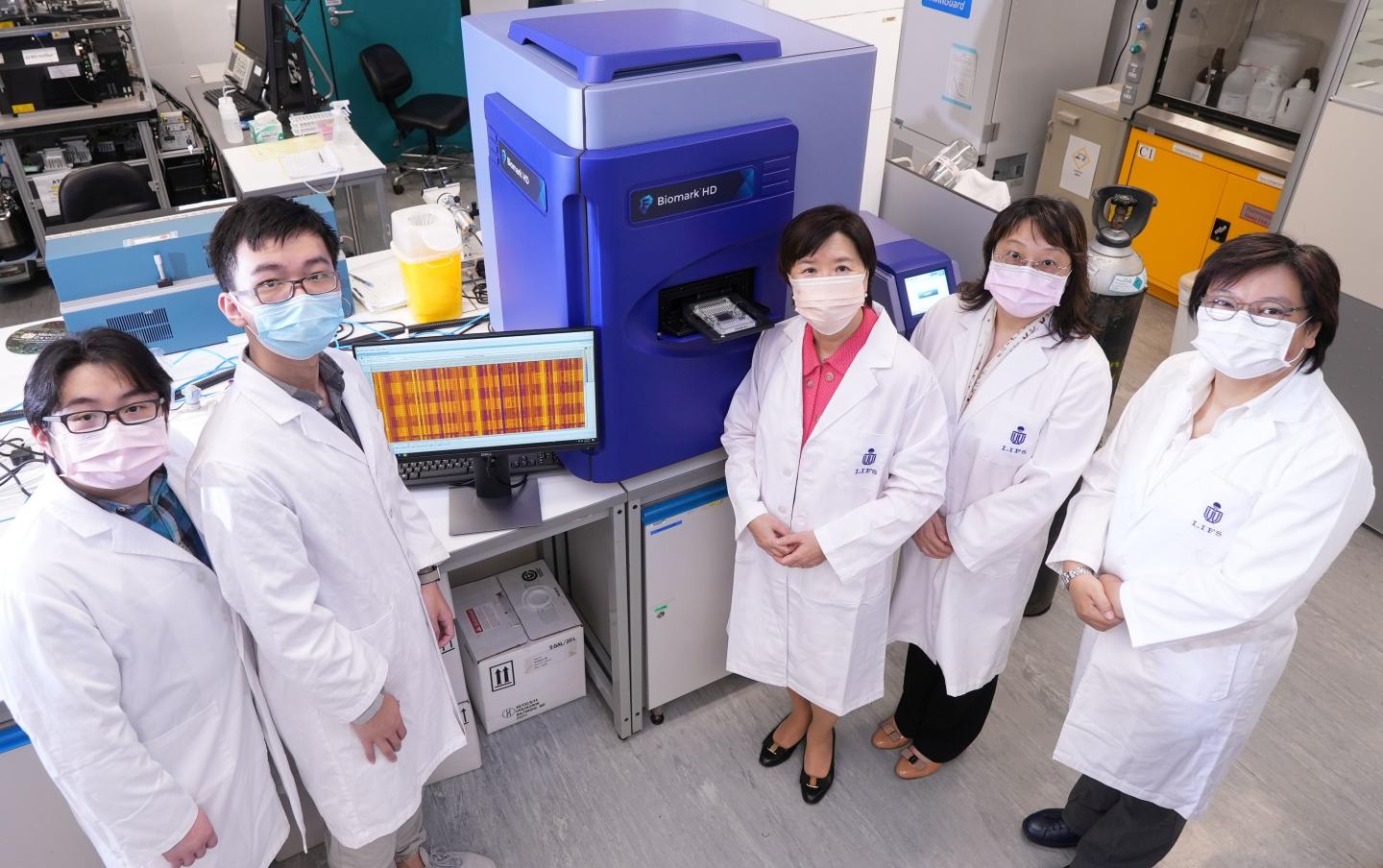
An international research team led by HKUST has developed a simple but robust blood test from Chinese patient data for early detection and screening of Alzheimer’s disease (AD) for the first time, with an accuracy level of over 96%.

Currently, doctors mainly rely on cognitive tests to diagnose a person with AD. Besides clinical assessment, brain imaging and lumbar puncture are the two most commonly used medical procedures to detect changes in the brain caused by AD. However, these methods are expensive, invasive, and frequently unavailable in many countries.

Now, a team led by Prof. Nancy IP, Vice-President for Research and Development at HKUST, has identified 19 out of the 429 plasma proteins associated with AD to form a biomarker panel representative of an “AD signature” in the blood. Based on this panel, the team has developed a scoring system that distinguishes AD patients from healthy people with more than 96% accuracy. This system can also differentiate among the early, intermediate, and late stages of AD, and can be used to monitor the progression of the disease over time. These exciting findings have led to the development of a high-performance, blood-based test for AD, and may also pave the way to novel therapeutic treatments for the disease.

“With the advancement of ultrasensitive blood-based protein detection technology, we have developed a simple, noninvasive, and accurate diagnostic solution for AD, which will greatly facilitate population-scale screening and staging of the disease,” said Prof. Nancy Ip, Morningside Professor of Life Science and the Director of the State Key Laboratory of Molecular Neuroscience at HKUST.

The work was conducted in collaboration with researchers at University College London and clinicians in local hospitals including the Prince of Wales Hospital and Queen Elizabeth Hospital. The discovery was made using the proximity extension assay (PEA) – a cutting-edge ultrasensitive and high-throughput protein measurement technology, to examine the levels of over 1,000 proteins in the plasma of AD patients in Hong Kong.

As the most comprehensive study of blood proteins in AD patients to date, the work has recently been published in Alzheimer’s & Dementia: The Journal of the Alzheimer’s Association, and has also been featured and actively discussed on different scholarly exchange platforms on AD research such as Alzforum.

AD, which affects over 50 million people worldwide, involves the dysfunction and loss of brain cells. Its symptoms include progressive memory loss as well as impaired movement, reasoning, and judgment. While patients often only seek medical attention and are diagnosed when they have memory problems, AD affects the brain at least 10-20 years before symptoms appear.

###

Media Contact
Johnny Tam
[email protected]

Original Source

https://hkust.edu.hk/news/research-and-innovation/hkust-scientists-develop-simple-blood-test-early-detection-alzheimers

Related Journal Article

http://dx.doi.org/10.1002/alz.12369

Tags: AlzheimerDiagnosticsMedicine/Healthneurobiology
Share14Tweet9Share2ShareShareShare2

Related Posts

Tracking Lanthanide-Labeled Microplastics in Plants

June 25, 2026

Neural Design Enables Zero-Shot Drug-Binding Proteins

June 25, 2026

Genomic Insights into Human Skin Fungi Diversity

June 25, 2026

Chiral Laser Gyroscopes Surpass Lock-In Limit

June 25, 2026
Please login to join discussion

POPULAR NEWS

  • Saying Goodbye to PGY-6: Pediatric Fellowship Realities

    103 shares
    Share 41 Tweet 26
  • Multi-Hospital Study Reveals Long Covid Burden Is Twice as High as Current Estimates

    92 shares
    Share 36 Tweet 23
  • Detection of EDCs in Breast Milk and Infant Urine Up to Six Months Highlights Early Exposure Risks

    77 shares
    Share 31 Tweet 19
  • New Drug Candidate Developed at McMaster Shows Potential for Treating Brain Cancer

    58 shares
    Share 23 Tweet 15

About

We bring you the latest biotechnology news from best research centers and universities around the world. Check our website.

Follow us

Recent News

Tracking Lanthanide-Labeled Microplastics in Plants

POSTECH Researchers Slash Cost of Reconstituted Cell-Free Systems by 95%

AI and Physics Collaborate to Design Advanced Hydrogen Storage Materials

Subscribe to Blog via Email

Success! An email was just sent to confirm your subscription. Please find the email now and click 'Confirm' to start subscribing.

Join 82 other subscribers
  • Contact Us

Bioengineer.org © Copyright 2023 All Rights Reserved.

Welcome Back!

Login to your account below

Forgotten Password?

Retrieve your password

Please enter your username or email address to reset your password.

Log In
No Result
View All Result
  • Homepages
    • Home Page 1
    • Home Page 2
  • News
  • National
  • Business
  • Health
  • Lifestyle
  • Science

Bioengineer.org © Copyright 2023 All Rights Reserved.