• HOME
  • NEWS
  • EXPLORE
    • CAREER
      • Companies
      • Jobs
    • EVENTS
    • iGEM
      • News
      • Team
    • PHOTOS
    • VIDEO
    • WIKI
  • BLOG
  • COMMUNITY
    • FACEBOOK
    • INSTAGRAM
    • TWITTER
Saturday, May 16, 2026
BIOENGINEER.ORG
No Result
View All Result
  • Login
  • HOME
  • NEWS
  • EXPLORE
    • CAREER
      • Companies
      • Jobs
        • Lecturer
        • PhD Studentship
        • Postdoc
        • Research Assistant
    • EVENTS
    • iGEM
      • News
      • Team
    • PHOTOS
    • VIDEO
    • WIKI
  • BLOG
  • COMMUNITY
    • FACEBOOK
    • INSTAGRAM
    • TWITTER
  • HOME
  • NEWS
  • EXPLORE
    • CAREER
      • Companies
      • Jobs
        • Lecturer
        • PhD Studentship
        • Postdoc
        • Research Assistant
    • EVENTS
    • iGEM
      • News
      • Team
    • PHOTOS
    • VIDEO
    • WIKI
  • BLOG
  • COMMUNITY
    • FACEBOOK
    • INSTAGRAM
    • TWITTER
No Result
View All Result
Bioengineer.org
No Result
View All Result
Home NEWS Science News Biology

HKU ecologists and international team discover ongoing and future tropical diversity decline

Bioengineer by Bioengineer
May 26, 2020
in Biology
Reading Time: 3 mins read
0
IMAGE
Share on FacebookShare on TwitterShare on LinkedinShare on RedditShare on Telegram

IMAGE

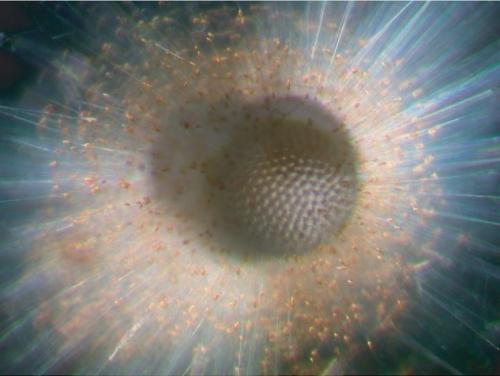
Credit: Katsunori Kimoto

How can patterns in the marine biodiversity of the past help us to understand how it may change in the future? A recent research by Drs Moriaki Yasuhara and Timothy C Bonebrake (School of Biological Sciences and Swire Institute of Marine Science, the University of Hong Kong) and numerous international collaborators finds that the tropical diversity decline now seen in the ocean is not purely human induced, but nonetheless will worsen considerably if we do not limit anthropogenic climate warming.

The research, published in Proceedings of the National Academy of Sciences of the United States of America, used fossil records to reconstruct global oceanic biodiversity patterns of the last ice age (~20,000 years ago) and the pre-industrial period (before 1800s), and used these to build ecological models for projecting global marine biodiversity in the near future (2090s). Using fossil protozoan foraminifera (Images 1, 2) as a “window” to see into past pelagic ecosystems through their rich fossil records, the authors discovered an equatorial “dip” in diversity during the pre-industrial period and projected for the end of this century, but not during the last ice age (Image 3).

“Biodiversity is usually high in the tropics and low at the poles. We call this important pattern the ‘latitudinal diversity gradient’. Yet, recent studies have found that global marine biodiversity patterns often show an equatorial ‘dip’ of diversity. We wanted to explore what caused this, and whether it was a recent pattern,” said lead author Dr Moriaki Yasuhara.

The modern decline of tropical diversity likely started during post-ice-age warming around 15,000 years ago. However, the magnitude of decline is projected to be amplified by anthropogenic warming. By the end of the 21st century, tropical diversity may decrease to levels not seen for millions of years if our future aligns with the “business-as-usual” CO2 emission scenario.

“By using fossil records we discovered that the diversity ‘dip’ in equatorial regions of the ocean is caused by species distribution shifts driven by post-ice-age ocean warming,” continued co-lead author Dr Chih-Lin Wei, Associate Professor at Institute of Oceanography, National Taiwan University. The pelagic ocean covers the vast majority of Earth’s surface and is the largest ecosystem on Earth (Images 4, 5). It is home to planktons that play a key role in food chain, top predators and economically important species that are increasingly under threat from climate change.

“These clear links between warming and reduced tropical biodiversity mean that by the end of this century, oceanic diversity at the equator may dip to a level unprecedented in human history,” co-author Dr Derek P Tittensor, Associate Professor at Dalhousie University, concluded.

###

About the journal paper

Citation: Moriaki Yasuhara, Chih-Lin Wei, Michal Kucera, Mark J. Costello, Derek P. Tittensor, Wolfgang Kiessling, Timothy C. Bonebrake, Clay Tabor, Ran Feng, Andrés Baselga, Kerstin Kretschmer, Buntarou Kusumoto, and Yasuhiro Kubota (2020) Past and future decline of tropical pelagic biodiversity. Proceedings of the National Academy of Sciences of the United States of America.

Link of journal paper: https://www.pnas.org/content/early/2020/05/20/1916923117

For more information about Dr Moriaki Yasuhara’s research, please visit: https://moriakiyasuhara.com

Images download and captions:

https://www.scifac.hku.hk/press

Media Contact
Cindy Chan
[email protected]

Original Source

https://hku.hk/press/news_detail_21080.html

Related Journal Article

http://dx.doi.org/10.1073/pnas.1916923117

Tags: Climate ChangeEarth ScienceEvolutionOceanographyPaleontology
Share12Tweet8Share2ShareShareShare2

Related Posts

Single mother must adapt swiftly — the survival of her colony depends on it — Biology

Single mother must adapt swiftly — the survival of her colony depends on it

May 15, 2026
Why Are Nearly Everyone Right-Handed? It Might Be Linked to How We Learned to Walk — Biology

Why Are Nearly Everyone Right-Handed? It Might Be Linked to How We Learned to Walk

May 15, 2026

Excessive Neuronal Activity Initiates Severe Autoimmune Brain Disorder

May 15, 2026

Precision Anti-Aging Strategies Focus on Eliminating Harmful Senescent Cells While Preserving Beneficial Ones

May 15, 2026
Please login to join discussion

POPULAR NEWS

  • Research Indicates Potential Connection Between Prenatal Medication Exposure and Elevated Autism Risk

    843 shares
    Share 337 Tweet 211
  • New Study Reveals Plants Can Detect the Sound of Rain

    730 shares
    Share 291 Tweet 182
  • Salmonella Haem Blocks Macrophages, Boosts Infection

    62 shares
    Share 25 Tweet 16
  • Breastmilk Balances E. coli and Beneficial Bacteria in Infant Gut Microbiomes

    58 shares
    Share 23 Tweet 15

About

We bring you the latest biotechnology news from best research centers and universities around the world. Check our website.

Follow us

Recent News

Perinatal and Early Childhood Factors in PFAPA Persistence

New Actinomycin Derivatives Target Malaria More Selectively

Mobile App Enhances Exercise for Older Adults’ Cognition

Subscribe to Blog via Email

Enter your email address to subscribe to this blog and receive notifications of new posts by email.

Join 82 other subscribers
  • Contact Us

Bioengineer.org © Copyright 2023 All Rights Reserved.

Welcome Back!

Login to your account below

Forgotten Password?

Retrieve your password

Please enter your username or email address to reset your password.

Log In
No Result
View All Result
  • Homepages
    • Home Page 1
    • Home Page 2
  • News
  • National
  • Business
  • Health
  • Lifestyle
  • Science

Bioengineer.org © Copyright 2023 All Rights Reserved.