• HOME
  • NEWS
  • EXPLORE
    • CAREER
      • Companies
      • Jobs
    • EVENTS
    • iGEM
      • News
      • Team
    • PHOTOS
    • VIDEO
    • WIKI
  • BLOG
  • COMMUNITY
    • FACEBOOK
    • INSTAGRAM
    • TWITTER
Friday, December 19, 2025
BIOENGINEER.ORG
No Result
View All Result
  • Login
  • HOME
  • NEWS
  • EXPLORE
    • CAREER
      • Companies
      • Jobs
        • Lecturer
        • PhD Studentship
        • Postdoc
        • Research Assistant
    • EVENTS
    • iGEM
      • News
      • Team
    • PHOTOS
    • VIDEO
    • WIKI
  • BLOG
  • COMMUNITY
    • FACEBOOK
    • INSTAGRAM
    • TWITTER
  • HOME
  • NEWS
  • EXPLORE
    • CAREER
      • Companies
      • Jobs
        • Lecturer
        • PhD Studentship
        • Postdoc
        • Research Assistant
    • EVENTS
    • iGEM
      • News
      • Team
    • PHOTOS
    • VIDEO
    • WIKI
  • BLOG
  • COMMUNITY
    • FACEBOOK
    • INSTAGRAM
    • TWITTER
No Result
View All Result
Bioengineer.org
No Result
View All Result
Home NEWS Science News Chemistry

Hispanics/Latinos underrepresented in Alzheimer’s disease research

Bioengineer by Bioengineer
February 20, 2020
in Chemistry
Reading Time: 2 mins read
0
IMAGE
Share on FacebookShare on TwitterShare on LinkedinShare on RedditShare on Telegram

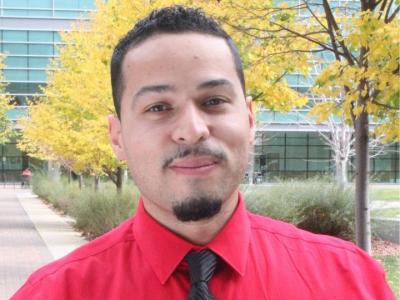
UH researcher to increase health literacy among largest US minority
IMAGE

Credit: University of Houston


A University of Houston researcher is working to increase health literacy among Hispanics/Latinos (H/Ls) when it comes to Alzheimer’s disease (AD). The largest ethnic minority in the U.S., at 18% of the population, H/Ls are 50% more likely to develop Alzheimer’s disease than non-Hispanic whites. H/Ls also live longer, develop AD symptoms earlier, are diagnosed at later stages and are less likely to be treated.

Given those statistics, it’s startling that Hispanics/Latinos comprise less than 1% of clinical trials for Alzheimer’s disease.

“From a social justice perspective, in order to help reduce health disparities we need to involve these communities in the decision-making process,” said Luis D. Medina, assistant professor of psychology. He will use a $2.35 million grant from the National Institute on Aging to build his “Engaging Communities of Hispanics for Aging Research Network.”

“There are various barriers to getting involved in research, including health literacy or what people actually know about Alzheimer’s disease. In the Hispanic/Latino communities, it is often thought of as just a part of aging,” said Medina, who believes the solution begins with education.

The network will launch in two pilot cities, Houston and Denver. Step one is “boot camp translation” wherein community stakeholders are immersed in learning about the disease, and then the tables turn – the community members educate the trainers on how to speak to their communities.

“In boot camp translation we break down the medical jargon to consumable, understandable lay language and the community tells us how to do that,” said Medina. “The communities have a lot of strengths that we, as researchers, may or may not have. We are hoping to put more seats at the table so that the communities are involved in research infrastructure and help drive research projects.”

Steven Woods, UH professor of psychology and Jennifer Vardeman, UH associate professor of communication, are assisting on the project in collaboration with Baylor College of Medicine, University of Colorado School of Medicine, University of Nevada, Las Vegas and the Lou Ruvo Center for Brain Health at the Cleveland Clinic in Las Vegas.

Medina plans to expand the project to Las Vegas next as he creates a template for other cities to follow.

“This is about lifting all of us up and improving brain health. The more representative our research samples are, the better we can understand the disease,” said Medina, who was recently invited to serve on the Alzheimer’s Association International Research Grant Program Council to help craft funding opportunity requests for applications, provide expertise during grant review and make funding recommendations. The association is especially interested in Medina’s input on issues related to the recruitment of underrepresented populations.

###

Media Contact
Laurie Fickman
[email protected]
713-743-8454

Original Source

https://uh.edu/news-events/stories/2020/february-2020/022020-medina-alzheimers-research-boot-camp.php

Tags: AgingAlzheimerMedicine/HealthMortality/Longevityneurobiology
Share12Tweet8Share2ShareShareShare2

Related Posts

Microenvironment Shapes Gold-Catalysed CO2 Electroreduction

Microenvironment Shapes Gold-Catalysed CO2 Electroreduction

December 11, 2025
Photoswitchable Olefins Enable Controlled Polymerization

Photoswitchable Olefins Enable Controlled Polymerization

December 11, 2025

Cation Hydration Entropy Controls Chloride Ion Diffusion

December 10, 2025

Iridium Catalysis Enables Piperidine Synthesis from Pyridines

December 3, 2025
Please login to join discussion

POPULAR NEWS

  • Nurses’ Views on Online Learning: Effects on Performance

    Nurses’ Views on Online Learning: Effects on Performance

    70 shares
    Share 28 Tweet 18
  • NSF funds machine-learning research at UNO and UNL to study energy requirements of walking in older adults

    70 shares
    Share 28 Tweet 18
  • Unraveling Levofloxacin’s Impact on Brain Function

    53 shares
    Share 21 Tweet 13
  • MoCK2 Kinase Shapes Mitochondrial Dynamics in Rice Fungal Pathogen

    72 shares
    Share 29 Tweet 18

About

BIOENGINEER.ORG

We bring you the latest biotechnology news from best research centers and universities around the world. Check our website.

Follow us

Recent News

Forceps Use Linked to Neonatal Bleeding Risks

Preoperative Nutrition Boosts Outcomes in Hirschsprung Kids

Bone Healing: Strain Effects from Loading Timing

Subscribe to Blog via Email

Enter your email address to subscribe to this blog and receive notifications of new posts by email.

Join 70 other subscribers
  • Contact Us

Bioengineer.org © Copyright 2023 All Rights Reserved.

Welcome Back!

Login to your account below

Forgotten Password?

Retrieve your password

Please enter your username or email address to reset your password.

Log In
No Result
View All Result
  • Homepages
    • Home Page 1
    • Home Page 2
  • News
  • National
  • Business
  • Health
  • Lifestyle
  • Science

Bioengineer.org © Copyright 2023 All Rights Reserved.