• HOME
  • NEWS
  • EXPLORE
    • CAREER
      • Companies
      • Jobs
    • EVENTS
    • iGEM
      • News
      • Team
    • PHOTOS
    • VIDEO
    • WIKI
  • BLOG
  • COMMUNITY
    • FACEBOOK
    • INSTAGRAM
    • TWITTER
Sunday, May 17, 2026
BIOENGINEER.ORG
No Result
View All Result
  • Login
  • HOME
  • NEWS
  • EXPLORE
    • CAREER
      • Companies
      • Jobs
        • Lecturer
        • PhD Studentship
        • Postdoc
        • Research Assistant
    • EVENTS
    • iGEM
      • News
      • Team
    • PHOTOS
    • VIDEO
    • WIKI
  • BLOG
  • COMMUNITY
    • FACEBOOK
    • INSTAGRAM
    • TWITTER
  • HOME
  • NEWS
  • EXPLORE
    • CAREER
      • Companies
      • Jobs
        • Lecturer
        • PhD Studentship
        • Postdoc
        • Research Assistant
    • EVENTS
    • iGEM
      • News
      • Team
    • PHOTOS
    • VIDEO
    • WIKI
  • BLOG
  • COMMUNITY
    • FACEBOOK
    • INSTAGRAM
    • TWITTER
No Result
View All Result
Bioengineer.org
No Result
View All Result
Home NEWS Science News

Highly sensitive nanosensors to prevent catastrophes

Bioengineer by Bioengineer
June 1, 2017
in Science News
Reading Time: 2 mins read
0
Share on FacebookShare on TwitterShare on LinkedinShare on RedditShare on Telegram
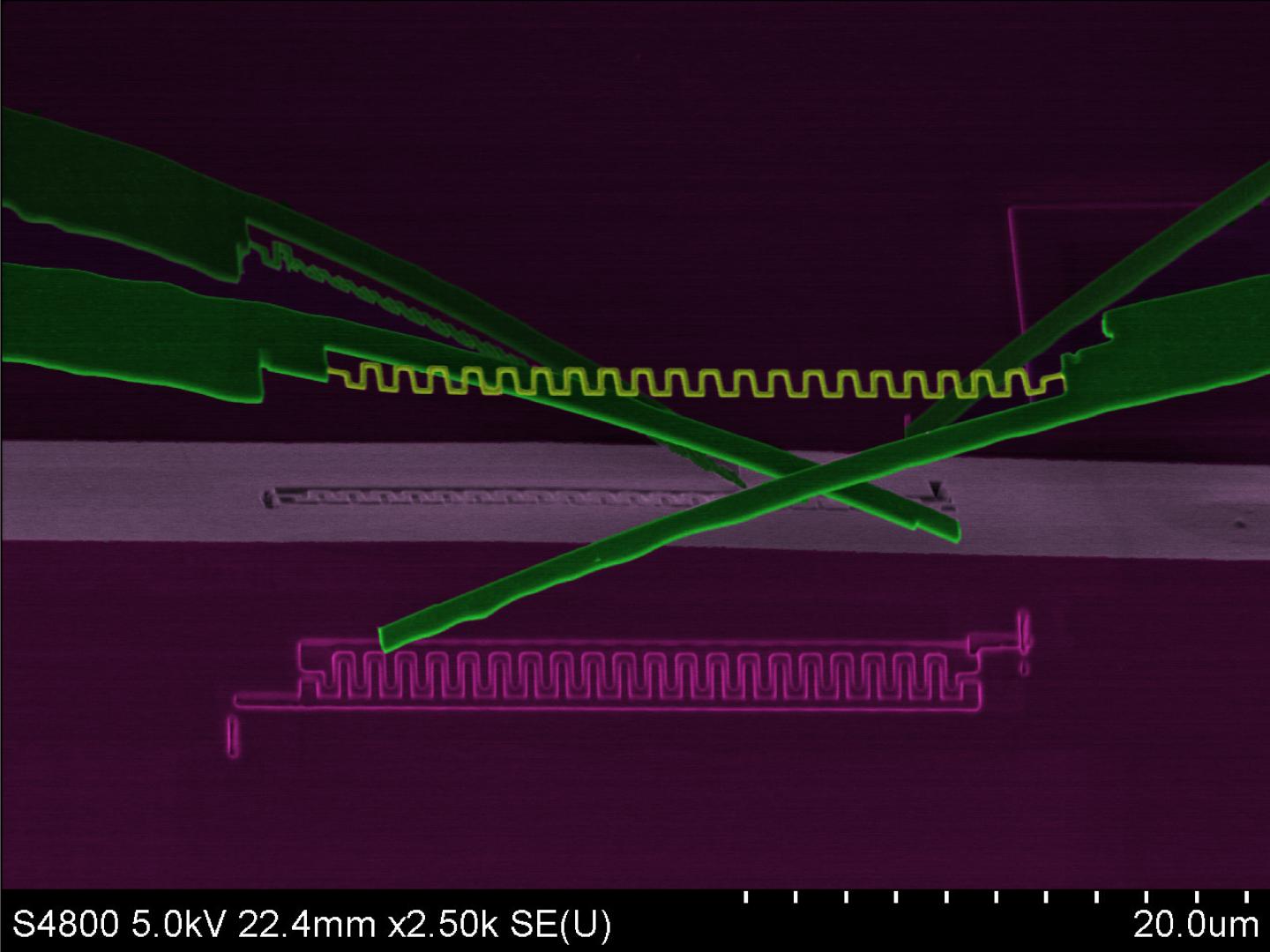
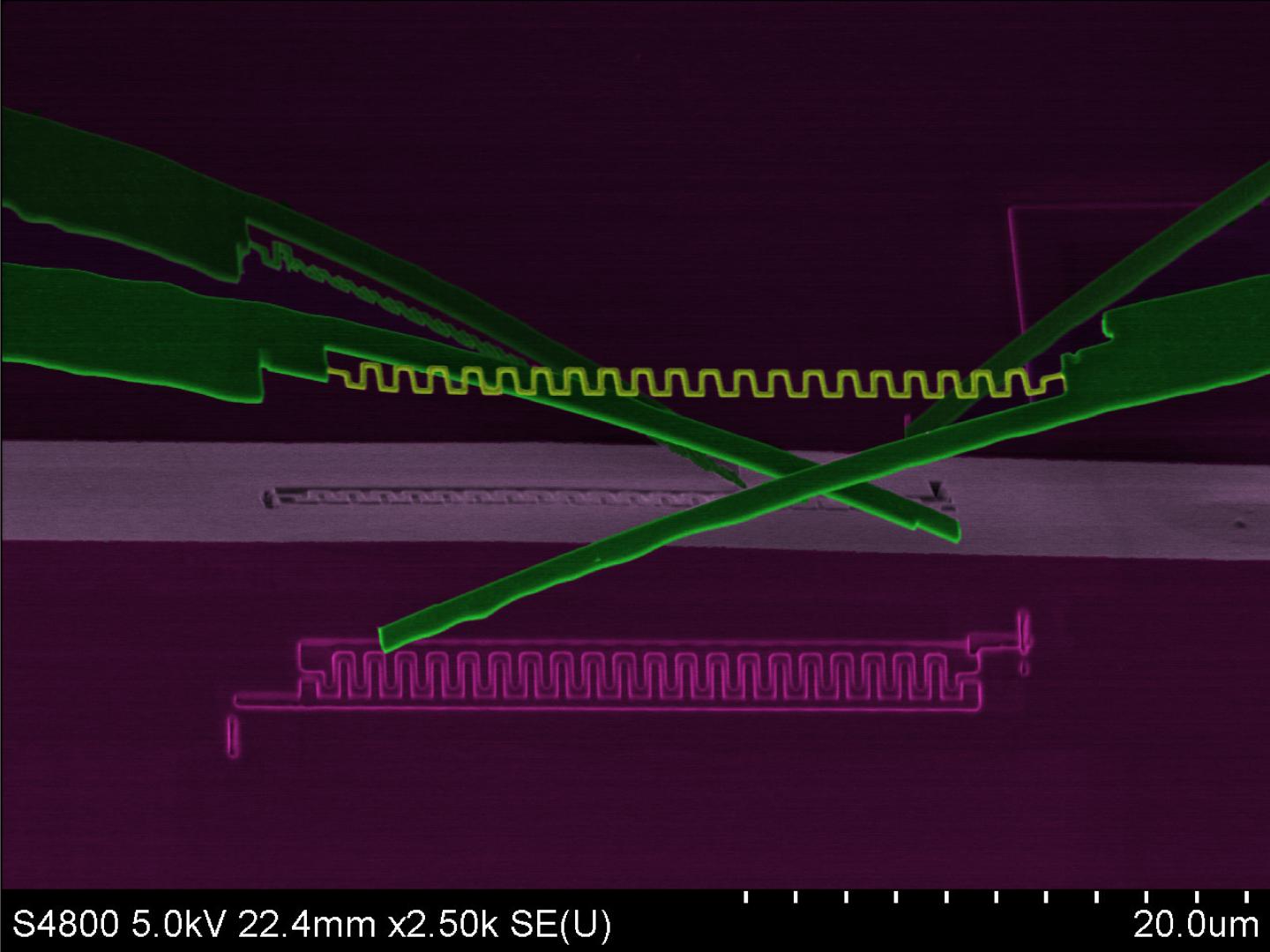
IMAGE

Credit: Queensland Micro- and Nanotechnology Centre, Griffith University.

With safety in the resource sector a globally critical issue, the researchers said an affordable, robust, and real-time monitoring system was imperative – and they have already made recent important discoveries furthering this work within the centre.

Dr Dzung Dao, Professor Nam-Trung Nguyen, Professor Sima Dimitrijev and Alan Iacopi will use a $403,000 Australian Research Council Linkage Project grant for their project 'Superior Silicon Carbide Nanoscale Sensors (SCANS) for Harsh Environments'.

Conducted in partnership with SPT Microtechnologies, the team will develop silicon-carbide (SiC) nanoscale sensors (SCANS) that will be commercialised to improve the safety and efficiency of systems that operate under hostile conditions.

Dr Dao said the project would address shortcomings of current diagnostic techniques, significantly improving the reliability, safety, productivity and efficiency of resource exploration and transportation systems in Australia.

"The resource sector, including mining, oil and gas, and geothermal industries, is one of the driving forces of the Australian economy, with the oil and gas extraction industry alone reaping approximately $50 billion for the Australian economy," he said.

"However, our oil and gas delivery infrastructure is rapidly ageing. Internal corrosion and mechanical strain can cause the leakage in gas and oil pipelines, leading to catastrophic failures, death, injury, and environmental impacts.

"Numerous sensor technologies have been used for monitoring and accident-prevention purposes but most of the sensors are bulky or based on material like silicon, which is not suitable for long time operation in high temperature environments found in pipelines, geothermal and mining applications."

Researchers have discovered numerous transducer effects in single crystal silicon-carbide thin films, including the pseudo-Hall, Hall, piezoresistive and thermoresistive effects, for superior pressure, vibration, flow rate, strain and magnetic sensors. The team has published 26 high-impact journal papers in this area since 2014, and already attracted 165 citations.

Compared to silicon, silicon-carbide possesses superior mechanical strength, chemical inertness, thermal durability, and electrical stability. Silicon carbide has been widely used in the power electronics industry, which is projected to have a global market value of $1.8 billion in 2018.

###

Media Contact

Stephanie Bedo
[email protected]
61-408-727-734
@Griffith_Uni

http://www.griffith.edu.au

############

Story Source: Materials provided by Scienmag

Share12Tweet8Share2ShareShareShare2

Related Posts

Intrinsic Capacity, Resilience, Frailty in Stroke Recovery

May 17, 2026
Seed Traits Key to Rare vs. Common Astragalus — Technology and Engineering

Seed Traits Key to Rare vs. Common Astragalus

May 17, 2026

Noncanonical Sulfur Metabolism, Immunity Altered in Down Syndrome

May 17, 2026

Physical Resilience Linked to Aging Views in Chinese Elders

May 17, 2026
Please login to join discussion

POPULAR NEWS

  • Research Indicates Potential Connection Between Prenatal Medication Exposure and Elevated Autism Risk

    844 shares
    Share 338 Tweet 211
  • New Study Reveals Plants Can Detect the Sound of Rain

    730 shares
    Share 291 Tweet 182
  • Salmonella Haem Blocks Macrophages, Boosts Infection

    62 shares
    Share 25 Tweet 16
  • Breastmilk Balances E. coli and Beneficial Bacteria in Infant Gut Microbiomes

    58 shares
    Share 23 Tweet 15

About

We bring you the latest biotechnology news from best research centers and universities around the world. Check our website.

Follow us

Recent News

Intrinsic Capacity, Resilience, Frailty in Stroke Recovery

Seed Traits Key to Rare vs. Common Astragalus

Noncanonical Sulfur Metabolism, Immunity Altered in Down Syndrome

Subscribe to Blog via Email

Success! An email was just sent to confirm your subscription. Please find the email now and click 'Confirm' to start subscribing.

Join 82 other subscribers
  • Contact Us

Bioengineer.org © Copyright 2023 All Rights Reserved.

Welcome Back!

Login to your account below

Forgotten Password?

Retrieve your password

Please enter your username or email address to reset your password.

Log In
No Result
View All Result
  • Homepages
    • Home Page 1
    • Home Page 2
  • News
  • National
  • Business
  • Health
  • Lifestyle
  • Science

Bioengineer.org © Copyright 2023 All Rights Reserved.