


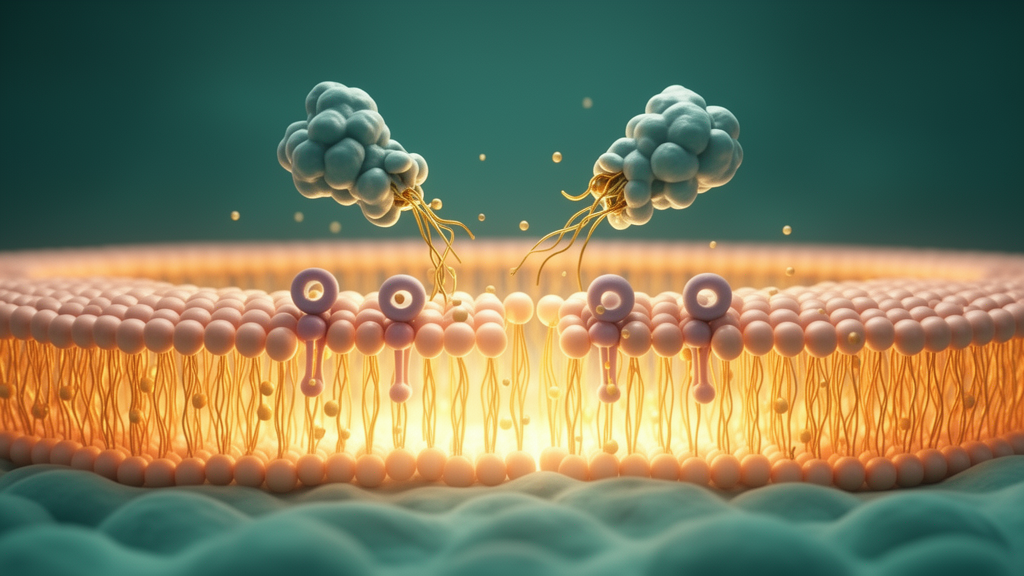
A reversible lipid tag called S-palmitoylation has moved to the center of molecular biology, and a newly published review in Cellular & Molecular Biology Letters argues that a family of enzymes once known mainly for fat metabolism sits at the heart of it.
S-palmitoylation is the covalent attachment of a 16-carbon palmitoyl group to cysteine residues on a protein. Unlike the other two canonical palmitoylation types, O-palmitoylation and N-palmitoylation, it is reversible, which makes it a genuine regulatory switch rather than a permanent label. Palmitoyl transferases, a family of 23 mammalian enzymes that all carry the conserved Asp-His-His-Cys (DHHC) domain, write the mark. For years, the erasers were thought to be a small cast: palmitoyl-protein thioesterase 1 (PPT1) in the lysosome and the acyl-protein thioesterases APT1 and APT2 elsewhere. But the review highlights a growing problem with that picture—many recently discovered palmitoylated substrates are not regulated by APTs at all, and Palmostatin B, the classical depalmitoylation inhibitor, hits additional serine hydrolases. Something was missing from the roster.
The missing players, the authors argue, are ABHD proteins. Humans carry twenty-three of them, enzymes that use a conserved catalytic triad to act as serine hydrolases or acyltransferases on a wide range of lipid substrates. Beyond their established roles in lipid homeostasis—handling medium-chain phospholipids, lysophosphatidylserine and N-acyl phosphatidylethanolamine, and tuning signaling lipids such as 2-arachidonoylglycerol and phosphatidic acid—several ABHD members have now been shown to control the palmitoylation status of protein substrates directly. The review focuses on five: ABHD17A/B/C, ABHD16A, ABHD10, ABHD7 and ABHD8, each with its own subcellular address, substrate set and disease portfolio.
The ABHD17 subfamily is the best characterized. In 2015, Lin and colleagues screened serine hydrolases against two heavily palmitoylated proteins, the oncogene N-Ras and the synaptic scaffold protein PSD-95, and found that overexpressing ABHD17A, ABHD17B or ABHD17C markedly reduced their palmitoylation. The three isoforms act redundantly: knocking down one has a modest effect on N-Ras, while silencing all three suppresses the modification substantially. Since then, ABHD17 enzymes have been implicated in tumorigenesis, synaptic function, neuronal polarization, GPCR signaling, inflammasome activation and inflammatory bowel disease.
In cancer, the same enzyme can cut both ways. ABHD17A counteracts zDHHC3-mediated palmitoylation of SCAP, promoting SCAP degradation, lowering cholesterol biosynthesis in the tumor microenvironment and preserving CD4-positive T cell cytotoxicity—thereby limiting immune escape in hepatocellular carcinoma. In colorectal cancer, ABHD17A depalmitoylates Rap2b, relocating it from the plasma membrane to the cytosol and blocking AKT/GSK3β signaling, which suppresses metastasis. ABHD17B, by contrast, suppresses hepatocellular carcinoma by blocking secretion of hexokinase 1 in large extracellular vesicles, yet promotes non-small cell lung cancer by stabilizing the glutamine transporter ASCT2 at the plasma membrane. ABHD17C fuels pancreatic ductal adenocarcinoma by depalmitoylating ALOX15B, blunting ferroptosis sensitivity, and drives hepatocellular proliferation through N-Ras activation. Single-cell RNA sequencing data further show ABHD17C upregulated in an aggressive epithelial subset of lung adenocarcinoma, where its expression tracks clinical stage and immune evasion, while in clear cell renal cell carcinoma its downregulation distinguishes tumor from normal tissue—making it a candidate diagnostic biomarker in both directions.
In the nervous system, ABHD17 enzymes govern the palmitoylation cycle of PSD-95 and MAP6. Overexpression of ABHD17B reduces synaptic aggregation of PSD-95, lowering spine density and distorting dendritic spine morphology, while the inhibitor Palmostatin B stabilizes PSD-95 at synapses. ABHD17B also controls axon maturation by regulating the palmitoylation of microtubule-associated protein 6, which shuttles between secretory vesicles and axonal microtubules. In schizophrenia-like phenotypes of MAP6 knockout mice, the review cautions that ABHD17 expression must be precisely balanced, since both excess and insufficiency disrupt MAP6 palmitoylation.
Immunity adds another layer. ABHD17A is the primary depalmitoylase of NLRP3, binding its LRR domain and removing palmitoyl groups at Cys837 and Cys838, thereby damping inflammasome activation; autoinflammatory disease mutations such as NLRP3 R920Q break this interaction and cause hyper-palmitoylation.
The remaining enzymes show how diverse the mechanisms can be. ABHD16A, located mainly on the endoplasmic reticulum, depalmitoylates IFITM1 and thereby weakens antiviral defense: its removal of the modification disrupts IFITM1 membrane localization, facilitating infection by Japanese encephalitis virus, vesicular stomatitis virus pseudotypes and hepatitis B virus. The E3 ubiquitin ligase RNF5 counterbalances this by tagging ABHD16A for proteasomal degradation, and the selective inhibitor KC01, which covalently targets the catalytic serine Ser355, attenuates JEV replication and suppresses HBV gene expression with minimal cytotoxicity. ABHD7, long known only as an epoxide hydrolase, was revealed in 2024 as the depalmitoylase of Lamin A at cysteines C522, C588 and C591; lactate weakens the ABHD7–Lamin A interaction, raising Lamin A palmitoylation, and this axis governs myoblast differentiation relevant to Emery–Dreifuss muscular dystrophy. ABHD10 also depalmitoylates SPATA19, GK2 and PDHX, proteins essential for sperm mitochondrial sheath formation and motility. ABHD8, uniquely, lacks depalmitoylase motifs and instead promotes NLRP3 palmitoylation by recruiting the palmitoyltransferase zDHHC12, restraining inflammasome activation—a brake that the SARS-CoV-2 nucleocapsid protein disrupts.
Underlying all of this is a shared structural grammar. The ABHD depalmitoylases conserve a catalytic triad—typically Ser-Asp-His, though ABHD7 unusually uses Asp169-Asp307-His336—and most carry the HXXXXD motif, whose disruption in ABHD16A abolishes depalmitoylase activity. Auxiliary elements dictate localization and substrate access: ABHD10’s cap domain cradles the palmitoyl lipid chain, while ABHD17 isoforms use a palmitoylated N-terminal amphipathic helix and a conserved hydrophobic loop to anchor at the plasma membrane. ABHD8 lacks the HXXXXD motif, consistent with its indirect, scaffold-based mechanism. The authors use these signatures to nominate candidates: ABHD12 and ABHD13 modestly reduce PSD-95 palmitoylation in overexpression screens but lack the correct synaptic localization, ABHD4’s effect on PSD-95 may reflect transcriptional downregulation rather than catalysis, and ABHD11’s sensitivity to the inhibitor ML226 hints at unexplored depalmitoylation potential. ABHD6 and ABHD14B, by contrast, show no measurable effect on global palmitoylation, and ABHD14B’s strict preference for short-chain acyl substrates rules out palmitate hydrolysis.
The review’s larger claim is that ABHD-mediated palmitoylation control is a druggable layer of cell regulation whose clinical exploitation has barely begun. The obstacles the authors flag are equally concrete: targeted delivery of inhibitors or agonists to specific tissues, precise titration of enzyme activity—nowhere more delicate than in the MAP6 system—and the still-unresolved question of whether the HXXXXD motif can serve as a predictive criterion for finding the next depalmitoylase. If those gaps close, the enzymes that erase a 16-carbon lipid tag may become diagnostic markers and drug targets across a remarkable span of human disease.
Subject of Research: The roles of ABHD proteins as regulators of reversible protein S-palmitoylation and their links to human disease
Article Title: Emerging roles of α/β hydrolase domain (ABHD) proteins in S-palmitoylation modification: molecular mechanisms, structural features, and pathological implications
Article References: Wen, X., Liu, M., Quan, Y., Xu, Y., Xu, J., & Shi, X. (2026). Emerging roles of α/β hydrolase domain (ABHD) proteins in S-palmitoylation modification: molecular mechanisms, structural features, and pathological implications. Cellular & Molecular Biology Letters, 31(1), Article 158. https://doi.org/10.1186/s11658-026-01020-9
Image Credits: AI Generated
DOI: 10.1186/s11658-026-01020-9
Keywords: S-palmitoylation, ABHD proteins, depalmitoylation, ABHD17, ABHD16A, ABHD10, ABHD7, ABHD8, post-translational modification, cancer, neurodegeneration, antiviral immunity
News Source: Drew Townsend. (October 30, 2026). Hidden Enzymes That Erase Protein Palmitoylation Emerge as Disease Drivers. Scienmag.



