• HOME
  • NEWS
  • EXPLORE
    • CAREER
      • Companies
      • Jobs
    • EVENTS
    • iGEM
      • News
      • Team
    • PHOTOS
    • VIDEO
    • WIKI
  • BLOG
  • COMMUNITY
    • FACEBOOK
    • INSTAGRAM
    • TWITTER
Sunday, August 16, 2026
BIOENGINEER.ORG
No Result
View All Result
  • Login
  • HOME
  • NEWS
  • EXPLORE
    • CAREER
      • Companies
      • Jobs
        • Lecturer
        • PhD Studentship
        • Postdoc
        • Research Assistant
    • EVENTS
    • iGEM
      • News
      • Team
    • PHOTOS
    • VIDEO
    • WIKI
  • BLOG
  • COMMUNITY
    • FACEBOOK
    • INSTAGRAM
    • TWITTER
  • HOME
  • NEWS
  • EXPLORE
    • CAREER
      • Companies
      • Jobs
        • Lecturer
        • PhD Studentship
        • Postdoc
        • Research Assistant
    • EVENTS
    • iGEM
      • News
      • Team
    • PHOTOS
    • VIDEO
    • WIKI
  • BLOG
  • COMMUNITY
    • FACEBOOK
    • INSTAGRAM
    • TWITTER
No Result
View All Result
Bioengineer.org
No Result
View All Result
Home NEWS Science News Health

Here’s a bitter pill to swallow: Artificial sweeteners may be doing more harm than good

Bioengineer by Bioengineer
December 17, 2019
in Health
Reading Time: 2 mins read
0
IMAGE
Share on FacebookShare on TwitterShare on LinkedinShare on RedditShare on Telegram

IMAGE

Credit: Creative Commons


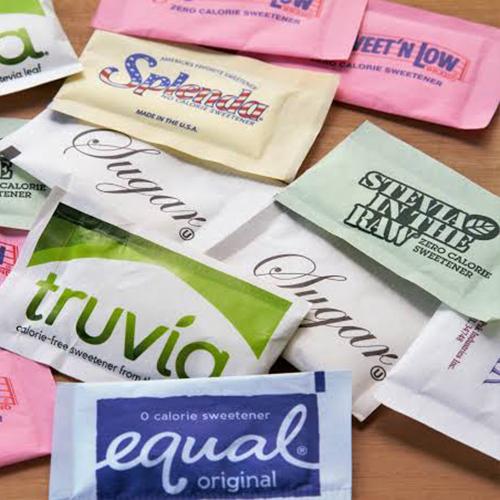
A $2.2 billion industry to help people lose weight through artificial sweeteners may be contributing to type 2 diabetes, according to researchers from the University of South Australia.

A recently published review led by UniSA Professor Peter Clifton reveals that people who use low-calorie sweeteners (LCS) are more likely to gain weight, the exact opposite of what consumers expect.

This is despite controlled clinical trials showing that artificial sweeteners do lead to weight loss.

There has been a 200 per cent increase in LCS usage among children and a 54 per cent increase among adults in the past 20 years, Prof Clifton says.

Low calorie sweeteners are used in place of sucrose, glucose and fructose. They have an intense sweet flavour without the calories, but recent studies have highlighted potential adverse health effects.

Prof Clifton says a US study of 5158 adults over a seven-year period found that those who consumed large quantities of artificial sweeteners gained more weight than non-users.

“Consumers of artificial sweeteners do not reduce their overall intake of sugar. They use both sugar and low-calorie sweeteners and may psychologically feel they can indulge in their favourite foods.

“Artificial sweeteners also change the gut bacteria which may lead to weight gain and risk of type 2 diabetes,” he says.

Artificially sweetened beverages (ASB) are also linked with increased risks of death and cardiovascular disease, and strokes and dementia among older people, but it is not clear why.

Prof Clifton cites 13 studies which investigated the effects of ASB intake on the risk of type 2 diabetes, all of which found either no link or a positive one. One study found that substituting ASB for sugar-sweetened beverages or fruit juices was associated with a 5-7 per cent lower risk of type 2 diabetes.

“A better option than low-calorie sweeteners is to stick to a healthy diet, which includes plenty of whole grains, dairy, seafood, legumes, vegetables and fruits and plain water,” Prof Clifton says.

###

The paper is available at: https://link.springer.com/content/pdf/10.1007%2Fs11883-019-0814-6.pdf

Media Contact
Candy Gibson
[email protected]
61-883-020-961

Related Journal Article

http://dx.doi.org/10.1007/s11883-019-0814-6

Tags: DiabetesDiet/Body WeightMedicine/HealthNutrition/Nutrients
Share12Tweet8Share2ShareShareShare2

Related Posts

PARP1 Drives Neuropathic Pain Through GPX4-Dependent Ferroptosis in Injured Mice’s Sensory Neurons

August 15, 2026

Genome-wide skin pQTL map reveals genetic regulators and mechanisms underlying skin disorders

August 15, 2026

Levistilide A Drives Ferroptosis via RNF40-HSP90α Axis, Suppressing Colorectal Cancer Lung Metastasis

August 15, 2026

Sintilimab, IBI305, and Chemotherapy Show Promise in First-Line Advanced Gastric and GEJ Adenocarcinoma

August 15, 2026
Please login to join discussion

POPULAR NEWS

  • KAIST develops semiconductor neuron that harnesses noise to selectively process signals

    29 shares
    Share 12 Tweet 7
  • Imagining natural and extra robotic thumbs together strengthens kinesthetic sensorimotor networks

    29 shares
    Share 12 Tweet 7
  • PARP1 Drives Neuropathic Pain Through GPX4-Dependent Ferroptosis in Injured Mice’s Sensory Neurons

    29 shares
    Share 12 Tweet 7
  • Strubbelig–NHL3 Receptor Complex Helps Arabidopsis Respond to Cellulose Deficiency

    29 shares
    Share 12 Tweet 7

About

We bring you the latest biotechnology news from best research centers and universities around the world. Check our website.

Follow us

Recent News

KAIST develops semiconductor neuron that harnesses noise to selectively process signals

Imagining natural and extra robotic thumbs together strengthens kinesthetic sensorimotor networks

PARP1 Drives Neuropathic Pain Through GPX4-Dependent Ferroptosis in Injured Mice’s Sensory Neurons

Subscribe to Blog via Email

Success! An email was just sent to confirm your subscription. Please find the email now and click 'Confirm' to start subscribing.

Join 85 other subscribers
  • Contact Us

Bioengineer.org © Copyright 2023 All Rights Reserved.

Welcome Back!

Login to your account below

Forgotten Password?

Retrieve your password

Please enter your username or email address to reset your password.

Log In
No Result
View All Result
  • Homepages
    • Home Page 1
    • Home Page 2
  • News
  • National
  • Business
  • Health
  • Lifestyle
  • Science

Bioengineer.org © Copyright 2023 All Rights Reserved.