Diabetic retinopathy remains one of the leading causes of vision loss worldwide, and current treatments such as injections of anti-VEGF drugs directly into the eye are invasive, costly, and poorly suited for long-term prevention. Now a team of researchers in Taiwan has uncovered a surprising new angle on how high blood sugar drives the growth of fragile, leaky retinal blood vessels, and they report that a traditional East Asian herbal drink, Mesona chinensis, may help rein in this process. The study, published in the Journal of Agriculture and Food Research, combines transgenic zebrafish, cultured human and primate endothelial cells, and computational modeling to trace the effect to a metabolic pathway that most people associate with cancer chemotherapy rather than eye disease: the folate-dependent thymidylate cycle.
Folate, or vitamin B9, is best known as an essential nutrient for prenatal development, but inside cells it is the backbone of one-carbon metabolism, a network that shuttles single-carbon units between folate derivatives to manufacture DNA building blocks, support methylation reactions, and maintain redox balance. One branch of this network, the thymidylate cycle, produces dTMP and ultimately dTTP, the nucleotide specifically required for DNA synthesis. Because endothelial cells must divide rapidly during angiogenesis, the growth of new blood vessels, their demand for thymidylate is unusually high. The researchers reasoned that this makes retinal blood vessel growth exquisitely sensitive to folate availability, and that hyperglycemia might exploit that sensitivity to fuel the pathological vessel proliferation seen in diabetic retinopathy.
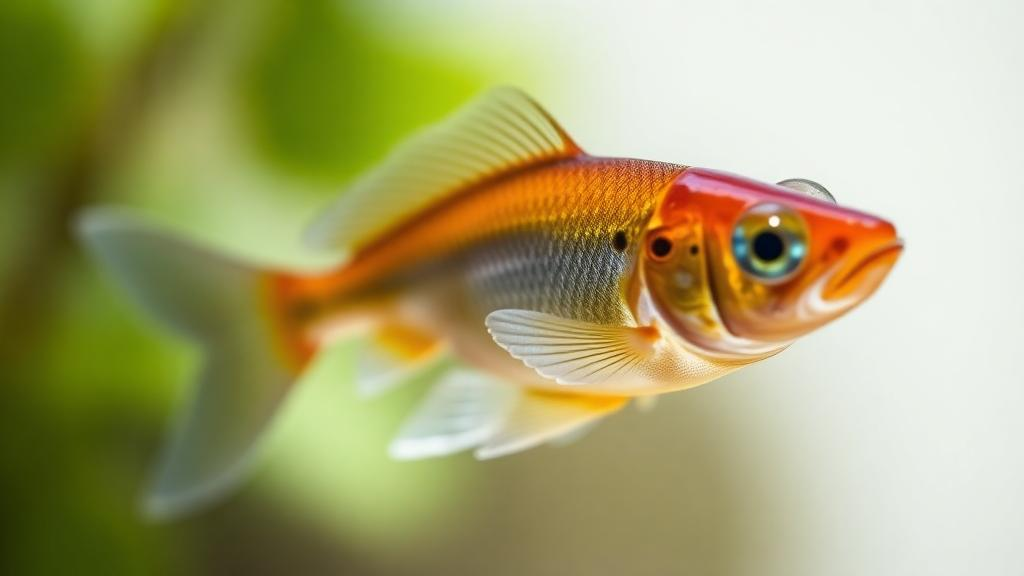
To test this idea, the team used a remarkable zebrafish model engineered so that intracellular folate deficiency can be switched on at will. A heat shock activates expression of gamma-glutamyl hydrolase, an enzyme that exports folate from cells, and red fluorescence marks the larvae in which the depletion has succeeded. When the researchers induced folate deficiency in these transparent larvae, the branching of the hyaloid vessels that supply the developing retina dropped significantly. Blocking folate metabolism with methotrexate, a classical dihydrofolate reductase inhibitor, produced the same effect, while supplementing with folic acid pushed branching in the opposite direction, increasing it. Retinal vascular development, in other words, tracks folate status closely.
The critical experiment came next. When larvae were bathed in a high-glucose solution, a standard zebrafish approach for modeling hyperglycemia, their retinal hyaloid vessels sprouted excessive branches, mimicking the hyper-angiogenesis of diabetic retinopathy. But when the researchers combined glucose exposure with folate deficiency, or with agents that perturb folate metabolism, including methotrexate, grape seed extract, and the green tea compound epigallocatechin-3-gallate, the glucose-driven vessel overgrowth was significantly blunted. This suggested that an intact, active folate metabolism is required for high sugar to exert its full angiogenic effect, and pointed the investigators toward the specific enzymes that changed under hyperglycemic conditions.
Molecular analysis revealed a clear signature. In the heads of glucose-exposed larvae, the messenger RNA for several one-carbon metabolism enzymes rose, but the standout was thymidylate synthase, or TYMS, the enzyme that converts deoxyuridine monophosphate into thymidylate using a methylene-tetrahydrofolate carrier. TYMS protein levels showed the most prominent increase of any enzyme measured. Crucially, the finding was not a zebrafish quirk: when the researchers exposed RF/6A monkey retinal endothelial cells and HMEC-1 human microvascular endothelial cells to glucose, TYMS protein climbed in both. Even more telling, injecting larvae with synthetic mRNA encoding Tyms, or simply supplying the downstream product dTTP, was enough to increase retinal vessel branching on its own, without any glucose at all.
The team also documented a striking tissue specificity. While TYMS overexpression boosted retinal hyaloid vessel branching, it simultaneously reduced the development of the intersegmental vessels along the trunk and the sub-intestinal vein. Exogenous dTTP reproduced this pattern, promoting retinal branching while leaving trunk vessels untouched. This aligns with the emerging concept of endothelial heterogeneity, in which vessel beds in different tissues have distinct metabolic appetites and signaling contexts. The retina, with its enormous energy demands, appears uniquely responsive to fluctuations in nucleotide supply, whereas trunk vasculature develops under different angiogenic programs governed by VEGF and BMP signaling. A gene set enrichment analysis of transcriptomic data from diabetic mouse retinas independently showed enrichment of folate one-carbon metabolism genes, lending cross-species support to the axis.
Into this mechanistic picture the researchers introduced Mesona chinensis, a botanical species long consumed as the herbal jelly and grass jelly tea of East Asian cuisine, with a documented history of safe dietary use. Phytochemical studies have identified rosmarinic acid, caffeic acid, quercetin glycosides, and astragalin among its constituents. When zebrafish larvae were exposed to the extract, high-performance liquid chromatography revealed a selective drop in dihydrofolate levels, while tetrahydrofolate, 5-methyl-tetrahydrofolate, and 10-formyl-tetrahydrofolate remained largely unchanged. This pointed to a targeted effect on the thymidylate cycle rather than a wholesale depletion of the folate pool. Consistent with that interpretation, adding folic acid or a mixture of other deoxynucleotides failed to reverse the extract’s anti-angiogenic effects, ruling out generalized folate or nucleotide starvation.
The functional results were compelling. Co-treatment with the extract dose-dependently reduced glucose-induced retinal vessel branching in larvae, and it restored the number of vessel branch points when dTTP was withheld from the system, an effect reversed by dTTP supplementation. In cultured endothelial cells, the extract reduced viability in a dose-dependent manner, and dTTP rescued the primate retinal cells. When applied to larvae engineered to overexpress Tyms, the extract tamed both the retinal hyper-branching and the trunk vascular abnormalities caused by excess enzyme. Perhaps most strikingly, larvae exposed to high glucose showed severely impaired optomotor responses, the instinctive swimming that follows moving stripes, with only about 27 percent behaving normally, whereas co-treatment with the extract raised that figure to roughly 84.5 percent. In adult zebrafish given retro-orbital glucose injections, the extract reduced retinal vascular sprouting in the mature vasculature.
Safety was a key differentiator. At concentrations that suppressed glucose-driven retinal angiogenesis, the extract produced no detectable developmental toxicity, while methotrexate and 5-fluorouracil caused reduced survival, body curvature, yolk sac and pericardial edema, and failed swim bladder inflation in the larvae. Molecular docking analysis further suggested that quercetin, a flavonoid present in the extract, binds the TYMS active site with a predicted energy more favorable than that of the natural substrate dUMP or the clinical inhibitor FdUMP, forming hydrogen bonds with Ser216 and hydrophobic contacts with Phe225 and Leu221, although the authors emphasize this is hypothesis-generating modeling rather than proof. Quercetin alone partially recapitulated the extract’s vascular effects in larvae.
The authors are careful about the limits of the work. The 100 millimolar glucose used in zebrafish immersion exceeds human physiological levels, though the TYMS upregulation was independently confirmed in mammalian cells at 10 millimolar glucose, within the clinically relevant range. Osmotic controls were omitted, long-term chronic exposure studies remain to be done, and the full chemical composition of the extract was not characterized chromatographically. No mammalian diabetic retinopathy model or clinical cohort has yet validated the findings, and the experimental concentrations cannot be translated directly into dietary recommendations. Still, the study establishes a mechanistic foundation for a genuinely novel idea: that a common, traditionally consumed food plant may modulate a chemotherapy-linked metabolic enzyme to protect the retina from sugar-driven vessel overgrowth, offering a gentler, diet-based complement to injections for millions at risk of diabetic blindness.
Subject of Research: The role of folate-mediated one-carbon metabolism and thymidylate synthase in diabetic retinopathy and the anti-angiogenic potential of Mesona chinensis extract
Article Title: Modulating Folate Metabolism and Thymidylate Synthase in Diabetic Retinopathy: Zebrafish Insights and the Prophylactic Potential of Mesona chinensis
Article References: Jao, S.-W., Yu, H.-H., Lee, G.-H., Ma, T.-W., Chang, Y.-S., Tang, M.-J., Chen, B.-H., & Fu, T.-F. (2026). Modulating Folate Metabolism and Thymidylate Synthase in Diabetic Retinopathy: Zebrafish Insights and the Prophylactic Potential of Mesona chinensis. Journal of Agriculture and Food Research, Article 103355. https://doi.org/10.1016/j.jafr.2026.103355
Image Credits: AI Generated
DOI: 10.1016/j.jafr.2026.103355
Keywords: diabetic retinopathy, folate metabolism, thymidylate synthase, one-carbon metabolism, Mesona chinensis, zebrafish model, angiogenesis, quercetin, hyperglycemia, retinal vasculature, functional foods, endothelial cells
News Source: Alan Morgan. (October 7, 2026). Herbal Tea Extract Shows Promise Against Diabetic Eye Disease in Zebrafish Study. Scienmag.