• HOME
  • NEWS
  • EXPLORE
    • CAREER
      • Companies
      • Jobs
    • EVENTS
    • iGEM
      • News
      • Team
    • PHOTOS
    • VIDEO
    • WIKI
  • BLOG
  • COMMUNITY
    • FACEBOOK
    • INSTAGRAM
    • TWITTER
Monday, October 5, 2026
BIOENGINEER.ORG
No Result
View All Result
  • Login
  • HOME
  • NEWS
  • EXPLORE
    • CAREER
      • Companies
      • Jobs
        • Lecturer
        • PhD Studentship
        • Postdoc
        • Research Assistant
    • EVENTS
    • iGEM
      • News
      • Team
    • PHOTOS
    • VIDEO
    • WIKI
  • BLOG
  • COMMUNITY
    • FACEBOOK
    • INSTAGRAM
    • TWITTER
  • HOME
  • NEWS
  • EXPLORE
    • CAREER
      • Companies
      • Jobs
        • Lecturer
        • PhD Studentship
        • Postdoc
        • Research Assistant
    • EVENTS
    • iGEM
      • News
      • Team
    • PHOTOS
    • VIDEO
    • WIKI
  • BLOG
  • COMMUNITY
    • FACEBOOK
    • INSTAGRAM
    • TWITTER
No Result
View All Result
Bioengineer.org
No Result
View All Result
Home NEWS Science News Biology

Helping hands from within: Live-in bacteria protect plants against infections

Bioengineer by Bioengineer
November 1, 2019
in Biology
Reading Time: 3 mins read
0
IMAGE
Share on FacebookShare on TwitterShare on LinkedinShare on RedditShare on Telegram

IMAGE

Credit: NIOO-KNAW


Micro-organisms living inside plant roots team up to boost the plant’s growth and tolerance to stress. An international research team led by the Netherlands Institute of Ecology (NIOO-KNAW) and Wageningen UR reports its discovery in today’s issue of the renowned scientific journal Science.

Certain species of ‘resident’ bacteria can protect plant roots against fungal infections. Researchers from the Netherlands (Wageningen, Leiden, Rotterdam), Brazil, Colombia and the United States made this discovery using metagenomics: a form of DNA-technology that analyses genes from an environment to reveal the previously hidden diversity of the local microbial community.

“It’s without precedent that we were able to reconstruct the composition and functions of this community in plant roots based solely on DNA-sequencing”, says the study’s last author and research leader, Jos Raaijmakers from NIOO-KNAW.

Sustainable crop production

“Bacteria are essential to the functioning of plants, animals and people”, argues Raaijmakers. “Our main goal was to discover micro-organisms inside roots that are recruited by the plant when it’s under attack from fungal pathogens. Our study represents a big step forward for developing more sustainable crop production systems, with fewer pesticides.”

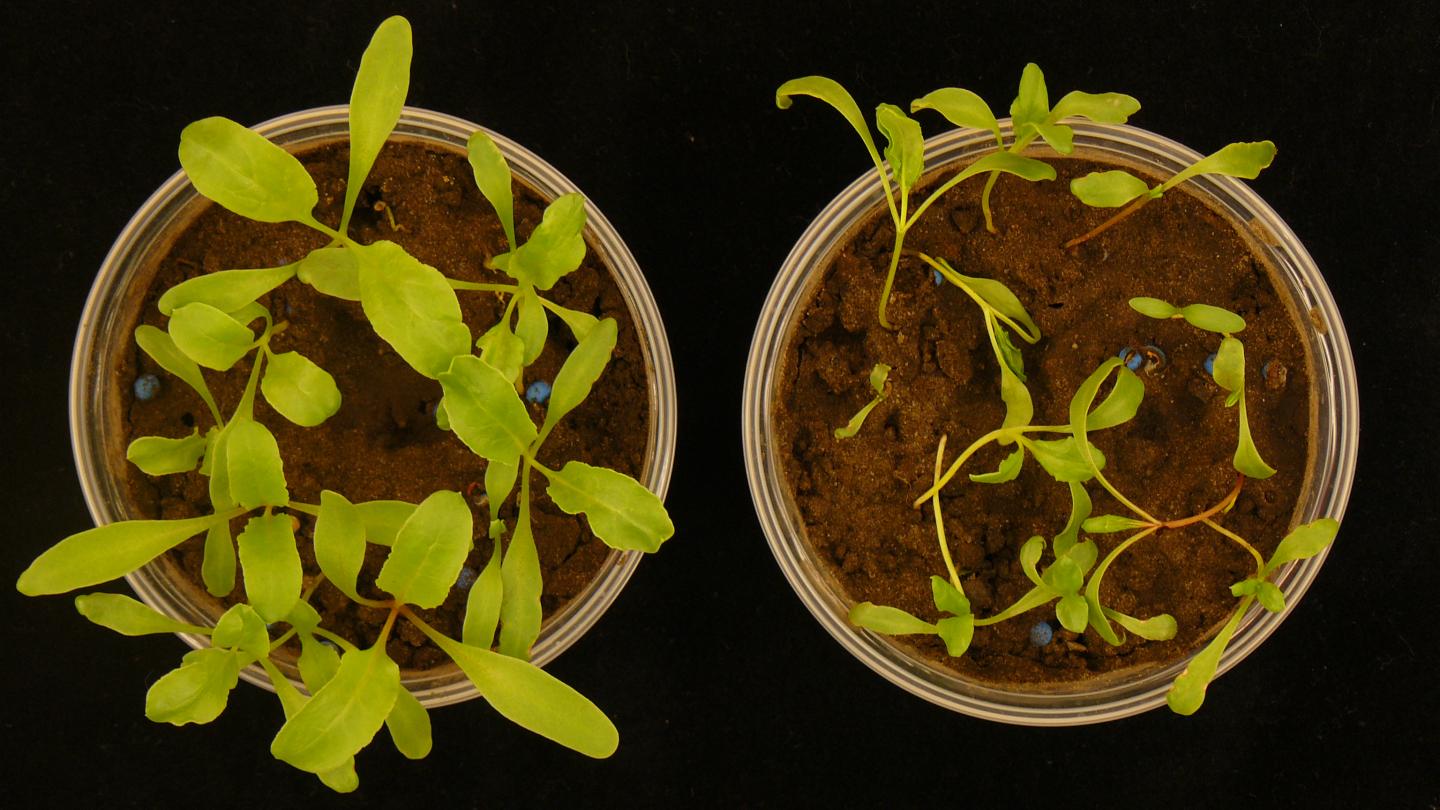
So what exactly happens in plant roots when they’re on the verge of being infected? The researchers found out that ‘helping hands’ inside the roots begin producing all kinds of useful substances. Chitinases, for example: enzymes that break down the cell walls of attacking fungal pathogens.

This discovery allowed the researchers to develop tailor-made microscopic backup troops for plants, using Chitinophaga and Flavobacterium species. Experiments on sugarbeet consistently proved the effectiveness of this approach in suppressing fungal infections of the roots.

Genetic treasure trove

“The micro-organisms living in the roots also turned out to have a wealth of hitherto unknown genetic properties”, says Raaijmakers. New software, developed by researchers at Wageningen University & Research (WUR), facilitates the comparison of the DNA of thousands of species at once.

Using this method, the researchers found more than 700 unknown gene clusters that produce unique substances. Only twelve had so far been recorded in worldwide databases. Raaijmakers: “We have discovered a real treasure trove of properties of which we do not even know the function yet. This is only the tip of the iceberg.”

The NIOO researcher stresses that these discoveries were only possible because of the study’s multidisciplinary approach: “It included ecologists as well as microbiologists, molecular biologists, bio-informaticians and statisticians.”

The team’s research is part of the BackToRoots-project, which received funding from the Dutch Research Council’s AES Domain (Applied & Engineering Sciences). BackToRoots aims to enhance plant growth and productivity by exploring beneficial microbial communities, including ones found in wild ancestors of our present-day crops.

With more than 300 staff members and students, the Netherlands Institute of Ecology (NIOO-KNAW) is one of the largest research institutes of the Royal Netherlands Academy of Arts and Sciences (KNAW). The institute specialises in water and land ecology. As of 2011, the institute is located in an innovative and sustainable research building in Wageningen, the Netherlands. NIOO has an impressive research history that stretches back 60 years and spans the entire country, and beyond.

###

Media Contact
Froukje Rienks
[email protected]
31-610-487-481

Original Source

https://nioo.knaw.nl/en/press/live-bacteria-protect-plants-against-infections

Related Journal Article

http://dx.doi.org/10.1126/science.aaw9285

Tags: AgricultureBacteriologyBioinformaticsBiologyBiotechnologyEcology/EnvironmentFertilizers/Pest ManagementGenesMicrobiologyPlant Sciences
Share13Tweet8Share2ShareShareShare2

Related Posts

Gut Microbes Turn Amino Acid Into Toxin That Worsens Pancreatitis in the Elderly

Gut Microbes Turn Amino Acid Into Toxin That Worsens Pancreatitis in the Elderly

October 5, 2026
Ribosomal RNA Passes Its Test as a Steady Reference in High-Throughput Plasma qPCR

Ribosomal RNA Passes Its Test as a Steady Reference in High-Throughput Plasma qPCR

October 5, 2026

GRETA: New Database Turns Mountains of Genome Sequencing Data into Searchable Science

October 5, 2026

Deep Learning Tool Reads RNA Tails Straight From Nanopore Signals

October 5, 2026
Please login to join discussion

POPULAR NEWS

  • Alloys That Shrink Their Own Grains: New PIX Mechanism Refines Metals With Heat Alone

    Alloys That Shrink Their Own Grains: New PIX Mechanism Refines Metals With Heat Alone

    29 shares
    Share 12 Tweet 7
  • Endurance Exercise Reshapes the Liver in Males and Females Through Distinct Molecular Routes

    29 shares
    Share 12 Tweet 7
  • Single Transcription Factor PU.1 Rapidly Converts Fibroblasts into Macrophage-Lineage Cells

    29 shares
    Share 12 Tweet 7
  • New Scale Measures How Ready Nurse Educators Really Are for the AI Era

    29 shares
    Share 12 Tweet 7

About

We bring you the latest biotechnology news from best research centers and universities around the world. Check our website.

Follow us

Recent News

Alloys That Shrink Their Own Grains: New PIX Mechanism Refines Metals With Heat Alone

Endurance Exercise Reshapes the Liver in Males and Females Through Distinct Molecular Routes

Single Transcription Factor PU.1 Rapidly Converts Fibroblasts into Macrophage-Lineage Cells

Subscribe to Blog via Email

Success! An email was just sent to confirm your subscription. Please find the email now and click 'Confirm' to start subscribing.

Join 85 other subscribers
  • Contact Us

Bioengineer.org © Copyright 2023 All Rights Reserved.

Welcome Back!

Login to your account below

Forgotten Password?

Retrieve your password

Please enter your username or email address to reset your password.

Log In
No Result
View All Result
  • Homepages
    • Home Page 1
    • Home Page 2
  • News
  • National
  • Business
  • Health
  • Lifestyle
  • Science

Bioengineer.org © Copyright 2023 All Rights Reserved.