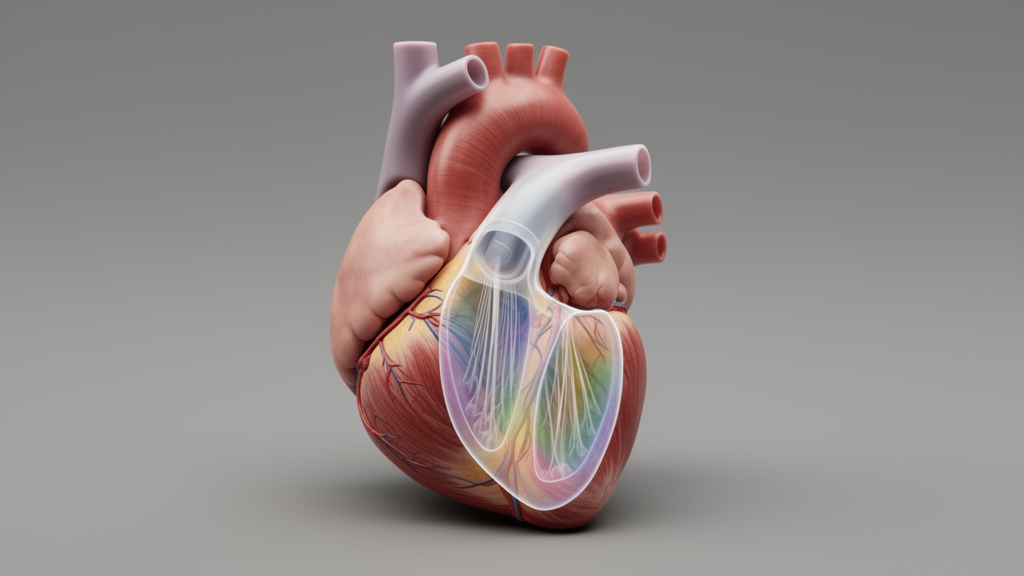
A new computational study published in the Annals of Biomedical Engineering presents a whole-heart fluid-structure interaction model designed to simulate the mechanical and hemodynamic effects of transcatheter mitral valve repair. The research, led by a team including Boyce E. Griffith and Masod Sadipour, focuses on primary mitral regurgitation caused by chordal rupture. By extending a previously developed whole-heart model, the authors aim to quantify the structural and hemodynamic consequences of both the pathology and the subsequent edge-to-edge repair.
This approach allows for a detailed examination of how these specific cardiac conditions impact global cardiac mechanics, an area that remains difficult to predict using traditional clinical metrics alone. The study addresses a specific clinical scenario where chordal rupture leads to acute volume overload and elevated left atrial pressure. While transcatheter edge-to-edge repair devices are known to reduce regurgitation, their broader impact on diastolic filling and ventricular output has not been fully characterized.
The researchers utilized a three-dimensional fluid-structure interaction model derived from cardiac CT imaging to simulate three distinct conditions: a healthy baseline, the state of chordal rupture-induced regurgitation, and the post-repair state. This methodology enables a direct comparison of physiological parameters across these stages, bridging the gap between isolated valve mechanics and whole-organ function. The simulation employed the immersed finite element-difference method, which facilitates a fully coupled simulation of blood flow, valve dynamics, and myocardial contraction.
Key hemodynamic metrics, including regurgitant fraction, left atrial pressure, stroke volume, and stroke work, were calculated for each condition. These values were compared with clinical reference data to ensure the model accurately represented the physiological responses associated with the specific pathology. The results indicated that the simulated chordal rupture produced moderate-to-severe mitral regurgitation, with a regurgitant fraction of 38 percent.
This condition also caused the left atrial V-wave amplitude to double, a finding that is consistent with clinical observations of patients suffering from acute regurgitation. Following the simulated transcatheter mitral valve repair, the central regurgitant jet caused by the chordal rupture was eliminated. The regurgitant fraction decreased to 21 percent, and left atrial pressure returned to near-baseline levels.
However, the model also revealed a distinct side effect of the repair procedure. The double-orifice valve configuration created by the edge-to-edge repair generated dual high-velocity inflow jets during diastole. The study concludes that the repair effectively reduces regurgitation and atrial pressure while simultaneously influencing diastolic filling and ventricular output.
These findings underscore the importance of evaluating both regurgitation reduction and inflow characteristics when assessing the outcomes of transcatheter mitral valve repair. The potential of patient-specific computational modeling for procedural planning and optimization is highlighted by these results.
Subject of Research: Whole-heart fluid-structure interaction modeling of transcatheter mitral valve repair in primary mitral regurgitation
Article Title: A Whole-Heart Fluid–Structure Interaction Model for Transcatheter Mitral Valve Repair in Primary Mitral Regurgitation
Article References: Sadipour, M., Davey, M., Wells, D. R., Kheradvar, A., Vavalle, J. P., & Griffith, B. E. (2026). A Whole-Heart Fluid–Structure Interaction Model for Transcatheter Mitral Valve Repair in Primary Mitral Regurgitation. Annals of Biomedical Engineering. https://doi.org/10.1007/s10439-026-04368-3
Image Credits: AI Generated
DOI: 10.1007/s10439-026-04368-3
Keywords: mitral regurgitation, transcatheter repair, fluid-structure interaction, cardiac modeling, hemodynamics, diastolic filling, biomedical engineering, computational simulation, Whole-Heart, Fluid, Structure, Interaction
News Source: Ophelia Keating. (October 24, 2026). Heart Model Shows Mitral Repair Trade-offs. Scienmag.