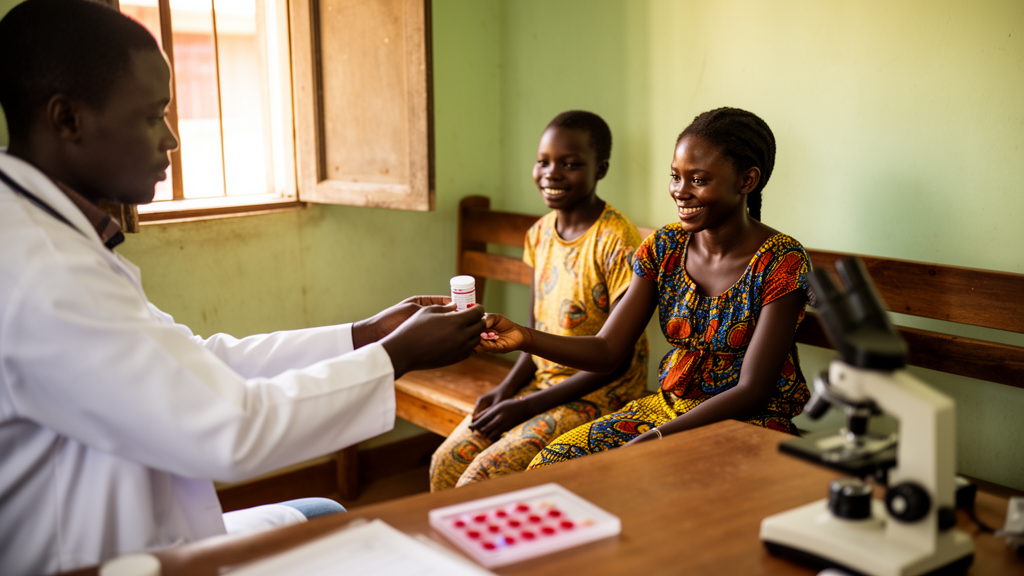
Patients with homozygous sickle cell disease who took hydroxyurea at two university hospitals in Conakry, Guinea, experienced significantly fewer vaso-occlusive crises, hospitalisations, transfusions and complications than comparable patients who were not taking the drug, according to a comparative study published in Annals of Hematology. The analysis also recorded the characteristic biological differences associated with the medication in the treated group, including higher fetal haemoglobin and a higher mean corpuscular volume, alongside lower white cell and platelet counts.
The research team, led by Mamady Diakité and colleagues, conducted a cross-sectional, descriptive and analytical study over six months, from 1 October 2025 to 31 March 2026, in the haematology departments of the Donka and Ignace Deen University Hospitals. Sickle cell disease is a major public health problem in Guinea, where access to disease-modifying therapy remains limited, and data on hydroxyurea use in Guinean patients have been scarce. The study consecutively enrolled 210 patients with homozygous sickle cell disease, known as the SS form. Of these, 102 patients, or 48.6 percent, had been receiving hydroxyurea for at least six months, while the remaining 108 patients, or 51.4 percent, formed the comparison group without the drug.
The participants had a mean age of 22 years, with ages ranging from 1 to 48 years, and women outnumbered men, reflected in a sex ratio of 0.9. The researchers compared clinical events over the previous six months and haematological parameters between the two groups. Continuous variables were analysed with the Mann–Whitney test, while qualitative variables were assessed using the Pearson chi-square test or Fisher’s exact test, with a two-sided p value below 0.05 considered statistically significant.
The clinical contrast between the groups was marked. Compared with untreated patients, those receiving hydroxyurea had significantly fewer vaso-occlusive crises, fewer hospitalisations, fewer transfusions, and fewer acute and chronic complications, with all comparisons reaching p < 0.001. These differences spanned both events recorded over the preceding six months and the longer-term complications assessed in the study.
The biological findings were also consistent across the treated group. Patients receiving hydroxyurea had significantly higher fetal haemoglobin, at p < 0.001, and a higher mean corpuscular volume, a measure of red blood cell size, at p = 0.004. The treated group additionally showed lower leucocyte and platelet counts, both at p < 0.001. Together, these haematological differences represent the biological profile associated with hydroxyurea use in this cohort.
Tolerability data from the study identified headache as the most frequent adverse effect, reported by 39.2 percent of treated patients. The authors concluded that in a low-income setting, hydroxyurea is associated with a more favourable clinical and biological course and represents an accessible therapeutic option for patients with SS disease.
The study’s design carries limitations that shape how the results should be read. Because the data are cross-sectional and patients were not randomly assigned to treatment, the findings demonstrate an association rather than proving that hydroxyurea caused the better outcomes; factors such as disease severity, adherence and access to care may differ between treated and untreated groups. The single-city setting and the six-month recall window for clinical events also limit how broadly the conclusions apply.
For Guinea, where the authors note that access to disease-modifying therapy remains constrained, the study offers locally generated figures on both the clinical and biological differences associated with hydroxyurea and its side effects in routine hospital care. The combination of fewer crises, fewer hospitalisations, fewer transfusions and fewer complications, together with the higher fetal haemoglobin and mean corpuscular volume observed in treated patients, provides clinicians in Conakry with evidence drawn directly from their own patient population, in a setting where such published data have previously been scarce.
Subject of Research: Clinical and biological associations linked to the use of hydroxyurea in patients with homozygous sickle cell disease (SS) in Conakry, Guinea: a comparative study
Article Title: Clinical and biological associations linked to the use of hydroxyurea in patients with homozygous sickle cell disease (SS) in Conakry, Guinea: a comparative study
Article References: Diakité, M., Doukouré, A. S., Condé, A., Traoré, M., Oulare, A., Bah, K., Camara, A. S., Kouyaté, F., Dambakaté, A., Condé, M. S., Diallo, A. G., Kanté, A. S., & Sidikiba, S. (2026). Clinical and biological associations linked to the use of hydroxyurea in patients with homozygous sickle cell disease (SS) in Conakry, Guinea: a comparative study. Annals of Hematology. https://doi.org/10.1007/s00277-026-07314-4
Image Credits: AI Generated
DOI: 10.1007/s00277-026-07314-4
Keywords: Clinical, biological, associations, linked, hydroxyurea, patients, homozygous, sickle, cell, disease, Conakry, Guinea
News Source: Nathaniel Bowman. (October 24, 2026). Hydroxyurea linked to fewer crises in sickle cell patients in Guinea. Scienmag.