An international and interdisciplinary team led by the Helmholtz Institute for Functional Marine Biodiversity at the University of Oldenburg, Germany, is developing sustainable strategies for the management of marine ecosystems.
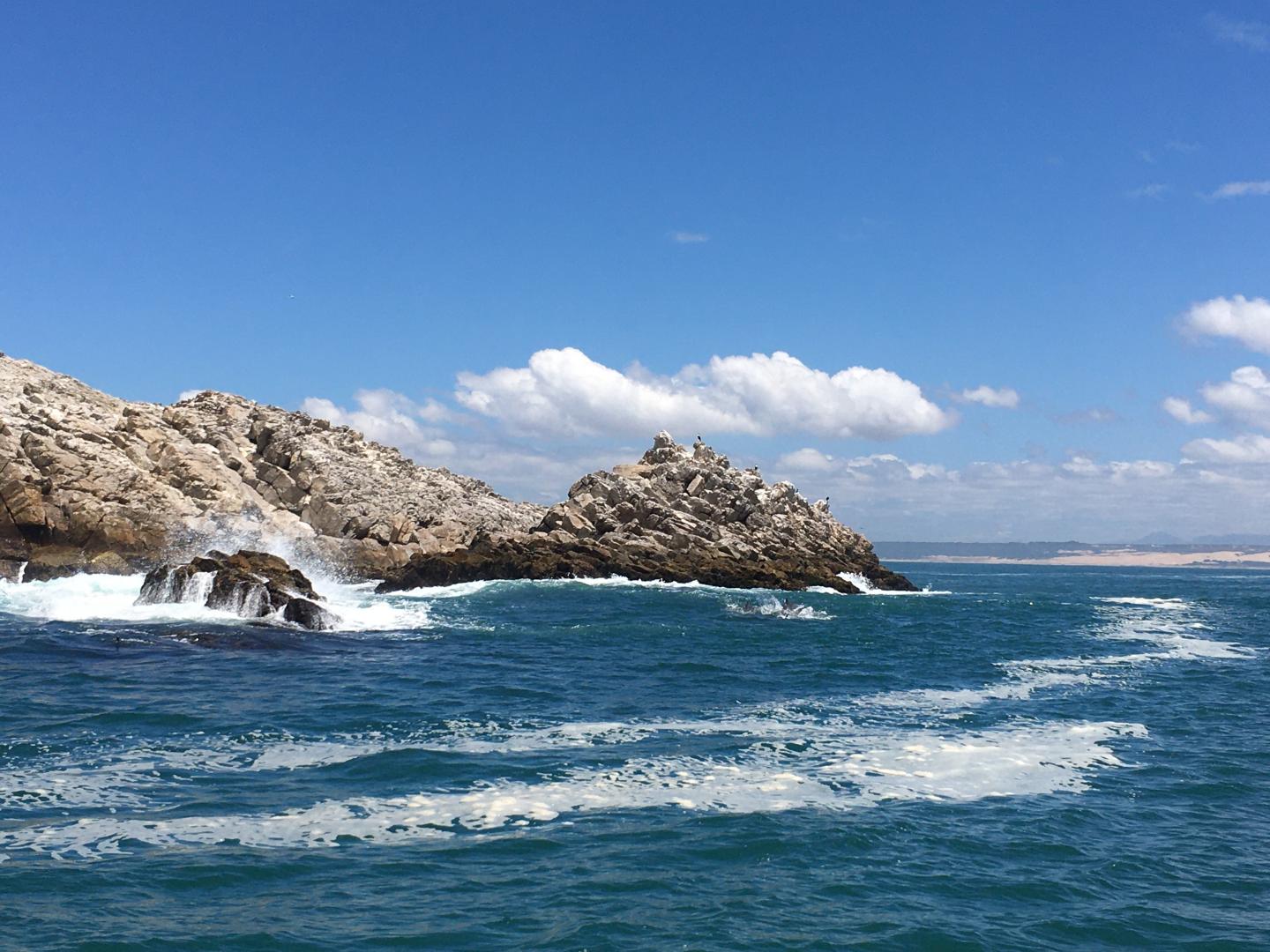
Credit: Ruth Krause/ HIFMB
How do human actions affect the coastal and oceanic environment? And how do the resulting changes interact with ecosystem functions, such as providing oxygen to the atmosphere or supporting fish stocks? Understanding these entanglements is crucial for finding ways to manage ecosystems, that is to sustain them for future ecological and human needs. Led by the Helmholtz Institute for Functional Marine Biodiversity (HIFMB) at the University of Oldenburg, Germany, an international group of scientists is now teaming up for addressing precisely this issue: The project MARISCO (Marine Research and Innovation for a Sustainable Management of Coasts and Oceans) combines data analysis and modelling efforts to develop new strategies for managing marine ecosystems more effectively.
Besides the HIFMB, the project involves experts from the National Center for Ecological Analysis and Synthesis (NCEAS) at the University of California, Santa Barbara, USA, and the Institute for Coastal and Marine Research (CMR) at the Nelson Mandela University, Port Elizabeth, South Africa. The partners draw on a wide range of expertise, such as biodiversity analyses, marine governance, marine spatial planning or ocean health. MARISCO is part of the Belmont Forum Call “Transdisciplinary Research for Ocean Sustainability” and runs for three years. The funding of up to one million Euro is provided by national funding agencies with the German Federal Ministry of Education and Research funding the team at the HIFMB with approximately 340.000 Euro.
Meeting the challenge to manage marine ecosystem
“Marine ecosystems are vast and highly connected. Because of their three-dimensional character it is particularly challenging to manage such ecosystems compared with land-based ones,” says the director of the HIFMB, Prof. Dr. Helmut Hillebrand, who is also heading the project. For example, the stress imposed on ecosystems by global warming, ocean acidification or fishing differs greatly between oceanic regions and water depths. Moreover, marine biodiversity may change more rapidly and more substantially than its terrestrial counterpart.
“The patterns of ecosystem changes are complex and take place on very different scales – both in time and in space,” Hillebrand says. Successful management strategies should therefore incorporate this complexity. “This is all the more important because different aspects of biodiversity change can impact society and what we term ‘Nature’s Contributions to People’, that is the ecosystem functions we all benefit from”, he adds.
Towards better regimes of ocean governance
The project partners are therefore aiming at a better understanding of how anthropogenic changes affect marine communities – for example in terms of their composition or in terms of the interactions within the food web. To do so, the researchers will combine and analyse data from different studies to quantify the environmental impacts of humanly induced changes. They will then combine the results of this data synthesis with mathematical modelling and qualitative analyses of ocean change to explore how social and ecological processes are intertwined. Thereby, they will be able to better understand the variety and strength of feedbacks between the various changes in biodiversity and multiple dimensions of Nature’s Contribution to People to enable routes towards better regimes of ocean governance.
The project is focussing its efforts on two major study sites, the Algoa Bay in South Africa and the tidal flats of the Wadden Sea off the coast of northwestern Germany. “Although very different, both sites are hotspots of biodiversity in a dynamic environment. Moreover, there is a lot of data already available, making the sites particularly interesting for our purposes,” Hillebrand notes.
Addressing one of the United Nations sustainable development goals
For mutual benefits, the scientists are also closely cooperating with different stakeholders in the regions, such as governmental authorities and environmental organisations. “This cooperation is at the heart of the project. The stakeholders have been involved already during the planning phase to draft meaningful research questions,” says Ruth Krause who is the HIFMB’s scientific coordinator. In the course of the coming three years, the stakeholders will provide knowledge and data and help to design and develop sustainable management targets and strategies. By doing so, the researchers address one of the United Nation’s sustainable development goals (SDG14), namely the goal “to combat the adverse effects of overfishing, growing ocean acidification due to climate change and worsening coastal eutrophication.”
###
About the HIFMB and Belmont Forum
The HIFMB conducts interdisciplinary marine biodiversity research. It joins the scientific profiles of the Institute of Chemistry and Biology of Marine Systems (ICBM) at the University of Oldenburg and the Alfred Wegener Institute – Helmholtz Centre for Polar and Marine Research Bremerhaven (AWI). Expertise in marine functional ecology, marine conservation, data science and theory is linked with a social science profile in marine governance.
Belmont Forum is an international partnership of funding organisations, international science councils, and regional consortia that supports international and transdisciplinary research providing knowledge for understanding, mitigating and adapting to global environmental change.
Media Contact
Prof. Dr. Helmut Hillebrand
[email protected]
Original Source
https:/