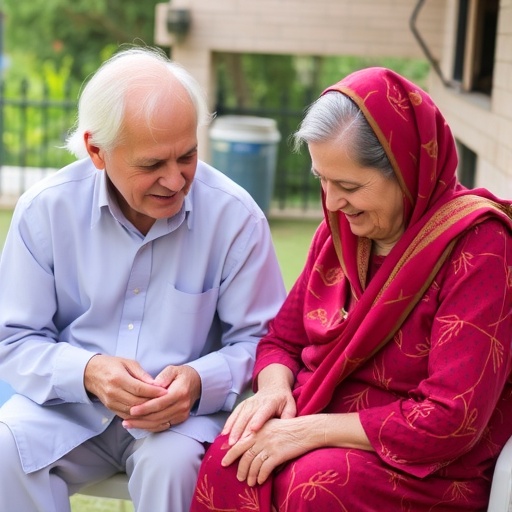
In the rapidly aging global population, the intricate nexus between sensory impairments and cognitive decline has garnered increasing scientific scrutiny. A groundbreaking study spearheaded by Zhang, S., Li, J., Liu, Z., and colleagues dives deep into this underexplored terrain, focusing specifically on older adults residing in rural China—a demographic often overlooked in gerontological research. Their work, published in BMC Geriatrics in 2026, elucidates how the decline in sensory faculties such as hearing and vision may intertwine with cognitive deterioration. The researchers also introduce an intriguing variable into this complex equation: the individual’s personal responsibility for health, positing it as a moderator that could potentially influence the trajectory and severity of cognitive impairment.
Understanding sensory impairment’s role in cognitive decline requires a multifaceted approach. Sensory deficits, prevalent in the elderly, extend beyond mere inconvenience. They can disrupt communication, social integration, and environmental interaction, all of which are crucial for maintaining cognitive stimulation and brain health. The neural mechanisms underlying these interactions suggest that diminished sensory input may lead to cortical reorganization or atrophy in specific brain regions, thereby accelerating cognitive deficits. This study uniquely situates itself within the context of rural China, where healthcare access challenges, socio-economic variables, and cultural attitudes toward aging and health responsibility intertwine to further complicate geriatric healthcare dynamics.
The researchers harnessed a robust methodological framework, enrolling a substantial cohort of older adults from rural communities to comprehensively assess sensory capacities and cognitive function. Detailed audiometric and ophthalmologic tests were complemented by standardized cognitive evaluations, providing a holistic view of the participants’ neuro-sensory health status. Importantly, the study employed novel psychometric scales designed to quantify personal responsibility for health, encompassing variables such as health literacy, proactive health behaviors, and attitudes toward preventive care. This allowed the team to probe whether individuals who actively manage their health exhibit a protective buffer against the cognitive decline traditionally associated with sensory loss.
Their results present compelling evidence that sensory impairment significantly correlates with worsened cognitive outcomes in the studied population. For instance, hearing loss was found to be strongly associated with diminished executive function and memory retention, echoing findings from prior neuropsychological research. Vision impairment similarly demonstrated deleterious effects on various cognitive domains, reinforcing the hypothesis that sensory inputs serve as essential catalysts for cognitive engagement. However, what sets this work apart is the nuanced revelation that personal responsibility for health modifies these associations. Participants exhibiting high levels of health responsibility showed attenuated cognitive decline despite sensory deficits, suggesting the presence of modifiable behavioral or psychosocial factors that can mitigate risks.
This moderation effect propels an important paradigm shift in how geriatric cognitive decline is conceptualized and addressed. While biological aging and sensory degeneration remain largely inevitable, the study advocates for enhancing individual agency in health management as a viable intervention pathway. Health responsibility may encompass behaviors such as adherence to treatment regimens, use of assistive devices (e.g., hearing aids, corrective lenses), engagement in cognitively stimulating activities, and regular health screenings. These behaviors can potentially compensate for sensory deficits or slow neurodegenerative processes by maintaining neural plasticity and social connectivity.
Moreover, the rural context adds layers of complexity and urgency to public health strategies. Infrastructure limitations, reduced availability of specialized healthcare professionals, and lower education attainment levels often impede timely diagnosis and treatment of sensory impairments. Stigma surrounding aging and disability may further discourage seniors from seeking help or using aids, thereby exacerbating cognitive decline. Zhang and colleagues emphasize the need for culturally tailored and community-specific interventions that foster empowerment and health literacy, thereby promoting greater personal responsibility among older adults. Such initiatives could revolutionize aging care paradigms in underserved regions globally.
From a neurobiological standpoint, sensory impairments likely contribute to what is termed “cognitive load hypothesis”—where the increased effort required to process degraded sensory information consumes cognitive resources that would otherwise support memory, attention, and problem-solving. This heightened cognitive load may accelerate neural aging or highlight preexisting vulnerabilities in brain networks. Conversely, individuals who assume active roles in managing their health might engage in compensatory strategies that alleviate this load, potentially sustaining cognitive function longer despite sensory losses.
The study also calls attention to the potential integration of technologies and telemedicine to bridge healthcare gaps in rural settings. Wearable sensory devices, mobile health applications, and virtual cognitive training programs could empower older adults to monitor and manage their sensory health proactively. By coupling these technologies with educational campaigns that enhance personal responsibility, healthcare systems might mitigate the dual burden of sensory and cognitive impairments more effectively.
Furthermore, the implications of this research stretch beyond Chinese rural residents. Aging rural populations worldwide face similar challenges, making the findings universally relevant. Policymakers and healthcare providers are encouraged to consider the dual importance of sensory health management and personal agency when designing geropsychological interventions. This dual focus promotes holistic well-being and addresses both biological and psychosocial determinants of cognitive aging.
The longitudinal design ethos inherent in this study enables researchers to observe temporal patterns—how sensory impairments might precede, coincide with, or exacerbate cognitive deficits. Such temporal insights are critical for developing early detection and prevention frameworks. Early intervention, especially in resource-constrained environments, can optimize outcomes and reduce the socio-economic burden of dementia and related conditions.
Moreover, the intersectionality of factors such as education level, socioeconomic status, and access to healthcare highlights the necessity for multidisciplinary research and intervention models. Sensory impairment and cognitive decline do not occur in isolation but are embedded within broader social determinants of health. As such, the study advocates for integrated care approaches that combine medical, psychological, social, and technological resources tailored to individuals’ contexts.
Zhang and colleagues’ research represents a compelling contribution to geriatric science, illuminating sensory impairment as a modifiable risk factor for cognitive decline contingent upon individual behavioral modulations. The emphasis on personal responsibility underscores a proactive narrative, shifting from passive acceptance of aging-related decline toward empowerment-based models of healthy aging. This focus not only advances scientific understanding but also offers practical solutions with far-reaching public health implications.
In essence, this study invites a reorientation in aging research and policy—where mitigating sensory deficits and fostering personal health responsibility are synergistically prioritized. It opens avenues for further exploration into how psychosocial factors interact with physiological changes to shape cognitive trajectories. Future research might delve deeper into mechanistic pathways, longitudinal impacts, and intervention efficacy in diverse populations.
Ultimately, the findings underscore that sensory and cognitive health are deeply intertwined domains influenced by individual actions, environmental contexts, and healthcare systems. Addressing this interdependence holistically can revolutionize elder care, improve quality of life, and reduce the global burden of dementia. As the world’s population ages, works such as this not only illuminate critical challenges but also chart hopeful paths toward resilient and dignified aging worldwide.
Subject of Research:
Sensory impairment, cognitive impairment, and the moderating role of personal responsibility for health among older adults in rural China.
Article Title:
Sensory impairment and cognitive impairment among older adults in rural China: personal responsibility for health as a possible moderator?
Article References:
Zhang, S., Li, J., Liu, Z. et al. Sensory impairment and cognitive impairment among older adults in rural China: personal responsibility for health as a possible moderator?. BMC Geriatr (2026). https://doi.org/10.1186/s12877-026-07743-w
Image Credits:
AI Generated
Tags: aging and cognitive functioncognitive impairment in aging populationgerontological research in rural areashealth responsibility in elderlyhearing and vision loss in elderlyneural mechanisms of sensory declinepersonal health management and cognitionrural elder health challengesrural healthcare access in Chinasensory deficits and brain healthsensory impairments and cognitive declinesocio-economic impact on elder health