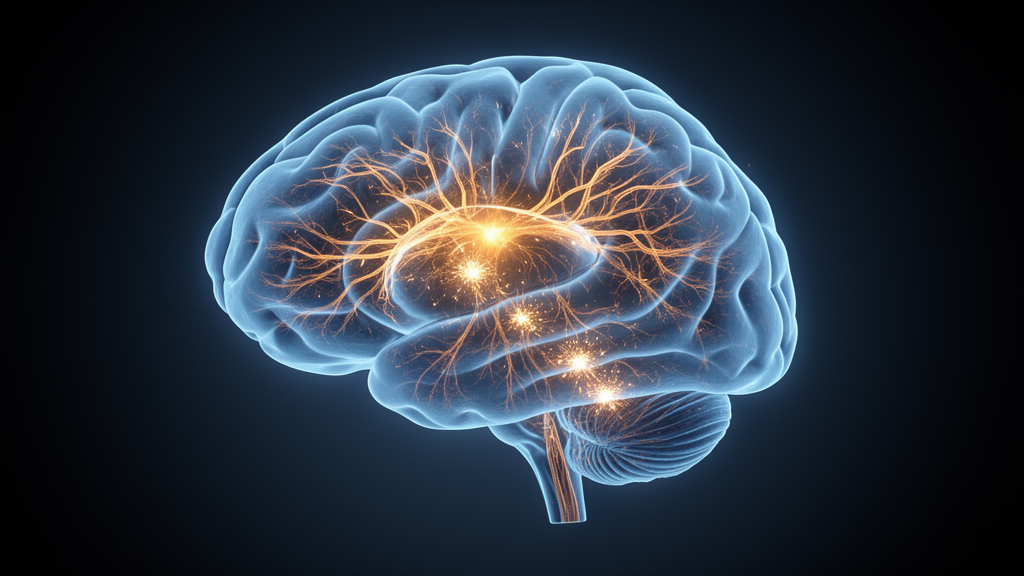
A severe blow to the head can leave behind changes so subtle that neither the injured person nor their doctor notices them, yet those changes may shape how the brain responds to stress years later. That is the central finding of an international study led by researchers from the Department of Cell Biology, Genetics and Physiology at the University of Malaga, working in collaboration with the Wexner Medical Center at Ohio State University in Columbus. The team set out to answer a question that has long puzzled neuroscientists: why do some people who survive a traumatic brain injury go on to show heightened anxiety, avoidance, and altered stress responses long after the initial wound has healed? Their results, published in the journal Brain Behavior and Immunity, point to a small but critical structure at the base of the brain and to the immune cells that live alongside its neurons.
The researchers focused on the hypothalamus, a tiny region nestled at the brain’s base that serves as the main junction between the nervous system and the endocrine system. When a person or animal encounters a threat, the hypothalamus springs into action, coordinating the body’s hormonal and behavioral response to the stressor. In the new study, the team demonstrated that in animals that had previously experienced a traumatic brain injury, the hypothalamus responds differently to subsequent stress. Rather than simply activating in the usual way, the region mounts an inflammatory reaction, and that neuroinflammation was associated with avoidance-like and anxiety-like behavior in the affected animals.
The experimental work, conducted so far only in animal models, examined what happens when previously injured animals face acute stress events in contexts of aggression and social defeat. Social defeat stress, a well-established laboratory paradigm, exposes an animal to a dominant aggressor, creating a psychologically intense experience that reliably activates stress circuitry in the brain. By comparing animals with a prior traumatic brain injury to those without, the researchers could isolate how the old injury changed the brain’s reaction to this new challenge. The differences they observed were not in the injury itself but in the way the brain handled the later insult, suggesting that trauma leaves a lasting imprint on stress-processing circuits.
At the cellular and molecular level, the changes were remarkably subtle. “A previous traumatic brain injury can cause subtle, virtually undetectable changes at the cellular and molecular levels that persist over time and may, in the future, alter individuals’ behavior in response to subsequent stressful situations”, explains María Dolores López, a scientist at the University of Malaga and one of the authors of the study, which also involves researchers from IBIMA Plataforma BIONAND. This persistence is what makes the finding clinically significant. An injury that appears resolved on a scan or in a neurological exam may nonetheless have reprogrammed key cellular players in ways that only become apparent when the brain is pushed by a later stressor.
Central to that reprogramming, the research suggests, are microglia, the resident immune cells of the brain. Microglia are largely responsible for the neuroinflammation that follows trauma, and the study indicates they play a decisive role in the long-term consequences of injury. According to the researchers, after a traumatic brain injury these cells acquire something akin to an immune memory and become sensitized. When a subsequent stressor arrives, the primed microglia respond more vigorously than they otherwise would. “This is reflected in changes in cell morphology and an increased production of inflammatory mediators”, López says. In other words, the trauma does not merely damage tissue; it recalibrates the brain’s immune sentinels so that they overreact to future challenges, flooding local circuits with inflammatory signaling molecules.
The concept of immune memory in microglia, sometimes described in the broader literature as trained immunity, helps explain how a single injury could produce effects that emerge much later. Sensitized microglia adopt altered shapes and release greater quantities of inflammatory mediators when stimulated, and because these cells constantly survey their neural environment, their heightened reactivity can influence neurons, synapses, and the hormonal circuits that pass through the hypothalamus. The University of Malaga team’s work ties this cellular mechanism directly to behavior: animals with sensitized hypothalamic microglia showed avoidance-like and anxiety-like responses to social stress that uninjured animals did not display to the same degree.
One of the most intriguing aspects of the findings is what the researchers did not see. The alterations in the brain did not translate into a greater increase in blood cortisol levels, the hormone typically released by the adrenal glands as the endpoint of the body’s stress response. This means the brain appears to respond differently to stress after injury even though the systemic hormonal response is not amplified. The dissociation is important, because it suggests that measuring circulating cortisol alone may miss profound changes occurring inside the brain. Clinicians who rely on peripheral hormonal markers could therefore underestimate the neurological consequences of a head injury, even while the patient’s brain is mounting an exaggerated inflammatory response and producing stress-related behavioral changes.
The study grew out of the doctoral thesis of Ana Léon, a young researcher at the University of Malaga who, as part of her doctoral training, completed a research stay in the laboratory of Professor Jonathan P. Godbout at the Wexner Medical Center. Godbout is a leading expert on the consequences of traumatic brain injuries and a co-author of the study. This kind of international collaboration allowed the Spanish team to combine expertise in cell biology and physiology with a laboratory renowned for its work on how brain injury and inflammation interact with stress and behavior. The published paper lists the full team, including León-Rodríguez, Wangler, Goodman, Packer, Davis, Sheridan, Grondona, Godbout, and López-Ávalos, underscoring the breadth of expertise required to connect a head injury, hypothalamic circuitry, immune cells, and behavior in a single experimental framework.
The findings also align with what clinicians have observed in patients. The researchers note that their results are consistent with clinical data indicating endocrine alterations in people who have suffered traumatic brain injuries, and the study sheds light on a possible underlying mechanism in which the hypothalamus and microglia may play a significant role. If future research confirms that the same sensitization process occurs in humans, it could reshape how head injuries are followed up and managed. Rather than treating recovery as complete once acute symptoms fade, physicians might need to consider that the brain’s stress and immune systems have been durably altered, potentially increasing vulnerability to anxiety, avoidance behavior, and abnormal responses to life’s stresses long after the original trauma.
Much work remains before these results can be translated into the clinic, beginning with the caveat that the study has so far been conducted only in animal models. Still, the research offers a compelling and testable model of an enduring clinical mystery: how an old injury reaches forward in time to change the way a person copes with new adversity. By identifying the hypothalamus as a site of lasting inflammatory remodeling and microglia as the cellular agents of that change, the University of Malaga-led team has given neuroscientists a concrete target for future studies of post-traumatic vulnerability, and given patients and families a biological explanation for symptoms that have too often been dismissed as unrelated to the original blow.
Subject of Research: Long-term effects of traumatic brain injury on hypothalamic microglia and the brain's subsequent stress response
Article Title: Research reveals that traumatic brain injury can alter the brain’s subsequent response to stress
Article References: Research reveals that traumatic brain injury can alter the brain’s subsequent response to stress. (n.d.). Original publication
Image Credits: AI Generated
DOI: Not provided
Keywords: traumatic brain injury, hypothalamus, microglia, neuroinflammation, stress response, social defeat, cortisol, immune memory, anxiety-like behavior, University of Malaga, Ohio State University, Brain Behavior and Immunity
News Source: Cassandra Pierce. (October 9, 2026). Head Trauma May Rewire How the Brain Reacts to Later Stress, Study Finds. Scienmag.