In the rapidly aging global population, understanding the interconnectedness of physical and cognitive health has become a focal point for researchers aiming to enhance the quality of life among older adults. A groundbreaking study led by Trinitas, J.K., Davidson, S.L., Murray, A., and their team has unveiled compelling evidence highlighting the intricate relationship between handgrip strength and both physical and cognitive functions in hospitalized older adults in Tanzania. This revelation is poised to reshape the approach to geriatric healthcare, emphasizing the importance of simple yet effective diagnostic tools in resource-limited settings.
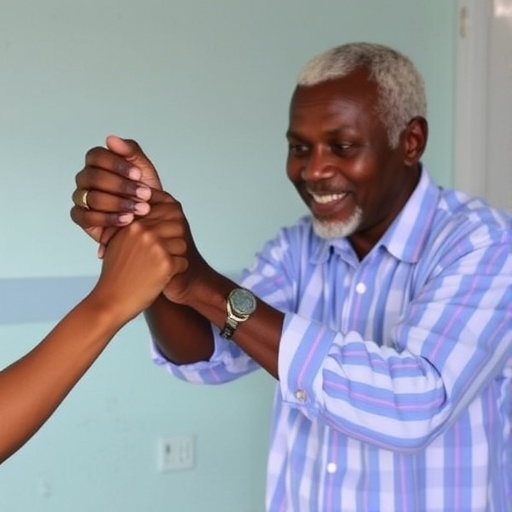
Handgrip strength, a readily measurable physical parameter, has increasingly been recognized as a reliable biomarker for overall muscle strength and functional status. In the context of the hospitalized elderly population, especially in low to middle-income countries like Tanzania, it offers a non-invasive and cost-effective means to evaluate patient health that transcends traditional clinical assessments. The study meticulously explores how diminished handgrip strength correlates not only with decreased physical abilities but also with cognitive impairments, suggesting a pathway that could facilitate early interventions.
Hospitalization itself often exacerbates health decline in older adults, with physical deconditioning and cognitive deterioration being prevalent complications. The Tanzanian cohort studied provided a unique perspective owing to the distinct socio-economic, nutritional, and healthcare challenges faced in the region. This context underlines the significance of identifying accessible indicators such as handgrip strength that can reliably predict multi-domain health outcomes, potentially guiding prompt and tailored therapeutic strategies.
The research employed robust methodologies to assess handgrip strength alongside standardized measures of physical function, including mobility and balance tests, and cognitive assessments encompassing memory, attention, and executive function. By integrating these diverse metrics, the study illuminated the multifactorial dynamics between muscle functionality and brain health, elaborating on the neurophysiological mechanisms that might underpin these associations.
Emerging theories posit that muscle strength and cognitive integrity are linked through shared pathways, including inflammatory processes, vascular health, and neuroendocrine function. Muscle weakness could reflect systemic physiological decline that concurrently affects cerebral structures responsible for cognition. The Tanzanian study adds empirical weight to these hypotheses by demonstrating statistically significant correlations after controlling for confounding variables like age, sex, and comorbidities.
Furthermore, the findings underscore the potential utility of handgrip dynamometry as a prognostic tool. In settings where sophisticated diagnostic resources are scarce, this simple measure could serve as an early warning indicator of impending declines, thus enabling healthcare providers to prioritize interventions aimed at preserving both physical autonomy and cognitive vitality. Such proactive measures could range from tailored nutritional support and physiotherapy to cognitive training programs.
The implications extend beyond individual patient outcomes to inform public health strategies targeting the aging population in sub-Saharan Africa and similar environments. By adopting handgrip strength screening in routine clinical practice, healthcare systems could optimize resource allocation, reduce hospital readmissions, and improve long-term functional independence among older adults. This is particularly significant given the demographic shifts and increasing burden of age-related diseases globally.
Importantly, the study also raises awareness about the need to contextualize geriatric assessments within cultural and environmental frameworks. Factors such as lifestyle, dietary patterns, and social structures intrinsic to Tanzania influence health trajectories differently than in high-income countries. Recognizing these nuances is vital for designing effective interventions that resonate with the target populations and yield sustainable outcomes.
Moreover, the research team advocates for longitudinal studies to further elucidate causal relationships and explore whether interventions that enhance handgrip strength could directly ameliorate cognitive decline. Such investigations would not only bolster scientific understanding but also pave the way for innovative therapeutic approaches, including resistance training protocols and integrative cognitive-physical rehabilitation models.
Technological advancements also present exciting opportunities. Portable and affordable handgrip dynamometers can be integrated with digital health platforms to enable real-time monitoring and data analytics. This convergence of technology and clinical practice can revolutionize geriatric care delivery, particularly in remote or underserved areas, by facilitating continuous health tracking and personalized care adjustments.
In the broader research landscape, this study contributes to a growing body of evidence advocating for holistic health assessments in aging populations. It challenges the traditional siloed approach that often treats physical and cognitive domains independently, instead promoting an integrated perspective that captures the complex interplay of factors influencing health and functionality.
For clinicians, the findings reinforce the importance of multidisciplinary collaboration. Geriatricians, physiotherapists, neurologists, and primary care providers must work cohesively to interpret handgrip strength measurements within comprehensive patient evaluations. Such collaboration ensures that interventions address both muscular and neural health dimensions, ultimately enhancing patient outcomes.
The study’s publication in BMC Geriatrics in 2026 heralds a new chapter in geriatric research, emphasizing innovation grounded in pragmatic, scalable solutions. Its focus on a Tanzanian hospitalized cohort not only fills a critical knowledge gap but also exemplifies the value of inclusivity in medical research that accounts for diverse populations and their unique healthcare challenges.
As aging continues to present formidable global health challenges, this research advocates for empowering healthcare professionals with simple, effective tools like handgrip strength assessment to identify vulnerable individuals early. Through such means, it may be possible to extend healthspan, preserve independence, and improve the overall well-being of older adults, transforming the landscape of geriatric care worldwide.
In conclusion, the association between handgrip strength, physical function, and cognitive performance among hospitalized older adults in Tanzania, as elucidated in this study, underscores the profound potential of integrative health metrics. The practical implications for clinical practice, public health, and ongoing research are vast, promising a future where aging is managed with greater precision, empathy, and efficacy.
Subject of Research: The relationship between handgrip strength and both physical and cognitive function in hospitalized older adults.
Article Title: The association between handgrip strength, physical, and cognitive function among hospitalized older adults in Tanzania.
Article References:
Trinitas, J.K., Davidson, S.L., Murray, A. et al. The association between handgrip strength, physical, and cognitive function among hospitalized older adults in Tanzania. BMC Geriatr (2026). https://doi.org/10.1186/s12877-026-07215-1
Image Credits: AI Generated
Tags: aging population physical and cognitive linkcognitive decline in hospitalized older adultsearly detection of cognitive impairmentelderly hospitalization complicationsfunctional status evaluation in elderlygeriatric healthcare in low-income countrieshandgrip strength and cognitive health in eldershealth interventions for Tanzanian eldersmuscle strength biomarker in agingnon-invasive diagnostic tools for elderlyphysical function assessment in elderlyresource-limited healthcare diagnostics