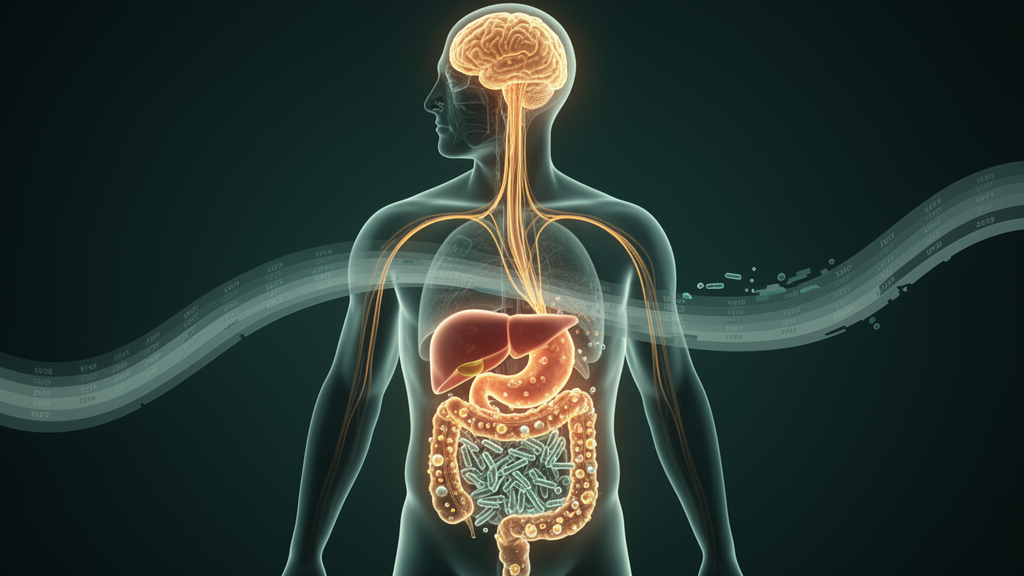
Humans provide these microbes with habitat and nutrients, and in return the microbial communities and their metabolites interface with the host through hormonal, immune, and metabolic pathways. A new review argues that this communication network, often called the gut-organ axis, is now mature enough in its basic science to be deliberately engineered for therapeutic benefit.
The review, published in the journal TransMed, applies a multi-tool bibliometric methodology to map global collaborative networks and the distribution of scientific contributions across 25 years of gut-organ axis research. Rather than focusing on a single organ, the authors analyze the characteristics of individual subfields and their translational potential, with the aim of helping shape future research directions in a field that has grown rapidly but unevenly.
According to the authors, disruption in host-microbiota communication is associated with the development and progression of various diseases. Because the organs of the human body do not exist or function in isolation, they argue that investigating the mechanisms underlying the gut-organ axis is essential for advancing the treatment of both intestinal and extra-intestinal disorders.
Not every branch of the field has advanced at the same pace. The authors found that literature on the gut-germline, gut-bone, gut-skin, and gut-immune axes remains underdeveloped, characterized by few research groups, small cohort sizes, and a near-absence of interventional trials with hard organ-specific endpoints. In other words, for several organ systems the field still consists largely of observational and descriptive work rather than studies designed to test whether manipulating the microbiota can change clinical outcomes.
The translational picture is similarly constrained. Current probiotic and fecal microbiota transplantation trials, the review notes, are limited by small sample sizes, heterogeneous designs, and a reliance on surrogate endpoints rather than direct measures of organ health. This means that while early studies suggest promise, the evidence base does not yet support firm conclusions about clinical efficacy for most applications.
To move the field forward, the authors urged that the next phase abandon the one-strain-fits-all paradigm in favor of interventions stratified by host factors such as renal function, diet, baseline microbiota composition, and immune status. They also called for such interventions to be evaluated against hard clinical outcomes, and for research to focus on mechanism-defined strategies producing microbial consortia rather than single organisms.
“In sum, the field has accumulated sufficient foundational knowledge,” says corresponding author Daiyuan Tang of the First Affiliated Hospital of University of Science and Technology of China. “The next decade should be dedicated to explaining associations through coordinated methodological rigor rather than continuing to catalogue them to progress from mapping the gut-organ axis landscape to engineering it for therapeutic benefit.”
The review was published as a peer-reviewed article in TransMed, with the DOI 10.1016/j.tmed.2026.100042, and the authors declare no known competing financial interests or personal relationships that could have appeared to influence the work reported. As a literature review, the paper maps and synthesizes existing research rather than presenting new experimental findings, and its conclusions about which subfields are underdeveloped reflect the state of the published literature over the 25-year period analyzed.
For readers following microbiome science, the review’s central message is a shift in expectations: after a quarter century of cataloguing associations between gut microbes and distant organs, the authors argue that the priority now is rigorous, mechanism-driven intervention studies designed around individual patient characteristics and measured against outcomes that matter clinically.
Subject of Research: A bibliometric review of 25 years of gut-organ axis research and its translational gaps
Article Title: Gut microbiota as master regulators: Mapping gut-organ axes that orchestrate systemic health
Article References: Gut microbiota as master regulators: Mapping gut-organ axes that orchestrate systemic health. Original publication (Bibliographic details unavailable.)
Image Credits: AI Generated
DOI: Not provided
Keywords: gut microbiota, gut-organ axis, bibliometric review, TransMed, probiotics, fecal microbiota transplantation, postbiotics, microbiome therapeutics, host-microbiota communication, translational research, microbiota, master
News Source: Morgan Morrow. (October 27, 2026). Gut-organ axis research mapped over 25 years reveals major gaps in translation. Scienmag.