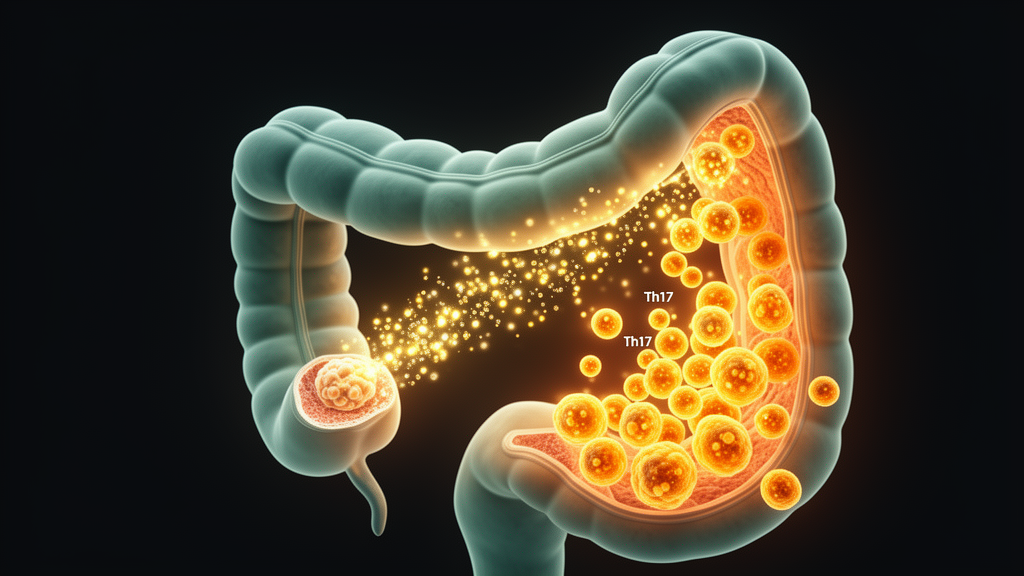
A microbial metabolite may be a key driver of intestinal inflammation. In a study published in BMC Medicine, researchers report that indole, a compound produced by gut bacteria from the amino acid tryptophan, promotes the overproduction of Th17 cells—immune cells that drive inflammatory bowel disease—through a molecular pathway involving the enzymes and transcription factors PKA, SP1 and Trim21.
The team built on earlier work identifying the Fbxw7-Trim21 axis as critical for Th17 cell differentiation driven by the bacterium Alcaligenes faecalis under physiological conditions. In the new study, they examined whether the same machinery operates in disease states, using mouse models of colitis induced by DSS and TNBS, as well as chronic colitis models in Il10-deficient mice and in Rag1-deficient mice transferred with CD4+ T cells.
According to the results, indole from the gut microbiota in inflammatory bowel disease strengthens the interaction between the protein kinase PKA and the transcription factor SP1. This promotes phosphorylation and activation of SP1, which in turn drives transcription of Trim21, a gene encoding an E3 ubiquitin ligase. Elevated Trim21 promotes degradation of another E3 ubiquitin ligase, Fbxw7, and the resulting imbalance leads to overproduction of Th17 cells in the intestine.
Diet appeared to influence this pathway. Feeding mice a tryptophan-rich diet enhanced indole production and aggravated colitis, the researchers report. In contrast, colonization with the bacterium Dubosiella newyorkensis alleviated disease by shifting tryptophan metabolism away from indole and toward kynurenine, another catabolic product of the same amino acid.
The study also tested a targeted intervention. Extracellular vesicles directed at CD4+ T cells, carrying a RING domain-deficient form of Trim21, blocked Trim21 function inside the cells. This suppressed Th17 cell generation and mitigated colitis in the DSS model, suggesting that inhibiting Trim21 could dampen the inflammatory response.
The authors conclude that indole-induced Trim21 upregulation is crucial for Th17 cell generation in inflammatory bowel disease, and they propose microbial interventions and Trim21 inhibition as potential therapeutic strategies. Because the findings come from mouse models of colitis, their relevance to human patients will require further validation, and the reported version of the article is an early, peer-reviewed accepted manuscript that may still be edited before the final version of record appears.
Subject of Research: How the microbial metabolite indole promotes Th17 cell overproduction in inflammatory bowel disease through PKA/SP1-mediated Trim21 transcription
Article Title: Indole induces intestinal T helper-17 cell overproduction during inflammatory bowel disease through PKA/SP1-mediated Trim21 transcription
Article References: Wu, H., Ma, Z., Zeng, X., Fang, Y., Guo, J., Qiao, S., Zhang, G., Wang, Q., Wang, J., Feng, H., Cai, Z., Chen, Y., & Shen, Y. (2026). Indole induces intestinal T helper-17 cell overproduction during inflammatory bowel disease through PKA/SP1-mediated Trim21 transcription. BMC Medicine. https://doi.org/10.1186/s12916-026-05351-4
Image Credits: AI Generated
DOI: 10.1186/s12916-026-05351-4
Keywords: indole, Th17 cells, inflammatory bowel disease, Trim21, SP1, PKA, gut microbiota, tryptophan, Dubosiella newyorkensis, colitis, extracellular vesicles, Fbxw7
News Source: Morgan Morrow. (October 28, 2026). Gut Microbial Indole Drives Th17 Cell Overproduction in Bowel Disease. Scienmag.