


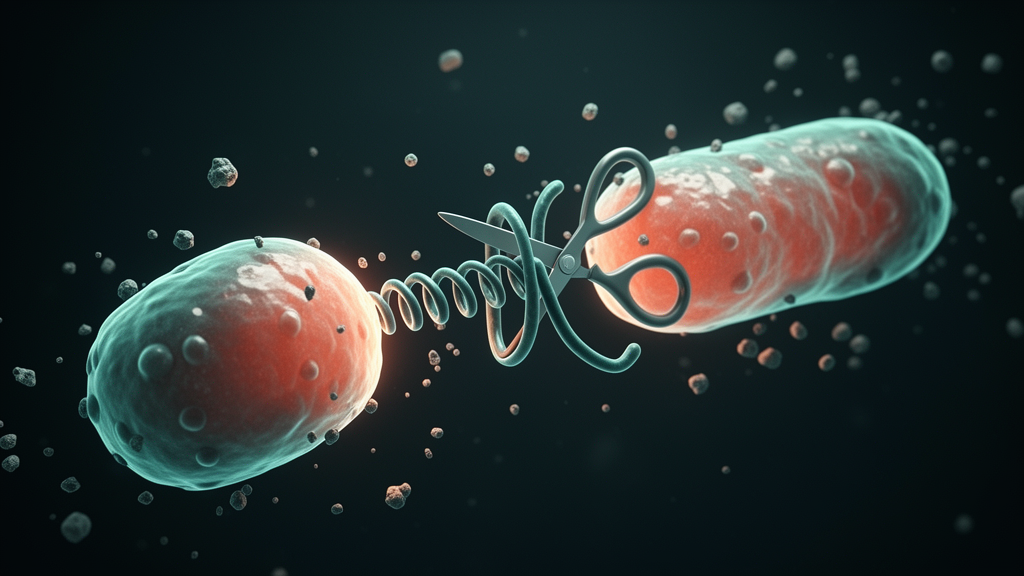
Periodontitis, the infection-driven chronic inflammatory disease that erodes the tissues anchoring our teeth, has long been framed as a story of microbial teamwork. In the dysbiotic biofilm beneath the gum line, certain bacterial species are thought to cooperate, each amplifying the destructive potential of the community. A study now published in EMBO Reports adds an unexpected twist to that narrative: one of the classic periodontal pathogens, Tannerella forsythia, can actively suppress the virulence of another, Porphyromonas gingivalis, through a protease inhibitor called miropin that the bacterium displays on its cell surface.
P. gingivalis is regarded as a keystone pathogen in periodontitis, largely because of its arsenal of cysteine proteases known as gingipains. These enzymes cleave peptide bonds after arginine residues (RgpA and RgpB) or lysine residues (Kgp) and are considered essential for initiating oral dysbiosis. Crucially, gingipain activity is unaffected by the host’s own protease inhibitors, which the bacterial enzymes instead treat as substrates. Secreted gingipains can therefore disrupt tightly regulated host proteolytic cascades, including coagulation, fibrinolysis, kinin generation and matrix metalloprotease activation, while also triggering protease-activated receptor signaling that promotes nutrient influx and further inflammation.
T. forsythia, another member of the periodontal pathogenic community, is unusual among bacteria in producing multiple protease inhibitors, including an alpha-2-macroglobulin, a family of potempins, and the recently described serpin miropin. Most bacterial and archaeal species lack protease inhibitor genes altogether. Miropin stands out even within the serpin superfamily: unlike archetypal serpins such as alpha-1-antitrypsin or antithrombin III, which target serine proteases with defined specificity, miropin inhibits a broad range of proteases spanning bacterial subtilisins, the plant enzyme papain, and mammalian trypsin, plasmin, neutrophil elastase and cathepsin G. This promiscuity stems from multiple active sites within its reactive center loop and an unusually plastic protein core.
The research team, led by Mirosław Książek and Jan Potempa with colleagues in Poland, Denmark and the United States, tested whether miropin could also target the proteases of P. gingivalis. In vitro, recombinant wild-type miropin, carrying the native Val-Lys-Thr (VKT) sequence in its reactive center loop, completely inhibited the lysine-specific gingipain Kgp and the calpain-like protease Tpr at a tenfold molar excess, but left RgpB untouched. Inhibition was concentration-dependent, with stoichiometry of inhibition values of 1.9 for Kgp and 9.3 for Tpr, and the formation of irreversible covalent complexes was confirmed by SDS-PAGE and peptide mass fingerprinting. N-terminal sequencing showed that Kgp attacks the Lys368-Thr bond in the reactive center loop, exactly as expected for a lysine-specific protease.
Kinetic analysis revealed association rate constants of 2.2 × 10⁵ M⁻¹s⁻¹ for Kgp and 2.5 × 10³ M⁻¹s⁻¹ for Tpr. The authors note that the slow rate and high stoichiometry for Tpr argue that its inhibition has little pathophysiological significance in vivo, since it would consume too many inhibitor molecules too slowly. Kgp, by contrast, is inhibited efficiently enough to matter. Importantly, the inhibitor also worked against proteases displayed on intact P. gingivalis cells, titrating Kgp and Tpr activity on the bacterial surface.
Determining where miropin sits in T. forsythia was a key step. Using dot blots of intact and sonicated cells, flow cytometry and controls including a miropin-null mutant, the team showed that the lipoprotein is exposed on the bacterial surface despite the semicrystalline S-layer that coats the cell. Both intact wild-type cells and outer membrane vesicles derived from them inhibited Kgp in a concentration-dependent manner, while the miropin-deficient mutant and its vesicles did not. Quantitative estimates suggested each T. forsythia cell carries roughly 740 to 1480 miropin molecules, and that outer membrane vesicles contain 61 to 116 femtomoles of the inhibitor per microgram of protein.
The functional consequences followed logically from P. gingivalis biology. The organism is a fastidious, asaccharolytic bacterium that relies on peptides as its carbon and energy source and requires heme as a growth factor. Kgp is important for heme acquisition, and gingipains collectively generate the peptide nutrients that P. gingivalis imports via the RagAB transporter. In a defined minimal medium containing albumin as the sole peptide source, wild-type VKT-miropin partially but significantly limited P. gingivalis growth in a concentration-dependent manner, producing a growth rate comparable to that of a Kgp-deficient mutant. The team then engineered a variant, RVK-miropin, that inhibits both Kgp and RgpB with a stoichiometry of 1.7 and rapid association kinetics. RVK-miropin achieved complete growth inhibition at 5 micromolar, matching a gingipain-null strain, while a control variant unable to inhibit gingipains had no effect even at 10 micromolar, confirming that the growth effect was specifically due to gingipain blockade.
In vivo, the picture grew more striking. In a subcutaneous chamber model, a lethal dose of 10⁹ colony-forming units of P. gingivalis W83 killed all mice within 24 hours. A single co-injected dose of VKT-miropin partially protected the animals, with 80 percent surviving to 48 hours, an effect attributed to quenching of Kgp-dependent pathogenicity rather than reduced bacterial counts. RVK-miropin, inhibiting both classes of gingipains, extended survival to 96 hours and significantly reduced bacterial loads in the chamber fluid, while the inactive variant offered no protection. More dramatically, when mice were co-infected with wild-type P. gingivalis and wild-type T. forsythia, all animals survived the six-day observation period, whereas co-infection with the miropin-null T. forsythia mutant was as lethal as P. gingivalis alone. Kgp activity in chamber exudates dropped to baseline during co-infection with the wild-type strain, and neutrophil infiltration, measured by myeloperoxidase activity, was significantly reduced.
The oral gavage model of periodontitis pointed in the same direction. T. forsythia alone caused measurable but modest alveolar bone erosion, far less than P. gingivalis. Co-infection with wild-type T. forsythia significantly reduced P. gingivalis-induced bone loss, but the miropin-deficient mutant conferred no protection. Mechanistically, the team traced this to bone remodeling signals: mono-infection with either bacterium induced similar levels of Tnf, Il1b and Ccl2 transcripts in gingival tissue, but only P. gingivalis raised the RANKL-to-OPG ratio, the balance that governs osteoclast-driven bone resorption. Co-infection with wild-type T. forsythia restored that ratio to baseline, while the mutant did not. The authors suggest that direct inhibition of Kgp and neutrophil elastase, both of which degrade osteoprotegerin, offers a plausible protein-level rationale, though how miropin influences Rankl and Opg gene expression remains unresolved.
The findings complicate the prevailing view of T. forsythia as an exclusively pathogenic member of the oral microbiome. Previous co-infection studies in rats and rabbits had reported synergistic or additive bone loss and abscess formation when T. forsythia was combined with other pathogens, making the protective effect observed here a puzzling contrast. The authors caution against fully exonerating the species: the outcome of its presence likely depends on its abundance, the composition of the surrounding biofilm and the strength of the host response, and the chamber model represents an acute, non-oral infection system while the gavage model involves antibiotic depletion of native flora. Still, with miropin strongly expressed in infected periodontal pockets and capable of inhibiting a remarkable breadth of proteases, the serpin emerges as a candidate scaffold for engineering multiprotease inhibitors, and as evidence that interspecies relationships within the dysbiotic biofilm can run in both directions.
Subject of Research: A Tannerella forsythia serpin inhibits Porphyromonas gingivalis gingipains and attenuates virulence in infection models
Article Title: Interspecies regulation of virulence through gingipain inhibition by a Tannerella forsythia serpin
Article References: Książek, M., Benedyk-Machaczka, M., Mizgalska, D., Sochaj-Gregorczyk, A., Waligórska, I., Drzazga, K., Nowak, M., Kaczor, A., Potempa, B., Fuchs, A., Thøgersen, I. B., Enghild, J. J., Scavenius, C., Mydel, P., Moris, S. C., Bagaitkar, J., & Potempa, J. (2026). Interspecies regulation of virulence through gingipain inhibition by a Tannerella forsythia serpin. EMBO Reports. https://doi.org/10.1038/s44319-026-00958-3
Image Credits: AI Generated
DOI: 10.1038/s44319-026-00958-3
Keywords: Tannerella forsythia, Porphyromonas gingivalis, miropin, serpin, gingipains, periodontitis, protease inhibitor, alveolar bone loss, RANKL/OPG, dysbiosis, mouse models, oral microbiome
News Source: Morgan Morrow. (October 29, 2026). Gum bacterium’s serpin disarms rival pathogen’s key virulence protease. Scienmag.



