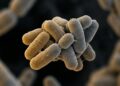
A gallic acid-based green sanitizer can push Listeria innocua into the viable but nonculturable (VBNC) state, a condition in which bacteria remain alive and metabolically active but fail to form colonies on standard laboratory media, according to a new RNA sequencing study published in Frontiers in Bacteriology. Researchers at the Agricultural Research Organization – The Volcani Institute in Israel and the Hebrew University of Jerusalem profiled the transcriptome of stationary-phase L. innocua cells after exposure to a triple formulation of gallic acid, hydrogen peroxide and lactic acid, and found a coordinated program of metabolic shutdown, stress response activation and an unexpected pattern of cell division gene expression that may leave the cells poised for resuscitation.
The sanitizer, developed previously by the same group as a potential alternative to chlorine-based treatments for fresh produce, combines the natural polyphenol gallic acid with hydrogen peroxide and lactic acid, all compounds generally recognized as safe. Its antibacterial activity arises mainly from reactive oxygen species generated through a synergistic interaction between gallic acid and hydrogen peroxide, with lactic acid enhancing susceptibility to the attack. In earlier work, the team showed that this treatment induced VBNC populations in stationary-phase L. innocua, characterized by high ATP levels, intact membranes, stable membrane potential and metabolic activity despite the loss of culturability, with apparent resuscitation stimulated by sodium pyruvate.
In the new study, the researchers grew L. innocua ATCC 33090 in brain heart infusion broth at 37 degrees Celsius to stationary phase, washed the cells and resuspended them in saline at approximately 10^8 colony-forming units per milliliter. The suspensions were incubated for 30 minutes with the triple formulation containing 8 millimolar gallic acid, 1 millimolar hydrogen peroxide and 20 millimolar lactic acid, while control samples were incubated in saline alone. After confirming the VBNC condition through culturability, ATP content and membrane integrity assays, the researchers collected the cells on 0.2-micrometer filters, stabilized the RNA, snap-froze the pellets and stored them at minus 80 degrees Celsius. Each sample had four biological replicates.
Sequencing was performed on an Illumina platform after rRNA depletion, generating paired-end reads that were mapped to the reference genome of Listeria innocua using STAR software. Gene abundance was estimated with Cufflinks, and differential expression analysis was carried out with the DESeq2 R package, considering genes at least 2-fold differentially expressed with a false discovery-corrected significance of at most 0.05. Kyoto Encyclopedia of Genes and Genomes pathway and Gene Ontology enrichment were assessed with the KOBAS 3.0 tool. A subset of 12 genes was validated by quantitative real-time PCR using the 2^-ΔΔCt method with 16S rRNA as the internal reference.
The comparison between culturable non-treated stationary-phase cells and VBNC triple-formulation-treated cells revealed 616 differentially expressed genes, of which 324, or 53 percent, were upregulated and 292, or 47 percent, were downregulated. Hierarchical clustering of normalized expression values showed clear segregation of the VBNC and control samples, with two major reciprocal gene clusters, one elevated in VBNC cells and repressed in controls and the other showing the opposite pattern. Although upregulated genes outnumbered downregulated ones, the most significant regulatory responses were found among the repressed genes, pointing to a broad suppression of cellular activity rather than isolated biochemical changes.
Functional enrichment analysis highlighted extensive downregulation of primary metabolism. Carbon metabolism was significantly reduced, with the strongest enrichment ratio in glycolysis and gluconeogenesis, and the pentose phosphate pathway was also affected, indicating reduced carbon flux and sugar utilization. Lipid metabolism showed robust downregulation of glycerolipid metabolism, a critical player in membrane lipid turnover with potential consequences for membrane fluidity. Biosynthesis of amino acids was significantly suppressed, marking what the authors describe as an extensive collapse of central metabolic biosynthetic capacity. Secondary metabolism, including biosynthesis of antibiotics and other secondary metabolites, was markedly perturbed as well.
The ribosome pathway was also significantly enriched among downregulated genes. In the molecular function category, ribosome-linked processes had high gene representation, with 32 annotated genes, about 11 percent of the 292 downregulated genes, and the structural constituent of ribosome term was significantly enriched. The cytosolic large ribosomal subunit was dramatically downregulated at the cellular component level. Among individual transcripts, the 23S rRNA gene, the core structural RNA of the large ribosomal subunit, was prominently reduced at minus 1.99 log2 fold change, while 4 genes of the small ribosomal subunit and 8 genes of the large subunit were repressed, ranging between minus 1.0 and minus 1.7 log2 fold change. The researchers interpret this coordinated suppression as translational downscaling, a physiological adaptation resembling the stringent response, aimed at conserving energy by preventing unnecessary protein synthesis.
On the activation side, the general stress response alternative sigma factor SigB was significantly upregulated at 1.16 log2 fold change, rising from a basal count of 340 in untreated samples to 758 in treated ones, a change confirmed by quantitative PCR. Its regulators RsbW and RsbV were also upregulated, suggesting fine-tuning of sigma activity after treatment. In parallel, the primary housekeeping sigma factors RpoD and Sig70, associated with growth transcription, were repressed, complementing the reduction in core gene expression machinery. Among SigB-dependent genes, dltX, a member of the dltABCD operon responsible for D-alanylation of teichoic acids, was upregulated and confirmed by RT-qPCR, alongside D-alanine-D-alanine ligase and N-acetylmuramoyl-L-alanine amidase, hinting at an effort to reinforce cell envelope structural integrity after exposure.
Perhaps the most striking finding concerns cell division. Although proliferation arrest is a central element of the VBNC state, most key cell division components were unexpectedly upregulated, including ftsL, PBP2B and zapA, as well as the FtsZ-ring modulator ezrA, the polar site recruiter divIVA, the nucleoid occlusion factor noc and the chromosome segregation translocase FtsK. At the same time, the FtsW/RodA/SpoVE protein gene, involved in peptidoglycan formation and cell shape maintenance, was downregulated. The researchers propose that this apparent paradox may reflect a fine-tuned strategy in which the division machinery is maintained in a poised but blocked state, with the SOS-induced cell division inhibitor yneA, upregulated at 1.88 log2 fold change, acting downstream to halt cytokinesis while DNA repair proceeds.
Several genes associated with the SOS response were differentially expressed, including the repressor lexA and LexA-dependent DNA repair genes such as recF, recN, recQ and uvrA, with one uvrA subunit upregulated and two others downregulated, supporting a model of coordinated nucleotide excision repair alongside stress response. The authors hypothesize that removal of the blocking element yneA, whose division-blocking effect is temporary and reversible, might trigger growth resumption, consistent with signs of resuscitation potential observed in their previous work. They suggest that antimicrobial interventions targeting the SOS response may be promising for overcoming the bacterial VBNC defense, though they caution that resuscitation was not directly examined in the present study and that further work integrating transcriptomics with proteomics, functional genetics and resuscitation tests is needed to validate the regulatory mechanisms. Because the study was performed with L. innocua, a widely used surrogate for the foodborne pathogen L. monocytogenes, the findings may inform approaches to control VBNC persistence in food processing environments, although species-specific differences must be considered when extrapolating the mechanisms across Listeria.
Subject of Research: Transcriptomic response of Listeria innocua to a gallic acid-based green sanitizer inducing the viable but nonculturable state
Article Title: Transcriptomic analysis of Listeria innocua response to a green food sanitizer: presumable viable but nonculturable state induction
Article References: Mwangi, E. W., Faigenboim, A., Kroupitski, Y., Nadarajan, S., Rodov, V., & Shemesh, M. (2026). Transcriptomic analysis of Listeria innocua response to a green food sanitizer: presumable viable but nonculturable state induction. Frontiers in Bacteriology, 5, Article 1903466. https://doi.org/10.3389/fbrio.2026.1903466
Image Credits: AI Generated
DOI: 10.3389/fbrio.2026.1903466
Keywords: Listeria innocua, viable but nonculturable, RNA-seq, gallic acid, green sanitizer, SigB stress response, cell division, SOS response, ribosome downregulation, food safety, transcriptomics, resuscitation
News Source: Drew Townsend. (November 5, 2026). Green sanitizer drives Listeria into a hidden viable but nonculturable state. Scienmag.