• HOME
  • NEWS
  • EXPLORE
    • CAREER
      • Companies
      • Jobs
    • EVENTS
    • iGEM
      • News
      • Team
    • PHOTOS
    • VIDEO
    • WIKI
  • BLOG
  • COMMUNITY
    • FACEBOOK
    • INSTAGRAM
    • TWITTER
Thursday, October 29, 2026
BIOENGINEER.ORG
No Result
View All Result
  • Login
  • HOME
  • NEWS
  • EXPLORE
    • CAREER
      • Companies
      • Jobs
        • Lecturer
        • PhD Studentship
        • Postdoc
        • Research Assistant
    • EVENTS
    • iGEM
      • News
      • Team
    • PHOTOS
    • VIDEO
    • WIKI
  • BLOG
  • COMMUNITY
    • FACEBOOK
    • INSTAGRAM
    • TWITTER
No Result
View All Result
Bioengineer.org
No Result
View All Result
Home NEWS Science News Biology

Great ape centromeres reveal a shared size-and-homogeneity signature

by
October 28, 2026
in Biology
Reading Time: 2 mins read
0
Great ape centromeres reveal a shared size-and-homogeneity signature

Great ape centromeres reveal a shared size-and-homogeneity signature

Share on FacebookShare on TwitterShare on LinkedinShare on RedditShare on Telegram

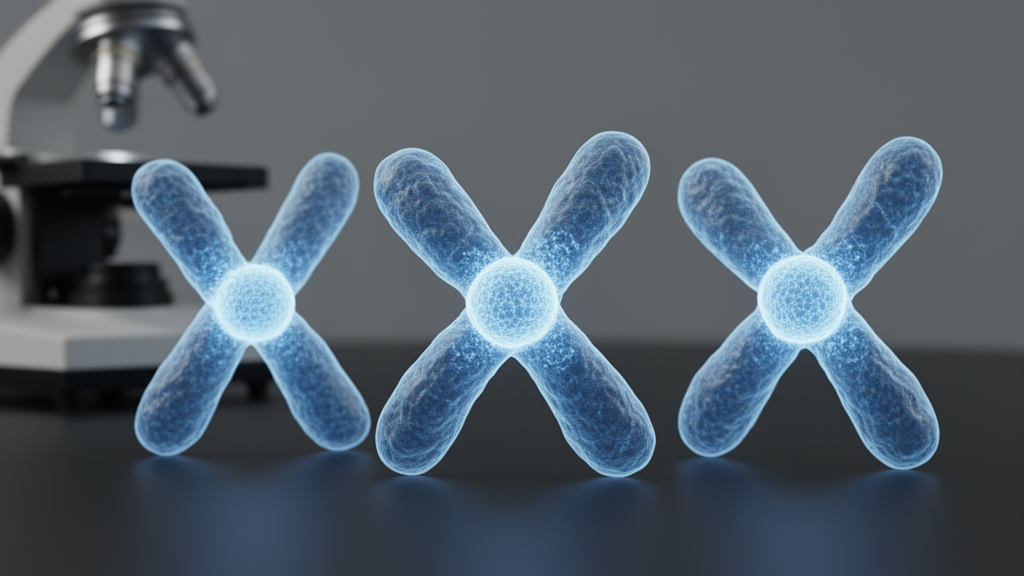
Complete telomere-to-telomere genome assemblies can now resolve centromeric repeat architecture at nucleotide resolution, yet pinpointing which of several candidate alpha-satellite arrays is actually functional still usually requires CENP-A occupancy or methylation data. A new study in BMC Genomics, published as an open-access research article on 28 October 2026, asks whether active centromeric arrays occupy a recurrent architectural state that can be recognized from assembled sequence alone, and whether that state is conserved across great apes.

Using sample-matched CENP-A occupancy data in the T2T-CHM13 human assembly, the researchers found that active arrays are both expanded and more sequence-homogeneous than neighbouring relict arrays. In practical terms, the functional centromere tends to sit in the largest, most internally consistent block of repetitive satellite DNA, while older, inactive arrays linger nearby in smaller and more diverged forms.

The simplest signal proved remarkably reliable. The longest candidate array correctly identified the functional centromere on all 19 testable human chromosomes. The authors also built a homogeneity-based model, called Centroseek, which identified 17 of 19. Functional assignments were robust across independent CENP-A datasets, suggesting the result is not an artifact of a single mapping experiment.

The team then tested whether the same rule holds beyond humans. Across 47 eligible chimpanzee, gorilla and bonobo chromosomes, the longest-array rule identified 44 of 47 annotated active arrays. All three failures occurred in bonobo, where relatively small active arrays break the otherwise strong expansion pattern that links array size to functional activity.

Notably, Centroseek recovered those three bonobo exceptions, flagging active arrays that are small but internally homogeneous. However, the homogeneity-based model did not outperform array length globally, correctly assigning 38 of 47 chromosomes compared with 44 of 47 for the simple longest-array rule.

The study also found that array length and homogeneity are strongly coupled, and that homogeneity provides little additional predictive information once size is known. Together, the results define a conserved expansion-and-homogenization architecture of active alpha-satellite arrays across great apes, with expansion acting as the dominant sequence-only signal of centromere activity, while Centroseek highlights exceptional centromere architectures in which size alone is insufficient.

Subject of Research: Sequence-only signatures that distinguish active centromeric alpha-satellite arrays across great ape genomes

Article Title: Active centromeres share a conserved array-architecture signature across great ape genomes

Article References: Guruacharya, A., & Rajbanshi, B. (2026). Active centromeres share a conserved array-architecture signature across great ape genomes. BMC Genomics. https://doi.org/10.1186/s12864-026-13483-3

Image Credits: AI Generated

DOI: 10.1186/s12864-026-13483-3

Keywords: centromere, alpha-satellite, telomere-to-telomere assembly, CENP-A, great apes, bonobo, chimpanzee, gorilla, genome architecture, T2T-CHM13, Centroseek, BMC Genomics

News Source: Drew Townsend. (October 28, 2026). Great ape centromeres reveal a shared size-and-homogeneity signature. Scienmag.

Tags: alpha satelliteBMC GenomicsbonoboCENP-AcentromereCentroseekchimpanzeegenome architecturegorillagreat apesT2T-CHM13telomere-to-telomere assembly
Share12Tweet7Share2ShareShareShare1

Related Posts

AlphaFold 3 Structures Can Guide T-Cell Receptor Engineering, With Caveats

AlphaFold 3 Structures Can Guide T-Cell Receptor Engineering, With Caveats

October 29, 2026
Hypergraph Embeddings Reveal How Metabolism Tracks Evolutionary Lineages

Hypergraph Embeddings Reveal How Metabolism Tracks Evolutionary Lineages

October 29, 2026

Human Pluripotent Stem Cells Made from Umbilical Cord Cells Using Small Molecules

October 29, 2026

River Yamuna Bacterium Removes Most Amoxicillin in Lab Test

October 29, 2026

POPULAR NEWS

  • Springer Nature Launches Open-Access Journal Discover Pediatrics

    Springer Nature Launches Open-Access Journal Discover Pediatrics

    29 shares
    Share 12 Tweet 7
  • Combined Cataract and Glaucoma Surgery Shows Strong One-Year Pressure Control

    29 shares
    Share 12 Tweet 7
  • PBS-PBAT Blend Films Tune Strength, Moisture Barrier and UV Shielding for Biodegradable Packaging

    29 shares
    Share 12 Tweet 7
  • Fruit Fly Eggshell Gene Reveals Purifying Selection with Episodes of Positive Evolution

    29 shares
    Share 12 Tweet 7

About

We bring you the latest biotechnology news from best research centers and universities around the world. Check our website.

Follow us

Recent News

AlphaFold 3 Structures Can Guide T-Cell Receptor Engineering, With Caveats

Hypergraph Embeddings Reveal How Metabolism Tracks Evolutionary Lineages

Human Pluripotent Stem Cells Made from Umbilical Cord Cells Using Small Molecules

Subscribe to Blog via Email

Enter your email address to subscribe to this blog and receive notifications of new posts by email.

Join 85 other subscribers
  • Contact Us

Bioengineer.org © Copyright 2023 All Rights Reserved.

Welcome Back!

Login to your account below

Forgotten Password?

Retrieve your password

Please enter your username or email address to reset your password.

Log In
No Result
View All Result
  • Homepages
    • Home Page 1
    • Home Page 2
  • News
  • National
  • Business
  • Health
  • Lifestyle
  • Science

Bioengineer.org © Copyright 2023 All Rights Reserved.