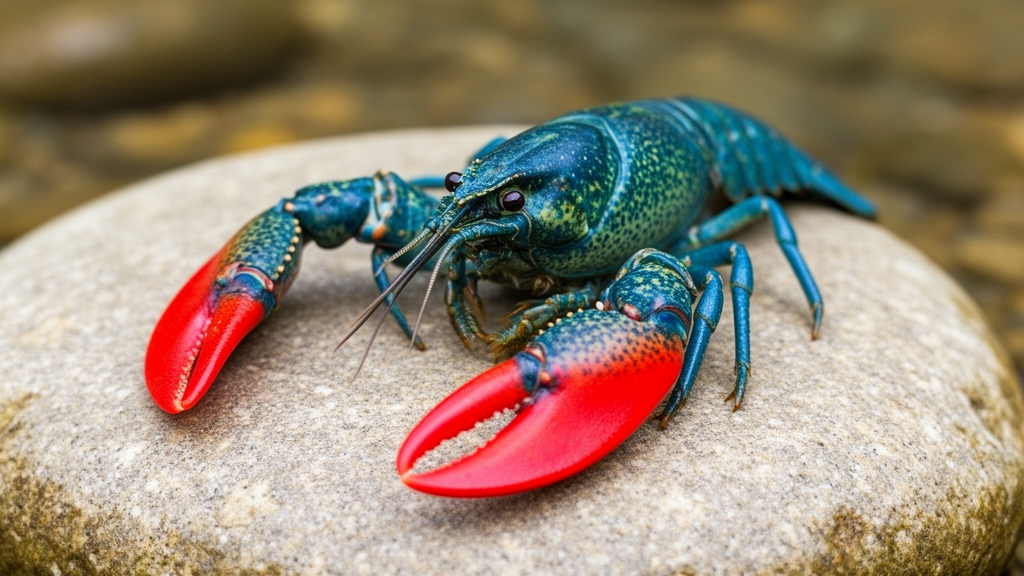
Variations in red cuticle patch development among male redclaw crayfish, Cherax quadricarinatus, correspond to distinct molecular profiles within gonadal tissue. The red cuticle patch functions as a male secondary sexual characteristic, yet its physical emergence varies substantially among individuals of similar age and body weight. To examine this variation, researchers evaluated associations between cuticle patch timing and reproductive organ profiles, finding that early patch growth correlates with replication- and structure-related gonadal expression, while later stages exhibit differences in folate-related pathways.
The experimental design evaluated male crayfish across two separate developmental stages to compare individuals with earlier and later red patch formation. At nineteen weeks of age, male crayfish demonstrating earlier patch development were designated as group A, whereas individuals with later development were assigned to group C. At twenty-six weeks, different individual crayfish selected from the corresponding cohorts were sampled as group B and group D, retaining the classification established at week nineteen. Body weight did not differ significantly between the groups within either sampling age.
Morphometric measurements and microscopic tissue examinations revealed notable physical differences between the designated groups. Morphometric evaluations were conducted on twelve animals per group, while histological examinations of the vas deferens utilized three animals per group. At week nineteen, crayfish in group A possessed larger red patches and a higher gonadosomatic index than crayfish in group C. Histological examination of representative vas deferens sections further demonstrated more apparent sperm masses in group A males. By week twenty-six, males in group B maintained a higher gonadosomatic index and greater patch length than those in group D.
To characterize the underlying molecular landscape, the authors examined the testis–vas deferens complex using three distinct omics platforms. Matched tissue samples obtained from five animals per group were analyzed through RNA sequencing, data-independent acquisition proteomics, and untargeted metabolomics. In addition, reverse transcription quantitative PCR was performed using the same RNA extracts to evaluate and verify transcription levels across the cohorts.
Transcriptomic profiling identified pronounced gene expression shifts associated with red patch maturation stages. The comparison between group A and group C at week nineteen identified 1,023 differentially expressed genes, which showed significant enrichment in DNA replication and tissue-structural terms following Benjamini–Hochberg correction. In contrast, the comparison between group B and group D at week twenty-six yielded 103 differentially expressed genes, displaying significant enrichment in folate-related processes after Benjamini–Hochberg adjustment.
Exploratory proteomic and metabolomic analyses captured numerous additional molecular features, though none met stringent thresholds for statistical significance. The screening detected 182 protein groups and 1,735 metabolic features in the week-nineteen comparison, as well as 117 protein groups and 1,185 metabolic features at week twenty-six. None of these protein groups or metabolic features passed full-set differential Benjamini–Hochberg adjusted P values below 0.05, and all six primary multivariate group tests were nonsignificant after correction. Directional trends in reverse transcription quantitative PCR aligned with RNA sequencing findings, and shared annotations highlighted candidates related to RNA processing and metabolism across omics layers.
The research team emphasized that the week-twenty-six comparison was exploratory because each category occupied a single pond. In their conclusions, the authors noted that early red patch variation associates with replication- and structure-related expression in the testis–vas deferens complex, whereas later cohort differences involve folate-related expression. These molecular associations provide a prioritized list of candidates for subsequent independent confirmation and functional investigations of reproductive-tissue variation in male Cherax quadricarinatus.
Subject of Research: Gonadal molecular profiles and red patch development in male redclaw crayfish
Article Title: Multi-omics profiles of gonadal tissue associated with differences in red patch development in male redclaw crayfish (Cherax quadricarinatus)
Article References: Li, L., Liu, Y., Zeng, Q., Hu, Y., Tong, T., Yang, H., Wang, D., Wang, R., Zhang, Q., & Du, X. (2026). Multi-omics profiles of gonadal tissue associated with differences in red patch development in male redclaw crayfish (Cherax quadricarinatus). BMC Genomics. https://doi.org/10.1186/s12864-026-13566-1
Image Credits: AI Generated
DOI: 10.1186/s12864-026-13566-1
Keywords: Cherax quadricarinatus, redclaw crayfish, red patch development, gonadal tissue, testis-vas deferens complex, secondary sexual characteristics, RNA sequencing, data-independent acquisition proteomics, untargeted metabolomics, differentially expressed genes, gonadosomatic index, sperm masses, DNA replication, folate metabolism, RT-qPCR, Benjamini-Hochberg correction
News Source: Juliet Wilcox. (November 17, 2026). Gonadal Expression Correlates With Red Patch Development in Male Redclaw Crayfish. Scienmag.