• HOME
  • NEWS
  • EXPLORE
    • CAREER
      • Companies
      • Jobs
    • EVENTS
    • iGEM
      • News
      • Team
    • PHOTOS
    • VIDEO
    • WIKI
  • BLOG
  • COMMUNITY
    • FACEBOOK
    • INSTAGRAM
    • TWITTER
Thursday, October 22, 2026
BIOENGINEER.ORG
No Result
View All Result
  • Login
  • HOME
  • NEWS
  • EXPLORE
    • CAREER
      • Companies
      • Jobs
        • Lecturer
        • PhD Studentship
        • Postdoc
        • Research Assistant
    • EVENTS
    • iGEM
      • News
      • Team
    • PHOTOS
    • VIDEO
    • WIKI
  • BLOG
  • COMMUNITY
    • FACEBOOK
    • INSTAGRAM
    • TWITTER
No Result
View All Result
Bioengineer.org
No Result
View All Result
Home NEWS Science News Health

Global model maps aquavoltaics potential for power and emissions offsets

by
October 22, 2026
in Health
Reading Time: 2 mins read
0
Global model maps aquavoltaics potential for power and emissions offsets

Global model maps aquavoltaics potential for power and emissions offsets

Share on FacebookShare on TwitterShare on LinkedinShare on RedditShare on Telegram

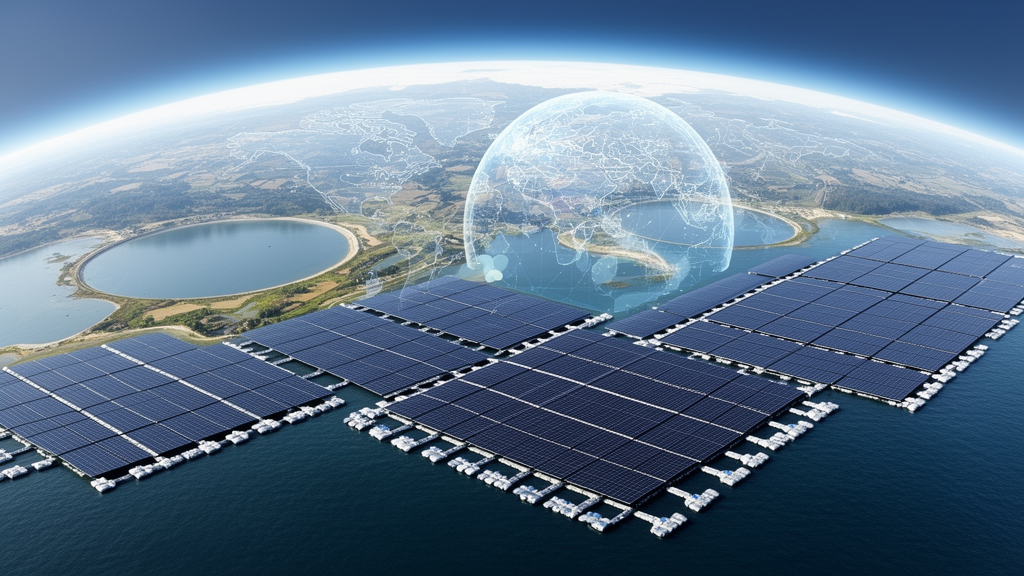
A global modeling study estimates that installing solar photovoltaic systems over clustered freshwater aquaculture ponds could produce 4,143 ± 145 terawatt-hours of electricity annually and help offset the sector’s carbon footprint. Researchers combined satellite observation products with climate-driven simulations of photovoltaic systems to map the distribution and potential expansion of aquavoltaics worldwide. They estimated the scenario by covering 40% of more than 50,000 square kilometres of landside aquaculture ponds.

The results describe modeled technical potential rather than output from a completed deployment program. The study found that aquavoltaics covered 423 square kilometres globally in 2023, with China accounting for 97% of that area. Using satellite data to identify clusters of aquaculture ponds, the researchers evaluated where photovoltaic installations could be placed and estimated their electricity production under realistic climate-driven system simulations.

Their 40% coverage scenario produced the central estimate of 4,143 ± 145 TWh per year, with the accompanying uncertainty indicating a range rather than a single guaranteed output. The researchers also compared modeled aquavoltaic generation with electricity demand at the city level. Under the scenario they assessed, deployment could support energy self-sufficiency in 878 cities.

A second component of the analysis examined the relationship between renewable electricity generated by aquavoltaics and emissions associated with inland freshwater aquaculture. At the grid level, the model estimated that deployment could offset the freshwater aquaculture carbon footprint in 61 countries through avoided emissions associated with electricity generation. This was a modeled accounting relationship between estimated renewable output and the electricity system, not evidence that aquaculture in those countries has already reached a net-zero balance.

The findings are presented as a global assessment of potential, and the supplied results do not establish how quickly or to what extent installations could be realized. Taken together, the analysis places aquavoltaics at the intersection of energy, food production and climate accounting. The study identifies a large modeled generation potential and links part of that potential to city-level electricity supply and national-scale emissions offsets.

Its scope, however, is defined by a global model using satellite observations, climate-driven photovoltaic simulations, a 40% pond-coverage assumption and grid-level avoided emissions.

Subject of Research: Global modeling of aquavoltaic electricity generation and freshwater aquaculture emissions offsets

Article Title: The global potential of aquavoltaics for power generation and offsetting the carbon footprint of freshwater aquaculture

Article References: Xia, Z., Bush, S. R., Jia, N., Li, Y., Bao, E., Guo, S., Chen, R., Pan, X., Chen, K., Guo, X., Jiang, P., & Du, P. (2026). The global potential of aquavoltaics for power generation and offsetting the carbon footprint of freshwater aquaculture. Nature Food. https://doi.org/10.1038/s43016-026-01446-6

Image Credits: AI Generated

DOI: 10.1038/s43016-026-01446-6

Keywords: aquavoltaics, photovoltaics, freshwater aquaculture, renewable electricity, greenhouse gas emissions, satellite observations, global modeling, climate-driven simulation, grid emissions, global, potential, power

News Source: Ophelia Keating. (October 22, 2026). Global model maps aquavoltaics potential for power and emissions offsets. Scienmag.

Tags: aquavoltaicsclimate-driven simulationFreshwater aquacultureGlobalglobal modelinggreenhouse gas emissionsgrid emissionsphotovoltaicspotentialpowerrenewable electricitysatellite observations
Share12Tweet7Share2ShareShareShare1

Related Posts

Structure–property relationships and biological performance of electroactive biomaterial scaffolds for tissue regeneration

Structure–property relationships and biological performance of electroactive biomaterial scaffolds for tissue regeneration

October 22, 2026
Fujian case-crossover study links short-term particulate matter to angina

Fujian case-crossover study links short-term particulate matter to angina

October 22, 2026

Review maps cardiac risk tools for inflammatory myopathies

October 22, 2026

Review examines gut microbial metabolites in radiation enteritis

October 22, 2026

POPULAR NEWS

  • Structure–property relationships and biological performance of electroactive biomaterial scaffolds for tissue regeneration

    Structure–property relationships and biological performance of electroactive biomaterial scaffolds for tissue regeneration

    29 shares
    Share 12 Tweet 7
  • Global model maps aquavoltaics potential for power and emissions offsets

    29 shares
    Share 12 Tweet 7
  • Fujian case-crossover study links short-term particulate matter to angina

    29 shares
    Share 12 Tweet 7
  • Reduced fruquintinib dose showed no significant survival association in colorectal cancer cohort

    29 shares
    Share 12 Tweet 7

About

We bring you the latest biotechnology news from best research centers and universities around the world. Check our website.

Follow us

Recent News

Structure–property relationships and biological performance of electroactive biomaterial scaffolds for tissue regeneration

Global model maps aquavoltaics potential for power and emissions offsets

Fujian case-crossover study links short-term particulate matter to angina

Subscribe to Blog via Email

Enter your email address to subscribe to this blog and receive notifications of new posts by email.

Join 85 other subscribers
  • Contact Us

Bioengineer.org © Copyright 2023 All Rights Reserved.

Welcome Back!

Login to your account below

Forgotten Password?

Retrieve your password

Please enter your username or email address to reset your password.

Log In
No Result
View All Result
  • Homepages
    • Home Page 1
    • Home Page 2
  • News
  • National
  • Business
  • Health
  • Lifestyle
  • Science

Bioengineer.org © Copyright 2023 All Rights Reserved.