The study revealed unexpected and sex-specific effects of germline regulation on longevity and somatic repair in vertebrates. Contrary to classical evolutionary theories, it turns out that changing how the germline (the part responsible for reproduction) works can have different effects on males and females. This challenges conventional beliefs that reproduction and longevity are linked by a limited pool of resources. The research opens up new possibilities for understanding how our bodies age and the role of reproduction in that process. The findings open new avenues for understanding the complex interplay between reproduction, damage repair, and lifespan, offering fresh insights into the mechanisms governing aging in vertebrates.
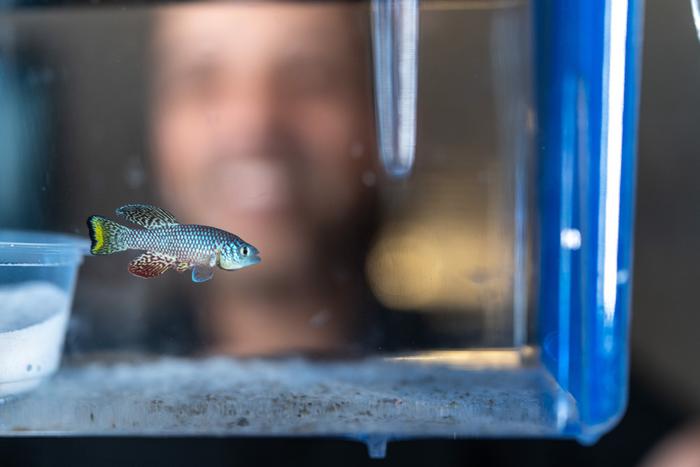
Credit: Harel Lab
The study revealed unexpected and sex-specific effects of germline regulation on longevity and somatic repair in vertebrates. Contrary to classical evolutionary theories, it turns out that changing how the germline (the part responsible for reproduction) works can have different effects on males and females. This challenges conventional beliefs that reproduction and longevity are linked by a limited pool of resources. The research opens up new possibilities for understanding how our bodies age and the role of reproduction in that process. The findings open new avenues for understanding the complex interplay between reproduction, damage repair, and lifespan, offering fresh insights into the mechanisms governing aging in vertebrates.
In a new study conducted by Prof. Itamar Harel from the Hebrew University of Jerusalem and team of researchers have discovered a novel connection between germline regulation and the intricate balance of longevity and somatic repair in vertebrates.
Germline cells are responsible for passing genetic information from one generation to the next through the production of eggs and sperm in animals, or pollen and ovules in plants. Classical evolutionary theories have long proposed tradeoffs between reproduction, damage repair, and lifespan, yet the specific role of the germline in shaping vertebrate aging has remained largely elusive. Prof. Harel’s research, focused on the turquoise killifish (Nothobranchius furzeri), introduces a paradigm-shifting perspective.
The team genetically arrested germline differentiation at discrete stages in turquoise killifish and meticulously examined the impact of different infertility “flavors” on life-history. A comprehensive single-cell gonadal atlas was constructed, providing cell-type-specific markers crucial for downstream phenotypic analysis.
The recent research conducted by doctoral students Eitan Moses and Tehila Atlan from Hebrew University, shows that removing the germline in vertebrates has different effects on males and females. It notably extends the lifespan of males and provides remarkable stress resistance in females. The main discoveries from the study indicate that only depleting the germline significantly improves the ability of females to repair damage, while stopping germline differentiation doesn’t produce the same result. Interestingly, males without a germline showed a notable increase in lifespan, challenging the commonly held belief that the germline always benefits longevity.
Analyzing the genes and pathways, the study discovered that there are more of those connected to longer life, than initially believed. Surprisingly, when they studied a tiny worm called Caenorhabditis elegans, known for genetic and aging research, they found that these mechanisms related to living longer still worked.
The research also uncovered that germline depletion extended male healthspan through rejuvenated metabolic functions, suggesting a potential avenue for interventions to promote healthy aging in males.
The results suggest that different germline manipulation paradigms can yield pronounced sexually dimorphic phenotypes, introducing alternative mechanisms to classical evolutionary tradeoffs.
“This study opens new avenues for understanding the intricate balance between reproduction, damage repair, and lifespan. The sex-specific nature of germline regulation challenges existing paradigms and paves the way for further exploration of alternative mechanisms governing aging in vertebrates,” remarked Prof. Itamar Harel.
Journal
Nature Aging
DOI
10.1101/2023.12.18.572041
Method of Research
Experimental study
Subject of Research
Animals
Article Title
The germline regulates longevity and somatic repair in a sex-specific manner
Article Publication Date
15-May-2024