• HOME
  • NEWS
  • EXPLORE
    • CAREER
      • Companies
      • Jobs
    • EVENTS
    • iGEM
      • News
      • Team
    • PHOTOS
    • VIDEO
    • WIKI
  • BLOG
  • COMMUNITY
    • FACEBOOK
    • INSTAGRAM
    • TWITTER
Saturday, February 7, 2026
BIOENGINEER.ORG
No Result
View All Result
  • Login
  • HOME
  • NEWS
  • EXPLORE
    • CAREER
      • Companies
      • Jobs
        • Lecturer
        • PhD Studentship
        • Postdoc
        • Research Assistant
    • EVENTS
    • iGEM
      • News
      • Team
    • PHOTOS
    • VIDEO
    • WIKI
  • BLOG
  • COMMUNITY
    • FACEBOOK
    • INSTAGRAM
    • TWITTER
  • HOME
  • NEWS
  • EXPLORE
    • CAREER
      • Companies
      • Jobs
        • Lecturer
        • PhD Studentship
        • Postdoc
        • Research Assistant
    • EVENTS
    • iGEM
      • News
      • Team
    • PHOTOS
    • VIDEO
    • WIKI
  • BLOG
  • COMMUNITY
    • FACEBOOK
    • INSTAGRAM
    • TWITTER
No Result
View All Result
Bioengineer.org
No Result
View All Result
Home NEWS Science News Health

Geography, age and anemia shape childhood vaccine responses in Sub-Saharan Africa

Bioengineer by Bioengineer
February 6, 2020
in Health
Reading Time: 2 mins read
0
IMAGE
Share on FacebookShare on TwitterShare on LinkedinShare on RedditShare on Telegram

IMAGE

Credit: [Credit: Dr. Danika Hill]


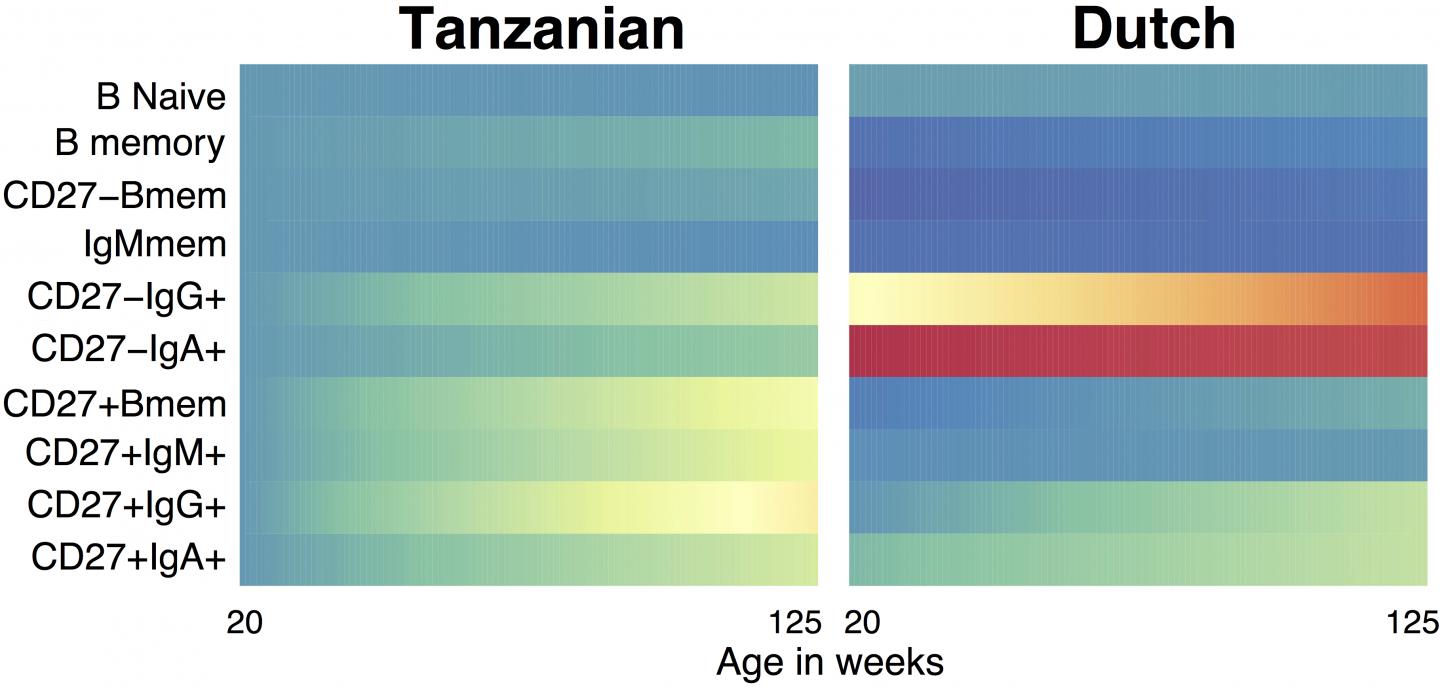
Vaccine responses in the developing immune systems of children may depend on factors such as age, location and anemia status, according to a study comparing samples from 1,119 Dutch children to 171 children in sub-Saharan Africa who took part in a malaria vaccine trial. By casting light on how geography shapes immune responses in children, the findings could help health authorities conduct more effective vaccination campaigns in developing countries. Children in low-income countries are highly susceptible to both vaccine-preventable diseases and infections such as malaria that have historically lacked a vaccine. However, some immunizations do not work as well in children as in adults, partly because scientists don’t fully understand how age, nutrition and genetics influence the developing immune system. Danika Hill and colleagues examined blood samples from 55 children in Tanzania and 116 children in Mozambique under the age of five who had taken part in a phase 3 trial for RTS,S (MosquirixTM) – one of the first vaccines for malaria licensed in Europe. They found that the composition of immune cells in the children evolved over the 32-month trial, and in some cases matured more quickly when compared with samples from Dutch children collected during a previous study. Furthermore, children in Mozambique showed a stronger antibody response to the malaria vaccine compared with Tanzanian children, hinting that geography within continents also influences immune dynamics. One key finding was that children in Tanzania and Mozambique with anemia showed weaker immune responses to the vaccine and lower frequencies of B cells, which, through follow-up studies in the lab, the authors tied to a lack of bioavailable iron. They say their results could explain the poor vaccination outcomes observed in anemic children and iron-deficient adults, but add that further studies should dissect the influence of iron deficiency.

###

Media Contact
Press Package Team
[email protected]
202-326-6440

Related Journal Article

http://dx.doi.org/10.1126/scitranslmed.aaw9522

Tags: Immunology/Allergies/AsthmaMedicine/HealthVaccines
Share12Tweet8Share2ShareShareShare2

Related Posts

Exploring Decision-Making in Dementia Caregivers’ Mobility

February 7, 2026

Succinate Receptor 1 Limits Blood Cell Formation, Leukemia

February 7, 2026

Palmitoylation of Tfr1 Drives Platelet Ferroptosis and Exacerbates Liver Damage in Heat Stroke

February 7, 2026

Oxygen-Enhanced Dual-Section Microneedle Patch Improves Drug Delivery and Boosts Photodynamic and Anti-Inflammatory Treatment for Psoriasis

February 7, 2026
Please login to join discussion

POPULAR NEWS

  • Robotic Ureteral Reconstruction: A Novel Approach

    Robotic Ureteral Reconstruction: A Novel Approach

    82 shares
    Share 33 Tweet 21
  • Digital Privacy: Health Data Control in Incarceration

    63 shares
    Share 25 Tweet 16
  • Study Reveals Lipid Accumulation in ME/CFS Cells

    57 shares
    Share 23 Tweet 14
  • Breakthrough in RNA Research Accelerates Medical Innovations Timeline

    53 shares
    Share 21 Tweet 13

About

We bring you the latest biotechnology news from best research centers and universities around the world. Check our website.

Follow us

Recent News

Florida Cane Toad: Complex Spread and Selective Evolution

Exploring Decision-Making in Dementia Caregivers’ Mobility

Succinate Receptor 1 Limits Blood Cell Formation, Leukemia

Subscribe to Blog via Email

Enter your email address to subscribe to this blog and receive notifications of new posts by email.

Join 73 other subscribers
  • Contact Us

Bioengineer.org © Copyright 2023 All Rights Reserved.

Welcome Back!

Login to your account below

Forgotten Password?

Retrieve your password

Please enter your username or email address to reset your password.

Log In
No Result
View All Result
  • Homepages
    • Home Page 1
    • Home Page 2
  • News
  • National
  • Business
  • Health
  • Lifestyle
  • Science

Bioengineer.org © Copyright 2023 All Rights Reserved.