In a groundbreaking study emerging from Columbia University Mailman School of Public Health, researchers have uncovered alarming shortcomings in the routine monitoring of hemoglobin A1C levels among women diagnosed with postpartum-onset diabetes. This comprehensive retrospective cohort analysis, published in The BMJ, reveals that a staggering majority of these women, especially Black women, are not adhering to the American Diabetes Association’s recommended biannual A1C testing schedule. This discovery highlights an urgent public health challenge—underscoring the critical need for interventions that address the complex social determinants influencing diabetes care during the postpartum period.
Postpartum-onset diabetes represents a unique clinical subset wherein women are newly diagnosed with type 2 diabetes following childbirth. Effective management during this window is paramount, given the heightened risk for long-term cardiovascular and metabolic complications. Glycated hemoglobin, or A1C, functions as a vital biomarker reflecting average blood glucose control over the preceding three months and serves as a powerful predictor of diabetes-related sequelae. Guideline-concordant A1C testing allows clinicians to tailor treatments appropriately and mitigate progressive damage to organs impacted by hyperglycemia.
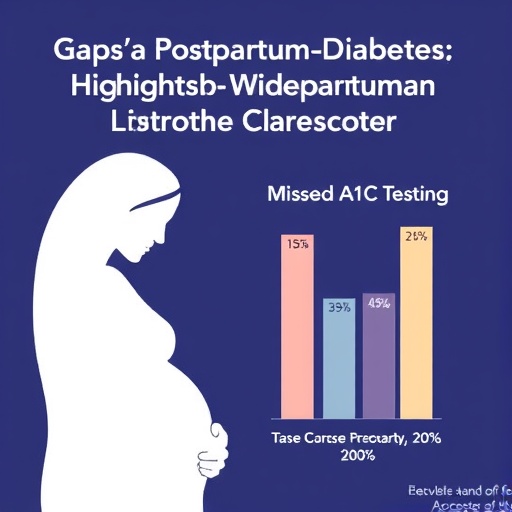
Despite the clinical significance of consistent monitoring, the Columbia study analyzed data from 5,590 postpartum women in New York City who delivered between 2009 and 2016 and were subsequently diagnosed with diabetes. By integrating linked birth certificate data, hospital records, and a centralized A1C registry, the researchers mapped the timing and frequency of follow-up testing. Strikingly, only 13 percent of these women achieved the recommended biannual testing frequency throughout the follow-up period. This low adherence rate signals systemic gaps extending beyond the clinical encounter, reflecting multifaceted social and structural barriers.
The study utilized an advanced epidemiological framework, controlling for key confounders such as body mass index, gestational diabetes history, and maternal age to isolate the influence of social determinants of health (SDOH). These determinants included race and ethnicity, insurance type, educational attainment, parity, and participation in nutrition assistance programs. Their findings layered a nuanced portrait of disparities: Non-Hispanic Black women faced longer delays before initial A1C testing and maintained lower overall test frequencies compared to their Non-Hispanic White counterparts. Additionally, women with higher parity experienced suboptimal testing adherence, suggesting the compounding burden of childcare responsibilities on healthcare engagement.
Intriguingly, women enrolled in Medicaid at the time of delivery exhibited relatively higher adherence to timely and frequent A1C testing compared to those with private insurance or other coverage types. This observation points to a potential protective effect conferred by specific healthcare coverage and social services facilitated through Medicaid programs. It invites further investigation into how Medicaid’s integrated support structures might bridge gaps in postpartum diabetes care and serve as a model for policy innovation.
The racial disparities highlighted by this study resonate with prior literature documenting inequities in chronic disease management. The lower monitoring rates among Black women align with documented challenges in accessing continuous diabetes care, yet this study pioneers by specifically targeting the postpartum population—a phase marked by unique sociocultural and economic stressors. Meanwhile, despite the absence of significant differences in testing rates between Hispanic and White women detected here, extant research indicates health outcome disparities in Hispanic populations, emphasizing an urgent need for targeted research to unpack this paradox and elucidate underlying factors.
The clinical implications of poor adherence to A1C monitoring during the postpartum period cannot be overstated. Inadequate surveillance hinders timely therapeutic adjustments, which may accelerate the development of microvascular complications, such as nephropathy and retinopathy, and macrovascular events, including myocardial infarction and stroke. Early identification and sustained management ensure better glycemic control trajectories and improve life expectancy and quality of life among reproductive-aged women navigating the dual challenges of new motherhood and chronic disease.
Moreover, the postpartum period is a critical juncture when women often encounter disrupted healthcare continuity due to psychosocial challenges, fragmented health insurance coverage, and competing priorities. This study’s illumination of these systemic hurdles underscores the necessity for healthcare delivery models that explicitly incorporate social context and structural determinants. Innovations such as integrated care pathways, community health worker engagement, and telemedicine follow-ups might enhance adherence and linkage to care.
The study’s robust methodology, utilizing a population-based cohort and cross-referencing multiple data sources, lends credence to its findings. The team’s epidemiologic rigor, including adjustment for clinical and demographic confounders, enables a clearer attribution of observed disparities to social and structural factors rather than biological differences alone. Future research directions must explore mechanistic pathways through which social determinants intersect with healthcare infrastructure and patient behaviors to influence diabetes monitoring and outcomes.
Columbia authors emphasize that addressing these disparities requires health policy reforms complemented by community-level interventions. Enhancing insurance coverage stability postpartum, increasing education around diabetes self-management, and combating systemic biases within healthcare systems are potential avenues to bridge gaps. The relative success observed among Medicaid beneficiaries could inform targeted expansion of coverage and support services tailored for postpartum women.
In the broader context of public health, this work contributes vital insights into chronic disease management equity. It stresses that despite advances in diabetes therapeutics, population-level outcomes will remain suboptimal without addressing fundamental social inequities. Reproductive health practitioners, primary care providers, and endocrinologists must collaborate to ensure seamless transition from obstetric to chronic disease care, particularly for marginalized populations disproportionately impacted.
The Columbia University Mailman School of Public Health continues to spearhead vital research tackling complex health disparities through interdisciplinary approaches. With their extensive expertise in epidemiology and social determinants, their contributions will shape future guidelines and interventions fostering equitable diabetes care. This study represents a clarion call for the scientific community and policymakers to prioritize postpartum diabetes monitoring as a critical frontier in health equity.
Subject of Research: The investigation focuses on the relationship between social determinants of health and adherence to hemoglobin A1C monitoring guidelines in women with postpartum-onset diabetes.
Article Title: Social determinants of health and recommended A1C monitoring among women with postpartum-onset diabetes: results from a retrospective cohort
News Publication Date: April 30, 2026
Web References: https://drc.bmj.com/content/14/2/e005745 ; http://dx.doi.org/10.1136/bmjdrc-2025-005745
References: Supported by NIH grants R01DK134725 and R21DK122266
Keywords: Postpartum diabetes, Hemoglobin A1C monitoring, Social determinants of health, Racial disparities, Medicaid, Epidemiology, Chronic disease management, Public health
Tags: American Diabetes Association A1C testing guidelinescardiovascular risks postpartum diabetesdiabetes care intervention strategieshemoglobin A1C as diabetes biomarkermetabolic complications after childbirthmissed A1C testing postpartumpostpartum diabetes care gapspostpartum diabetes monitoring adherencepostpartum-onset type 2 diabetes managementracial disparities in diabetes monitoringretrospective cohort study postpartum diabetessocial determinants of health in diabetes