In a groundbreaking advance for the field of hepatic disease and regenerative medicine, recent research has unveiled a promising role for spermidine in combating liver fibrosis through a sophisticated mechanism involving the cellular crosstalk between liver sinusoidal endothelial cells (LSECs) and hepatic stellate cells (HSCs). The study, conducted by Zeng, Liu, Jin, and colleagues, published in Cell Death Discovery in 2026, explores the intricacies of intercellular signaling pathways that drive fibrogenesis and demonstrates how spermidine, a naturally occurring polyamine, can modulate these interactions to reverse pathological liver remodeling. This discovery opens new therapeutic avenues for chronic liver conditions that affect millions worldwide.
Liver fibrosis, characterized by excessive accumulation of extracellular matrix components, represents a common pathological endpoint for various chronic liver diseases, ultimately leading to cirrhosis and liver failure. Central to fibrosis development is the activation of hepatic stellate cells, which transdifferentiate from a quiescent phenotype into myofibroblast-like cells, producing collagen and other fibrotic materials. Notably, endothelial cells lining the hepatic sinusoids orchestrate this activation through a complex communication network that finely tunes hepatic microenvironment homeostasis. The disruption of this cross-communication is a hallmark of fibrotic progression, making it a prime focus for therapeutic intervention.
Spermidine, a polyamine known for its cell growth-promoting properties and autophagy induction capabilities, emerges in this research as a modulatory agent capable of altering the dialog between LSECs and HSCs. Researchers have demonstrated that spermidine administration results in significant suppression of liver fibrosis, attributed to its effect on the signaling molecules exchanged between these two cell types. This remodeling of cellular communication attenuates the activation of fibrogenic pathways in stellate cells, thereby reducing collagen deposition and matrix stiffness, pivotal factors in fibrosis advancement.
The study utilized advanced in vitro co-culture systems combining LSECs and HSCs to recapitulate the hepatic microenvironment, alongside in vivo models of chemically induced liver fibrosis. These models allowed for a detailed examination of spermidine’s influence on cellular signaling cascades and functional outcomes. Through transcriptomic and proteomic analyses, the researchers identified critical changes in the expression of key signaling molecules and receptors upon spermidine treatment. Particularly, the modulation of cytokine release, growth factors, and extracellular vesicle content emerged as the mechanistic basis for the observed antifibrotic effects.
Central to the remodeling process is the influence of spermidine on nitric oxide (NO) bioavailability from LSECs, which directly impacts HSC behavior. The study highlights that spermidine enhances NO synthesis in endothelial cells, restoring vasodilatory function and dampening fibrogenic stimuli. This correction of endothelial dysfunction interrupts the positive feedback loop that ordinarily exacerbates stellate cell activation and matrix production. Moreover, the preservation of sinusoidal fenestrations under spermidine treatment maintains optimal nutrient and oxygen exchange, critical for hepatocyte survival and function during fibrotic stress.
The research also delves into the downstream intracellular pathways within HSCs affected by the altered endothelial signals. In particular, signaling via TGF-β, a master regulator of fibrogenesis, is tightly controlled by spermidine, which downregulates its receptor expression and downstream Smad phosphorylation. This biochemical interference halts the transcriptional programs responsible for myofibroblast transformation and extracellular matrix synthesis. Additionally, spermidine influences the activity of other profibrotic mediators, including PDGF and connective tissue growth factor, thereby orchestrating a multifaceted suppression of fibrotic signaling.
Intriguingly, spermidine’s effects extend beyond direct cell signaling modification to include epigenetic regulation. The study presents evidence that spermidine impacts histone acetylation patterns in both LSECs and HSCs, suggesting a potential mechanism for sustained antifibrotic gene expression profiles. This epigenetic remodeling may underpin the prolonged therapeutic benefits observed in vivo, marking spermidine as a compound capable of inducing durable reprogramming of hepatic cell states.
From a translational perspective, the identification of spermidine’s efficacy emphasizes the value of targeting cellular crosstalk rather than just isolated cell types in liver fibrosis treatment. This approach acknowledges the liver’s complex multicellular architecture and the dynamic interdependence of its components in disease progression. Spermidine’s favorable safety profile, given its natural occurrence and current dietary presence, further enhances its appeal as a therapeutic candidate, potentially allowing for rapid advancement into clinical trials.
Further research is warranted to decipher the full spectrum of molecular targets influenced by spermidine and to optimize its dosing and delivery methods for maximum antifibrotic impact. The study suggests that nanoparticle-based delivery systems or liver-targeted formulations could enhance spermidine’s bioavailability and therapeutic index. Additionally, investigation into combination therapies integrating spermidine with other antifibrotic agents may yield synergistic effects, advancing more comprehensive treatment strategies.
The implications of this work reverberate beyond liver fibrosis alone. Since polyamines like spermidine play roles in cellular homeostasis, aging, and metabolic regulation, these findings may inspire broader applications in organ fibrosis, tissue regeneration, and chronic disease management. The mechanistic insights into intercellular communication remodeling pave the way for novel biomarker discovery and precision medicine approaches, enabling patient-tailored interventions based on cellular signaling profiles.
In conclusion, the study convincingly demonstrates that spermidine acts as a potent remodeler of the signaling axis between liver sinusoidal endothelial cells and hepatic stellate cells, disrupting the fibrogenic cascade at multiple regulatory nodes. This discovery aligns with a growing recognition that targeting the microenvironment and intercellular interactions is essential for effective antifibrotic therapy. With liver fibrosis representing a significant global health burden, spermidine’s emergence as a modulator of hepatic cell communication could represent a transformative step forward, offering hope for millions of patients afflicted by chronic liver diseases.
This innovative research marks a new chapter in understanding and treating liver fibrosis, emphasizing the critical role of endothelial-stellate cell communication and highlighting spermidine’s therapeutic promise. As the scientific community continues to unravel the complex biology underpinning liver health and pathology, such studies build a robust foundation for next-generation antifibrotic therapies, moving us closer to viable clinical solutions that restore liver integrity and function.
Subject of Research: Liver fibrosis and the intercellular communication between liver sinusoidal endothelial cells and hepatic stellate cells modulated by spermidine.
Article Title: Spermidine suppresses liver fibrosis by remodeling the communication signal between liver sinusoidal endothelial cells and hepatic stellate cells.
Article References:
Zeng, C., Liu, J., Jin, Z. et al. Spermidine suppresses liver fibrosis by remodeling the communication signal between liver sinusoidal endothelial cells and hepatic stellate cells. Cell Death Discov. (2026). https://doi.org/10.1038/s41420-026-03129-4
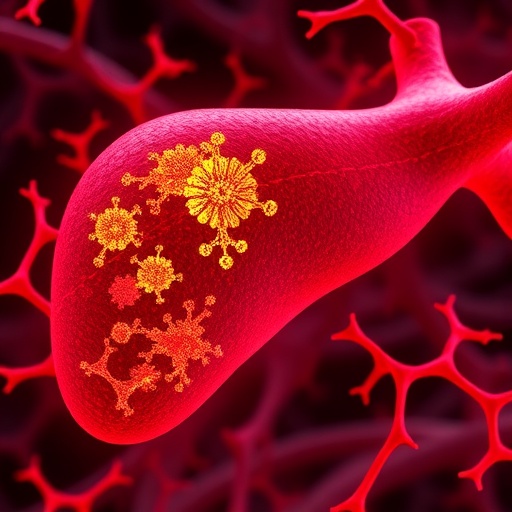
Image Credits: AI Generated
DOI: https://doi.org/10.1038/s41420-026-03129-4
Tags: cell signal remodeling in hepatic fibrosischronic liver disease therapeutic targetsextracellular matrix accumulation in liver diseasefibrosis to cirrhosis progressionhepatic microenvironment homeostasishepatic stellate cell activation mechanismsintercellular communication in liver fibrosisliver sinusoidal endothelial cell signalingpolyamines in liver disease therapyregenerative medicine for liver fibrosisreversing liver fibrosis with spermidinespermidine and liver fibrosis treatment