• HOME
  • NEWS
  • EXPLORE
    • CAREER
      • Companies
      • Jobs
    • EVENTS
    • iGEM
      • News
      • Team
    • PHOTOS
    • VIDEO
    • WIKI
  • BLOG
  • COMMUNITY
    • FACEBOOK
    • INSTAGRAM
    • TWITTER
Sunday, May 10, 2026
BIOENGINEER.ORG
No Result
View All Result
  • Login
  • HOME
  • NEWS
  • EXPLORE
    • CAREER
      • Companies
      • Jobs
        • Lecturer
        • PhD Studentship
        • Postdoc
        • Research Assistant
    • EVENTS
    • iGEM
      • News
      • Team
    • PHOTOS
    • VIDEO
    • WIKI
  • BLOG
  • COMMUNITY
    • FACEBOOK
    • INSTAGRAM
    • TWITTER
  • HOME
  • NEWS
  • EXPLORE
    • CAREER
      • Companies
      • Jobs
        • Lecturer
        • PhD Studentship
        • Postdoc
        • Research Assistant
    • EVENTS
    • iGEM
      • News
      • Team
    • PHOTOS
    • VIDEO
    • WIKI
  • BLOG
  • COMMUNITY
    • FACEBOOK
    • INSTAGRAM
    • TWITTER
No Result
View All Result
Bioengineer.org
No Result
View All Result
Home NEWS Science News Chemistry

Galactic cosmic rays now available for study on Earth, thanks to NASA

Bioengineer by Bioengineer
May 19, 2020
in Chemistry
Reading Time: 3 mins read
0
IMAGE
Share on FacebookShare on TwitterShare on LinkedinShare on RedditShare on Telegram

IMAGE

Credit: Image courtesy of NASA

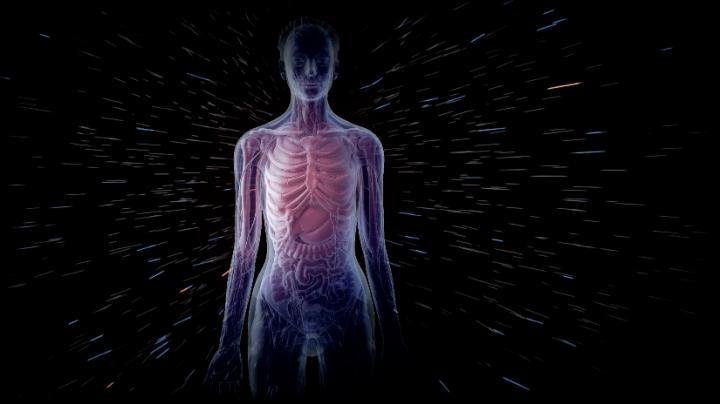
To better understand and mitigate the health risks faced by astronauts from exposure to space radiation, we ideally need to be able to test the effects of Galactic Cosmic Rays (GCRs) here on Earth under laboratory conditions. An article publishing on May 19, 2020 in the open access journal PLOS Biology from Lisa Simonsen and colleagues at the NASA Langley Research Center, USA, describes how NASA has developed a ground-based GCR Simulator at the NASA Space Radiation Laboratory (NSRL), located at Brookhaven National Laboratory.

Galactic cosmic rays comprise a mixture of highly energetic protons, helium ions, and higher charge and energy ions ranging from lithium to iron, and they are extremely difficult to shield against. These ions interact with spacecraft materials and human tissues to create a complex mixed field of primary and secondary particles.

The biological effects from these heavy ions and mixtures of ions are poorly understood. Using recently developed fast beam switching and controls systems technology, NSRL demonstrated the ability to rapidly and repeatedly switch between multiple ion-energy beam combinations within a short period of time, while accurately controlling the extremely small daily doses delivered by the heavier ions.

The authors describe how the simulator was developed, with a view to balancing the definition of mission-relevant radiation environments, facility limitations and beam selection, required hardware and software upgrades, as well as animal care and handling constraints.

In June of 2018, thirty-three unique ion-energy beam combinations were delivered in rapid sequential order (under 75 minutes), cumulatively mimicking the GCR environment experienced by shielded astronauts on a deep space mission. The following October, acute and highly fractionated GCR simulation doses were delivered to three animal model systems over four weeks to investigate mixed-field quality and dose-rate effects on the risks of radiogenic cancers, cardiovascular disease, and adverse effects on the central nervous system.

Over the past 30 years, most research on understanding space radiation-induced health risks has been performed using acute exposures of mono-energetic single-ion beams. Now a mixed field of ions can be studied collectively in the same animal cohort, thereby drastically reducing the number of animals, husbandry, and research costs. This achievement marks a significant step forward and enables a new era of radiobiology research to accelerate our understanding and mitigation of health risks faced by astronauts during long duration exploration missions or interplanetary travel to Mars.

###

Peer reviewed; Experimental study; Cells

In your coverage please use these URLs to provide access to the freely available articles in PLOS Biology: http://journals.plos.org/plosbiology/article?id=10.1371/journal.pbio.3000669

Citation: Simonsen LC, Slaba TC, Guida P, Rusek A (2020) NASA’s first ground-based Galactic Cosmic Ray Simulator: Enabling a new era in space radiobiology research. PLoS Biol 18(5): e3000669. https://doi.org/10.1371/journal.pbio.3000669

Funding: This work was executed under agreements NNJ12HA64I and NNJ16HP161 between NASA and and DOE Brookhaven National Laboratory. The funders had no role in study design, data collection and analysis, decision to publish, or preparation of the manuscript.

Competing Interests: The authors have declared that no competing interests exist.

Media Contact
Lisa C. Simonsen
[email protected]

Related Journal Article

http://dx.doi.org/10.1371/journal.pbio.3000669

Tags: AstrophysicsAtmospheric ScienceAtomic/Molecular/Particle PhysicsBiologyBiotechnologyChemistry/Physics/Materials SciencesExperiments in SpaceMedicine/HealthSpace/Planetary ScienceTechnology/Engineering/Computer Science
Share12Tweet8Share2ShareShareShare2

Related Posts

Miniature Sensor Uses Light to Detect Touch — Chemistry

Miniature Sensor Uses Light to Detect Touch

May 8, 2026
Iron Minerals Determine Whether Dissolved Organic Matter Fuels Microbes or Becomes Long-Term Carbon Storage — Chemistry

Iron Minerals Determine Whether Dissolved Organic Matter Fuels Microbes or Becomes Long-Term Carbon Storage

May 8, 2026

Kate Evans Appointed Associate Lab Director for Biological and Environmental Systems Science at ORNL

May 8, 2026

Advancing Multiscale Modeling and Overcoming Operational Challenges in Autothermal COâ‚‚-to-Methanol Reactors

May 8, 2026
Please login to join discussion

POPULAR NEWS

  • Research Indicates Potential Connection Between Prenatal Medication Exposure and Elevated Autism Risk

    840 shares
    Share 336 Tweet 210
  • New Study Reveals Plants Can Detect the Sound of Rain

    727 shares
    Share 290 Tweet 181
  • Scientists Investigate Possible Connection Between COVID-19 and Increased Lung Cancer Risk

    68 shares
    Share 27 Tweet 17
  • Salmonella Haem Blocks Macrophages, Boosts Infection

    61 shares
    Share 24 Tweet 15

About

We bring you the latest biotechnology news from best research centers and universities around the world. Check our website.

Follow us

Recent News

Evaluating Digoxin Use in Patients with Symptomatic Rheumatic Heart Disease

Evaluating the Effectiveness and Safety of Digitalis Glycosides in Treating Heart Failure

Urdu Fall Risk Questionnaire Adapted for Elderly

Subscribe to Blog via Email

Success! An email was just sent to confirm your subscription. Please find the email now and click 'Confirm' to start subscribing.

Join 82 other subscribers
  • Contact Us

Bioengineer.org © Copyright 2023 All Rights Reserved.

Welcome Back!

Login to your account below

Forgotten Password?

Retrieve your password

Please enter your username or email address to reset your password.

Log In
No Result
View All Result
  • Homepages
    • Home Page 1
    • Home Page 2
  • News
  • National
  • Business
  • Health
  • Lifestyle
  • Science

Bioengineer.org © Copyright 2023 All Rights Reserved.