In a groundbreaking advance that could redefine therapeutic strategies for Parkinson’s disease, a team of researchers has developed cryopreservable dopaminergic progenitors derived from human induced pluripotent stem cells (iPSCs). This innovation not only accelerates the loss of pluripotency—a major hurdle in stem cell therapy—but also demonstrates early functional restoration when transplanted into Parkinsonian rat models. These findings herald a new era in regenerative medicine, offering hope for millions affected by neurodegenerative disorders characterized by dopaminergic neuron loss.
Parkinson’s disease is marked by a progressive degeneration of dopaminergic neurons within the substantia nigra, leading to debilitating motor deficits such as tremors, rigidity, and bradykinesia. Conventional treatments largely focus on symptom management rather than disease modification. Hence, the pursuit of cell replacement therapies that can replenish lost dopaminergic neurons has been a central focus in neuroscience research. Human iPSCs, reprogrammed from adult somatic cells, hold immense promise as they can be coaxed into virtually any cell type, including dopaminergic progenitors.
However, a significant challenge in the deployment of iPSC-derived therapies lies in the cells’ retention of pluripotency—the ability to differentiate into multiple cell lines—even after directed differentiation. Residual pluripotency raises concerns about tumorigenicity post-transplantation and impairs the consistency of therapeutic outcomes. The current study addresses this critical bottleneck by engineering dopaminergic progenitors with an accelerated loss of pluripotency, thereby mitigating tumor risk and enhancing functional integration.
The researchers optimized protocols to differentiate human iPSCs into dopaminergic progenitors while simultaneously introducing conditions that expedite the exit from the pluripotent state. By fine-tuning growth factors, transcriptional modulators, and environmental cues within the culture milieu, they achieved a lineage-specific phenotype that was stable, functional, and devoid of pluripotent traits. This stepwise differentiation approach was pivotal in maximizing cell safety and efficacy.
A hallmark of this study is the successful cryopreservation of these dopaminergic progenitors without compromising their viability or functional potential. Cryopreservation facilitates off-the-shelf availability, enabling broader clinical application and circumventing logistical barriers associated with fresh cell preparations. The ability to thaw and transplant cells rapidly is transformative, allowing for timely interventions in acute or chronic neurodegenerative states.
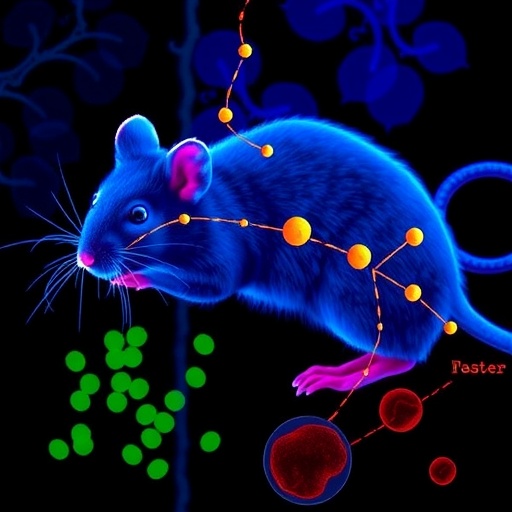
Upon transplantation into the striatum of Parkinsonian rat models—induced by the neurotoxin 6-hydroxydopamine—the grafted progenitors not only survived but demonstrated robust integration into host neural networks. Behavioral assessments revealed significant amelioration of motor deficits as early as weeks post-implantation, underscoring the functional restoration conferred by these cells. This rapid onset of therapeutic benefit contrasts favorably with prior approaches requiring longer maturation times.
Electrophysiological analyses further confirmed that transplanted progenitors matured into dopamine-releasing neurons capable of forming synaptic connections. This synaptogenesis is critical for reestablishing neurotransmitter homeostasis and restoring basal ganglia circuitry functionality. The data also highlighted that the progenitors exhibited minimal immunogenicity, reducing the necessity for aggressive immunosuppressive regimens in future clinical translations.
Interestingly, the study uncovered novel molecular signatures associated with the accelerated pluripotency loss, delineating a distinct differentiation trajectory. These signatures implicate epigenetic modifiers and signaling cascades such as Wnt and Sonic Hedgehog pathways, which can be harnessed to refine stem cell fate decisions further. This mechanistic insight enriches our understanding of neural development and opens avenues for tailored cell engineering techniques.
The researchers emphasize that the cryopreservation process utilized a uniquely formulated cryoprotectant cocktail designed to preserve mitochondrial integrity and minimize oxidative stress during freeze-thaw cycles. Preservation of mitochondrial function is crucial for post-thaw cellular metabolism and engraftment competence, marking a significant advancement over traditional cryopreservation methods which often incur functional deficits.
Moreover, the scalability of this protocol is a promising leap towards clinical applicability. The ability to generate large batches of standardized dopaminergic progenitors and bank them cryogenically aligns with regulatory frameworks and manufacturing requirements for stem cell therapeutics. This standardization is critical for reproducibility, safety assessment, and eventual approval for human trials.
While challenges remain, including long-term graft survival and integration in primate models, this study lays a robust foundation for transitioning from bench to bedside. The affirmation of functional restoration in an animal model is a compelling prelude to pilot clinical trials aimed at mitigating Parkinson’s disease progression in humans. The potential impact on patient quality of life and healthcare systems is transformative.
This research underscores the power of stem cell biology combined with bioengineering innovations to tackle neurodegeneration. The ability to control cell fate with precision and create ready-to-use cell therapies embodies a new frontier in regenerative neuroscience. As the field advances, such approaches may extend beyond Parkinson’s disease to other disorders marked by selective neuronal loss, including Huntington’s disease and multiple system atrophy.
The implications of this study resonate deeply within the scientific community, promising renewed vigor in the search for curative treatments. By addressing fundamental issues related to cell pluripotency and delivery logistics, the investigators have surmounted key translational barriers. The deployment of cryopreservable, lineage-committed neuronal progenitors may soon become a cornerstone of personalized medicine for neurodegenerative diseases.
In conclusion, the revelation that dopaminergic progenitors derived from human iPSCs can be cryopreserved while exhibiting accelerated pluripotency loss and early functional restoration in Parkinsonian rats is nothing short of paradigm-shifting. It represents a critical step toward developing safe, effective, and scalable cell-based therapies. The research community and patients alike await further developments with great anticipation, hopeful that these scientific strides mark the dawn of a new therapeutic epoch.
Subject of Research: Human iPSC-derived dopaminergic progenitors and their application in Parkinson’s disease therapy
Article Title: Cryopreservable dopaminergic progenitors derived from human iPSCs with accelerated loss of pluripotency and early functional restoration in Parkinsonian rats
Article References:
Chang, CY., Chiang, CY., Ting, HC. et al. Cryopreservable dopaminergic progenitors derived from human iPSCs with accelerated loss of pluripotency and early functional restoration in Parkinsonian rats. npj Parkinsons Dis. (2026). https://doi.org/10.1038/s41531-026-01399-4
Image Credits: AI Generated
Tags: cell replacement therapy for Parkinson’s diseasecryopreservable stem cells in neurodegenerative diseasedopaminergicfrozen dopaminergic progenitors for Parkinson’s therapyfunctional restoration in Parkinsonian rat modelshuman iPSC-derived dopaminergic neuronsinduced pluripotent stem cells in neurotherapyovercoming tumorigenicity in stem cell transplantspluripotency loss in stem cell therapyregenerative medicine for dopaminergic neuron losstransplantation of iPSC-derived neurons in rat models