• HOME
  • NEWS
  • EXPLORE
    • CAREER
      • Companies
      • Jobs
    • EVENTS
    • iGEM
      • News
      • Team
    • PHOTOS
    • VIDEO
    • WIKI
  • BLOG
  • COMMUNITY
    • FACEBOOK
    • INSTAGRAM
    • TWITTER
Wednesday, May 13, 2026
BIOENGINEER.ORG
No Result
View All Result
  • Login
  • HOME
  • NEWS
  • EXPLORE
    • CAREER
      • Companies
      • Jobs
        • Lecturer
        • PhD Studentship
        • Postdoc
        • Research Assistant
    • EVENTS
    • iGEM
      • News
      • Team
    • PHOTOS
    • VIDEO
    • WIKI
  • BLOG
  • COMMUNITY
    • FACEBOOK
    • INSTAGRAM
    • TWITTER
  • HOME
  • NEWS
  • EXPLORE
    • CAREER
      • Companies
      • Jobs
        • Lecturer
        • PhD Studentship
        • Postdoc
        • Research Assistant
    • EVENTS
    • iGEM
      • News
      • Team
    • PHOTOS
    • VIDEO
    • WIKI
  • BLOG
  • COMMUNITY
    • FACEBOOK
    • INSTAGRAM
    • TWITTER
No Result
View All Result
Bioengineer.org
No Result
View All Result
Home NEWS Science News Biology

Fossils help identify a lone ‘bright spot’ in a similar state to coral reefs before human impact

Bioengineer by Bioengineer
February 21, 2020
in Biology
Reading Time: 3 mins read
0
IMAGE
Share on FacebookShare on TwitterShare on LinkedinShare on RedditShare on Telegram

IMAGE

Credit: Aaron O’Dea

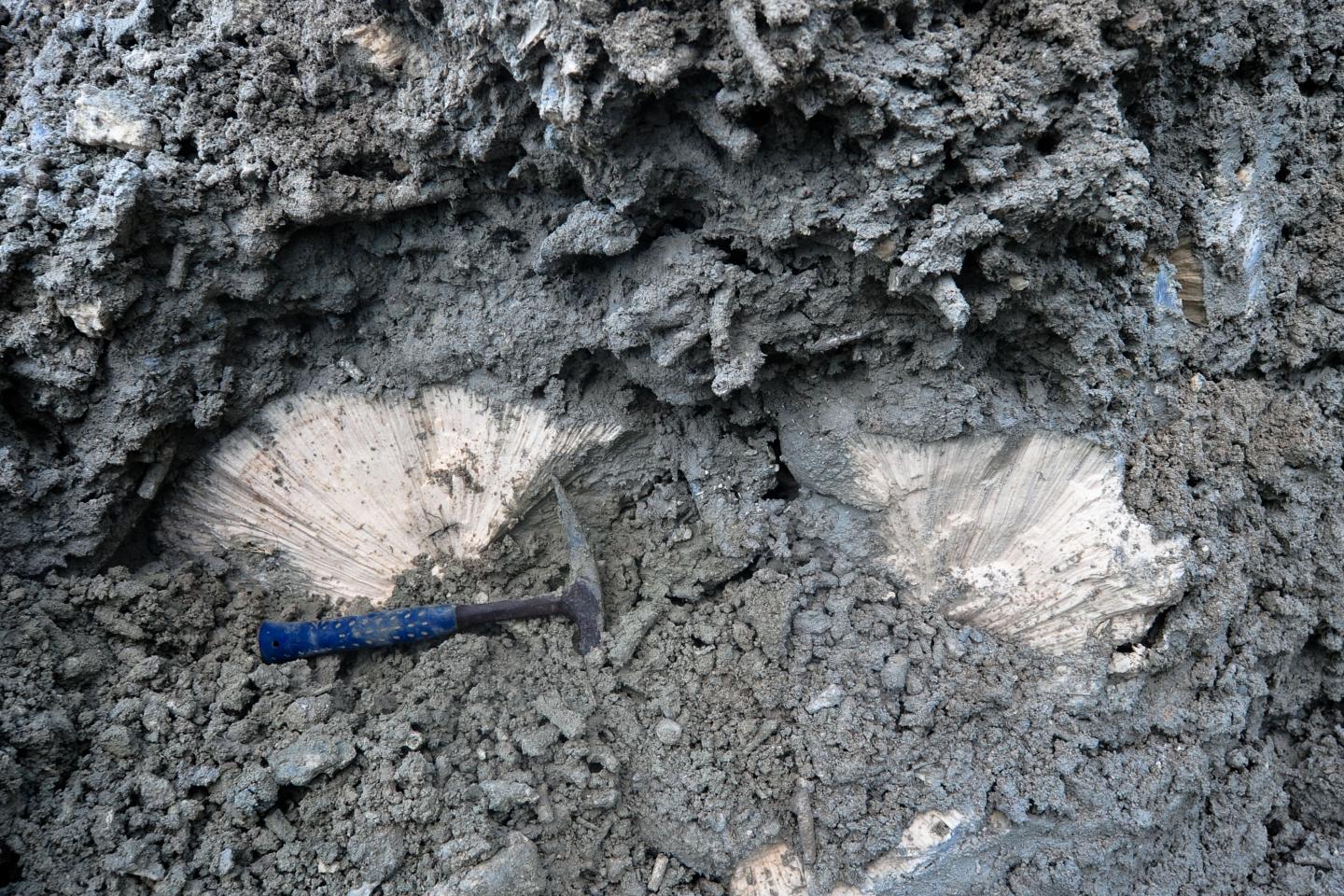
Researchers at the Smithsonian Tropical Research Institute (STRI) discovered a massive, 7,000-year-old fossilized coral reef near the institute’s Bocas del Toro Research Station in Panama. Spanning about 50 hectares, it rewards paleontologists with an unusual glimpse of a “pristine” reef that formed before humans arrived.

“All modern reefs in the Caribbean have been impacted in some way by humans,” said STRI staff scientist Aaron O’Dea. “We wanted to quantify that impact by comparing reefs that formed before and after human settlement.”

Using a large excavator, the team dug 4-meter-deep trenches into the fossil reef and bagged samples of rubble. They dated the reef with high resolution radiometric dating.

“The fossils are exquisitely preserved,” O’Dea said. “We found branching corals in life position with chemically pristine fossil preservation. Now we are classifying everything from snails and clams to sea urchins, sponge spicules and shark dermal denticles.”

Archaeological evidence from Bocas del Toro indicates that settlers did not make extensive use of marine resources until around 2,000 years ago. So, the fossilized reef predates human impact by a few thousand years. After comparing fossilized corals with corals from nearby reefs, the team was surprised to find a modern reef that closely resembled the pre-settlement reef. They dubbed this a “bright spot,” and asked why this reef is more similar to the prehistoric reef than the others.

“Most of the reefs in Bocas today look nothing like they did 7,000 years ago,” said Andrew Altieri, former STRI scientist and now assistant professor at the University of Florida, Gainesville. “That confirmed our expectations given what we know about recent deterioration caused by humans. So we were really surprised when we discovered one modern reef that is indistinguishable in its community composition to the ancient reefs.”

When the team cored this “bright spot” reef, they discovered that it had been in this state for centuries. “This suggests resilience,” said Mauro Lepore, former STRI post-doctoral fellow. “And that kind of information can be really powerful for conservation.”

“This finding begs the question of what’s so special about this reef,” O’Dea said. The team evaluated current environmental factors such as water quality, hypoxia, temperature, aspect and shape, but none of those explained why this reef is more like the pre-human impact reef. The only clues were that it was the furthest away from human activity and that the staghorn coral, which dominates the reef, had previously been shown to consist of clones resilient to white band disease.

More work is needed to understand why this bright spot persists in the face of human impacts. However, the team propose that these kinds of fossil records can help in conservation by establishing which ecosystems have been irrevocably altered and those which preserve elements of what was natural. Once identified, these “bright spots” could act as a guide to conserve other ecosystems.

###

O’Dea, A, Lepore, M., Altieri, A.H. et al. 2020 Defining variation in pre-human ecosystems can guide conservation: An example from a Caribbean coral reef. Sci Rep 10, 2922. https://www.nature.com/articles/s41598-020-59436-y

Media Contact
Beth King
[email protected]
507-212-8216

Original Source

https://www.si.edu/newsdesk/releases/plenty-gloom-dash-hope-fossils-help-identify-lone-bright-spot-reef-similar-state

Related Journal Article

http://dx.doi.org/10.1038/s41598-020-59436-y

Tags: BiodiversityBiologyEcology/EnvironmentEvolutionMarine/Freshwater BiologyPaleontology
Share12Tweet8Share2ShareShareShare2

Related Posts

Using Real-Time Brain Signals to Forecast and Prevent Attention Lapses in Children — Biology

Using Real-Time Brain Signals to Forecast and Prevent Attention Lapses in Children

May 13, 2026
Cutting-Edge Genomic Techniques Reveal Unexpected Cellular Changes in the Aging Brain — Biology

Cutting-Edge Genomic Techniques Reveal Unexpected Cellular Changes in the Aging Brain

May 12, 2026

USC Researchers Initiate Study on the Most Advanced Lab-Grown Kidney Structures

May 12, 2026

Childbirth in Humans Is Not Uniquely Challenging Among Mammals, New Research Shows

May 12, 2026
Please login to join discussion

POPULAR NEWS

  • Research Indicates Potential Connection Between Prenatal Medication Exposure and Elevated Autism Risk

    842 shares
    Share 337 Tweet 211
  • New Study Reveals Plants Can Detect the Sound of Rain

    728 shares
    Share 290 Tweet 182
  • Salmonella Haem Blocks Macrophages, Boosts Infection

    62 shares
    Share 25 Tweet 16
  • Breastmilk Balances E. coli and Beneficial Bacteria in Infant Gut Microbiomes

    57 shares
    Share 23 Tweet 14

About

We bring you the latest biotechnology news from best research centers and universities around the world. Check our website.

Follow us

Recent News

Perimenopause Presents a Key Window for Heart Disease Prevention in Women

Penn Scientists Develop AI Tool to Accelerate Antibiotic Discovery

MIT-MGH Team Develops Novel Cancer Vaccine Strategy That Enhances T Cell Potency

Subscribe to Blog via Email

Enter your email address to subscribe to this blog and receive notifications of new posts by email.

Join 82 other subscribers
  • Contact Us

Bioengineer.org © Copyright 2023 All Rights Reserved.

Welcome Back!

Login to your account below

Forgotten Password?

Retrieve your password

Please enter your username or email address to reset your password.

Log In
No Result
View All Result
  • Homepages
    • Home Page 1
    • Home Page 2
  • News
  • National
  • Business
  • Health
  • Lifestyle
  • Science

Bioengineer.org © Copyright 2023 All Rights Reserved.