UCC palaeontologists have discovered new evidence that the fate of vertebrate animals over the last 400 million years has been shaped by microscopic melanin pigments.
Credit: UCC
UCC palaeontologists have discovered new evidence that the fate of vertebrate animals over the last 400 million years has been shaped by microscopic melanin pigments.
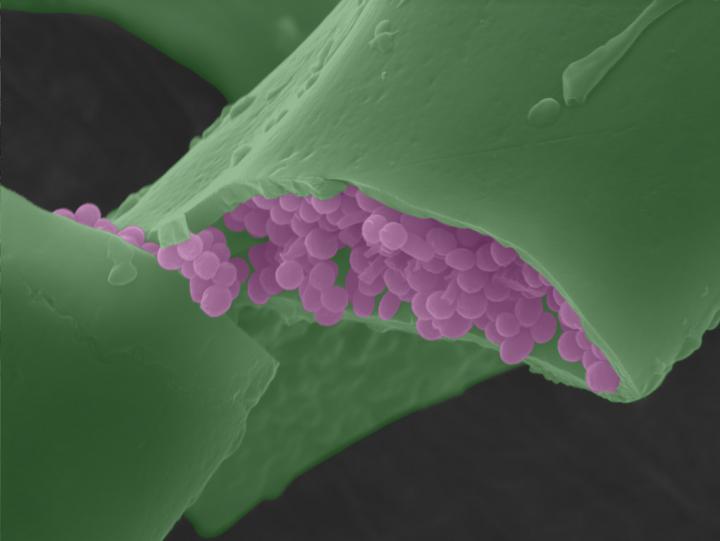
This new twist in the story of animal evolution is based on cutting-edge analyses of melanin granules – melanosomes – in many different fossil and modern vertebrates, including fish, amphibians, reptiles, birds and mammals. Melanin and melanosomes have traditionally been linked to outermost body tissues such as skin, hair and feathers, with important roles in UV protection and stiffening of tissues. Analyses of where different animals store melanin in the body, however, show that different vertebrate groups concentrate melanin in different organs, revealing shifts in how animals have used melanin over the last 400 million years.
The study, published today in the journal Trends in Ecology and Evolution, was led by UCC palaeontologists Prof. Maria McNamara, Dr Chris Rogers, Dr Valentina Rossi and PhD student Tiffany Slater, with an international team of evolutionary biologists from Switzerland.
“Most studies of fossil melanin have focussed on melanin in fossil feathers and skin, and what colours ancient animals had,” said study leader Prof. McNamara. “By comparing melanin in different animals – how much melanin they have, where in the body it occurs, what melanin type and composition is present – and by studying fossils, we discovered new evidence for changes in the functions of melanin through deep time.”
The research shows that amphibians and reptiles concentrate melanin in internal organs, where it supports the immune system and stores metals. In birds and mammals, however, almost all melanin occurs in hair and feathers. This difference has an unexpected source – evolution of the immune system and of warm-blooded lifestyles.
“There are pros and cons to having melanin in the body,” said team member Dr Rossi. “Melanin is hugely beneficial, but it also generates free radicals, which are harmful. This creates a major problem for animals.”
During the evolution of hair and feathers, mammals and birds evolved more sophisticated immune systems than in amphibians and reptiles. This meant that large amounts of melanin were no longer necessary in internal organs. Melanin storage then shifted to hair and feathers, which are dead tissues, thereby removing harmful metals and free radicals from living body parts.
“Melanin is a two-sided coin,” said Prof. McNamara. “It’s useful, but toxic. Birds and mammals basically came up with an ingenious solution during the early Triassic – pump melanin into new, outer, dead skin tissues that were evolving at the time. This set the scene for the evolution of the incredible diversity of plumage and fur patterning which we see today.”
The study also shows that key genes can be mapped onto colour patterns in fossils, tracking the genetic evolution of melanin through time, and that animals preferentially use less toxic forms of melanin. “There’s still a lot about melanin genetics and physiology that we don’t understand,” said Dr Ducrest of Lausanne University. What’s clear, however, is that the fossil record is a valuable source of information that we can use going forwards.”
###
Media Contact
Joe Leogue
[email protected]
Original Source
https:/
Related Journal Article
http://dx.