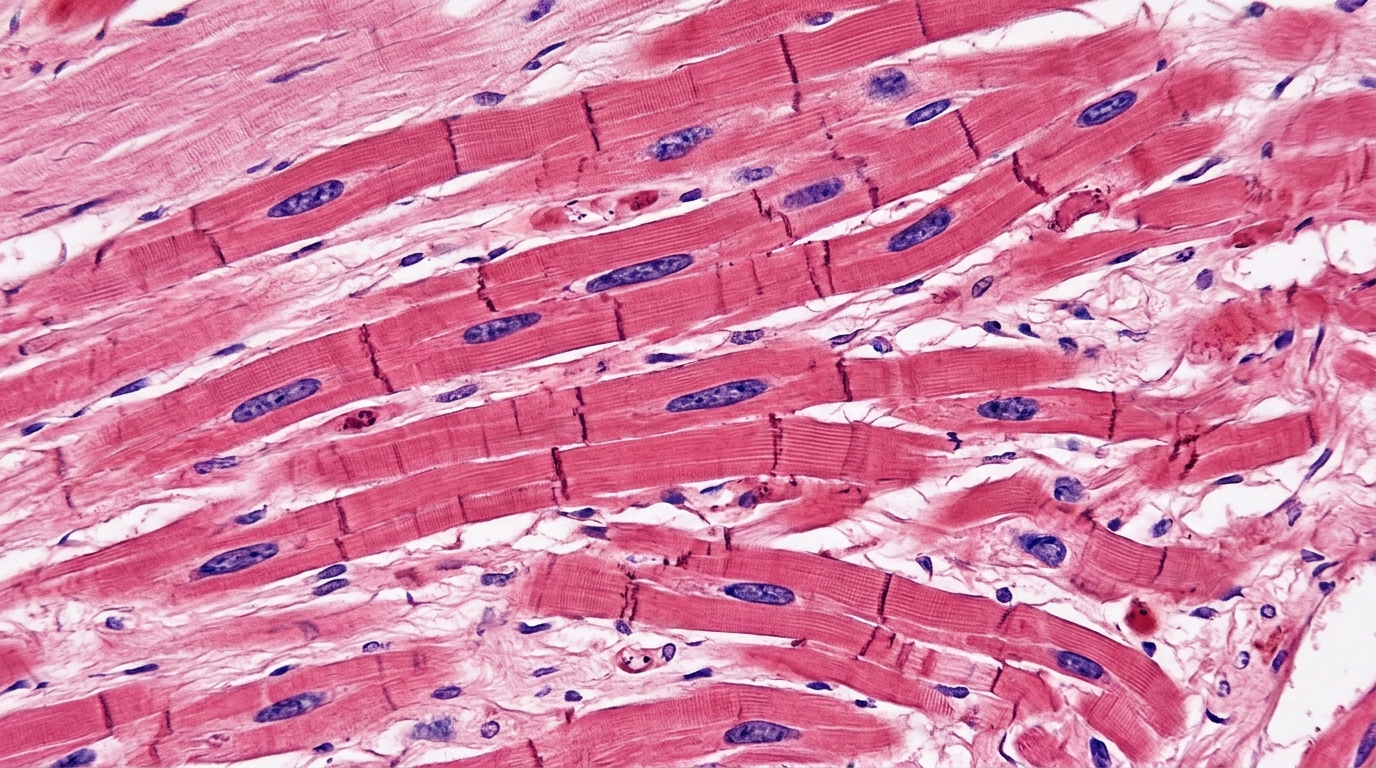
Researchers led by Rui Yao, Huimin Xiao and Yiheng Quan, working with Jinming Gao’s group, investigated Gegen Qinlian capsule (GGQL), a classical Chinese medicine preparation, and identified formononetin (FMN) as its key candidate cardioprotective constituent.
A murine DbCM model was established by high-fat diet feeding combined with streptozotocin injection. GGQL was administered at three doses for 8 weeks. Cardiac injury was evaluated by echocardiography, histology, and serum biomarkers.
Untargeted metabolomics and RNA sequencing were performed to characterize metabolic and transcriptional reprogramming.
Network pharmacology, molecular docking, and a cellular thermal shift assay (CETSA) were integrated to identify the principal active compound and its molecular target. Network pharmacology identified PPARγ as the central hub target. Molecular docking revealed that formononetin exhibited the highest PPARγ binding affinity among the screened compounds, with a calculated binding energy of −9.3 kcal/mol.
Mechanistic validation employed PPARG lentiviral knockdown in H9C2 cardiomyocytes and pharmacological PPARγ antagonism (GW9662) in vivo. In H9C2 cardiomyocytes, lentiviral knockdown of the PPARG gene abolished FMN-mediated cardioprotection and its anti-ferroptotic effects. In the animal model, co-administration of GW9662, a pharmacological PPARγ antagonist, produced the same loss of benefit.
Downstream of PPARγ, the study mapped the signaling cascade further. Formononetin activated the PI3K/AKT/mTOR axis, and when the researchers inhibited PI3K, the upregulation of GPX4 and SLC7A11 was reversed.
The authors conclude that formononetin is a key candidate bioactive constituent of GGQL that attenuates diabetic cardiomyopathy by suppressing ferroptosis through a PPARγ–PI3K/AKT/mTOR–GPX4/SLC7A11 signaling cascade, providing a mechanistic basis for GGQL’s clinical use in diabetic cardiovascular disease.
Several caveats temper the translational implications. The work was conducted in a murine model and in H9C2 cardiomyocytes, a rat-derived cell line, so the findings do not yet establish efficacy in humans. The article is a shared early-access version, citable with a permanent DOI but subject to further edits before the final Version of Record appears. The study identifies a candidate compound and a plausible mechanism; it does not constitute a clinical trial of GGQL or formononetin in diabetic patients, and any move toward human application would require the standard sequence of pharmacokinetic, safety and controlled clinical studies.
What the paper does offer is a template for how complex herbal medicines can be deconvoluted. By combining an in vivo disease model with untargeted metabolomics, transcriptomics, network pharmacology, molecular docking and target-engagement assays, the researchers moved from a multi-component formula to a single compound, a single target and a defined signaling cascade.
Subject of Research: Mechanism of formononetin from Gegen Qinlian capsule in protecting against diabetic cardiomyopathy through PPARγ-regulated ferroptosis suppression
Article Title: Formononetin mediates the protective effect on diabetic cardiomyopathy through PPARγ-regulated ferroptosis suppression
Article References: Yao, R., Xiao, H., Quan, Y., Liu, B., Wang, S., & Gao, J. (2026). Formononetin mediates the protective effect on diabetic cardiomyopathy through PPARγ-regulated ferroptosis suppression. Cell Biology and Toxicology. https://doi.org/10.1007/s10565-026-10303-y
Image Credits: AI Generated
DOI: 10.1007/s10565-026-10303-y
Keywords: diabetic cardiomyopathy, formononetin, ferroptosis, PPARγ, Gegen Qinlian capsule, GPX4, SLC7A11, PI3K/AKT/mTOR, network pharmacology, metabolomics, H9C2 cardiomyocytes, oxidative stress
News Source: Drew Townsend. (November 6, 2026). Formononetin Suppresses Ferroptosis to Protect the Diabetic Heart via PPARγ. Scienmag.